Papaya Growing & Harvesting Guide
Papaya (Carica papaya) is the rapid-growing, palm-like treasure of the warm subtropical garden. Famed for its highly sweet, orange-fleshed pear-shaped fruits and massive deeply lobed leaves, this tropical plant thrives on intense sun and rich organic feeding.





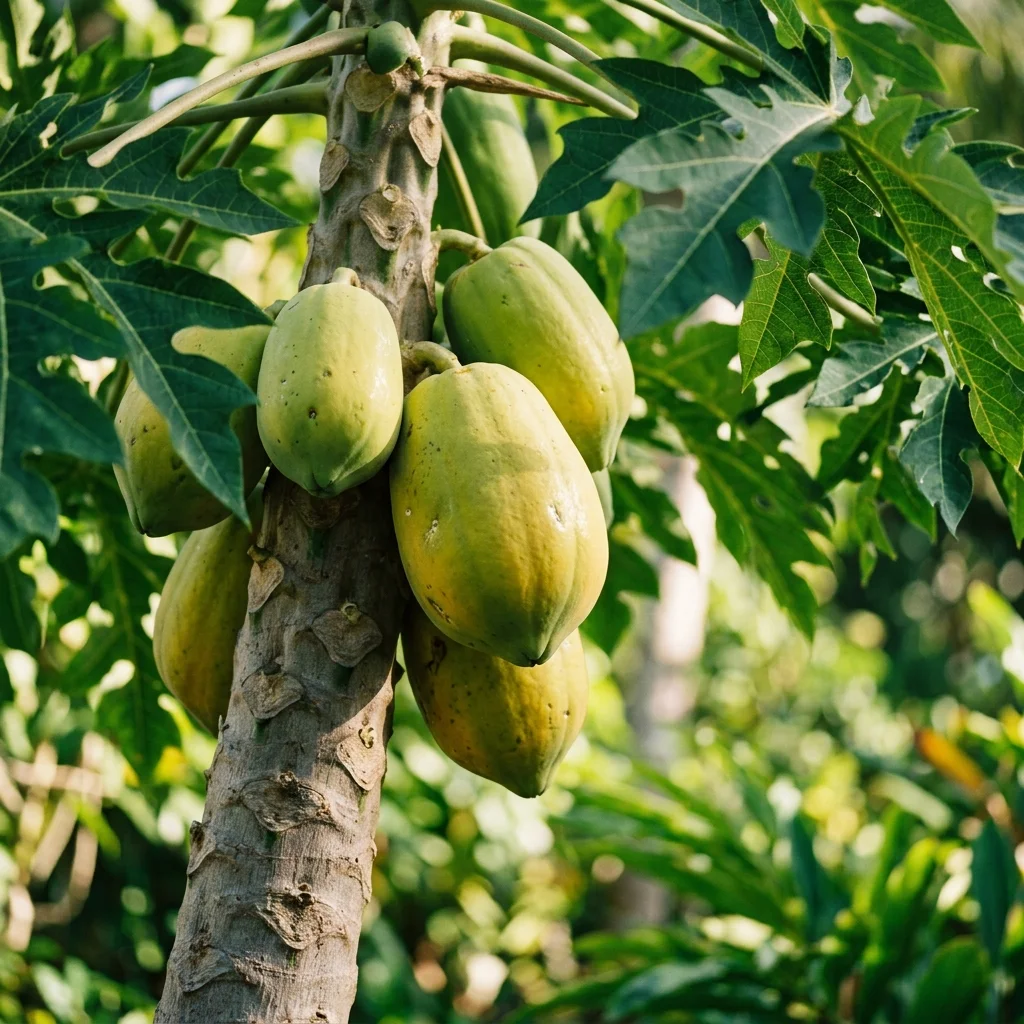
How to Identify Papaya
Papaya (Carica papaya) is a highly valued edible crop globally. Recognizing its definitive vegetative and fruit/vegetable structures is key to successful companion growing and harvesting.
-
✔
Key Visual Features: Single-stemmed, palm-like herbaceous plants with hollow green trunks.
-
✔
Leaf & Stems: Very large, deeply palmately lobed leaves clustered at the top of the trunk; highly fragrant cream-white flowers.
-
✔
Fruit/Edible Part: Elongated, pear-shaped or oval fruits hanging directly from the main trunk, turning orange-yellow.
Complete Growing & Harvesting Guide
Follow our detailed scientific agricultural cultivation guide to keep your Papaya thriving and high-yielding.
Common Diseases & Treatment
Papaya Ringspot Virus (PRSV)
Symptoms: Leaves show yellow mottling, oily dark green streaks appear on leaf petioles and trunk, and fruits develop circular ring spots.
Damping-off & Root Rot
Symptoms: Young seedlings collapse at the soil line, and older plants show yellowing leaves and trunk base decay in wet soils.
Frequently Asked Questions
Why is my papaya tree not setting fruit?
Papayas can be male, female, or bisexual. Male trees only produce pollen and do not fruit; female trees require a male or bisexual tree to set fruit.
How fast do papaya trees grow?
Extremely fast! Papayas can grow from seed to a fruiting plant of 6-10 feet tall within 9 to 12 months.
Can I grow papayas in a greenhouse?
Yes! Plant dwarf varieties (like Solo or Tainung) in large 20-gallon rolling pots and keep greenhouse temperature above 18°C.
Are papaya leaves safe for dogs and cats?
No. Papaya foliage and green skins contain a milky latex rich in papain, which can cause skin allergies, vomiting, and mouth swelling in pets.