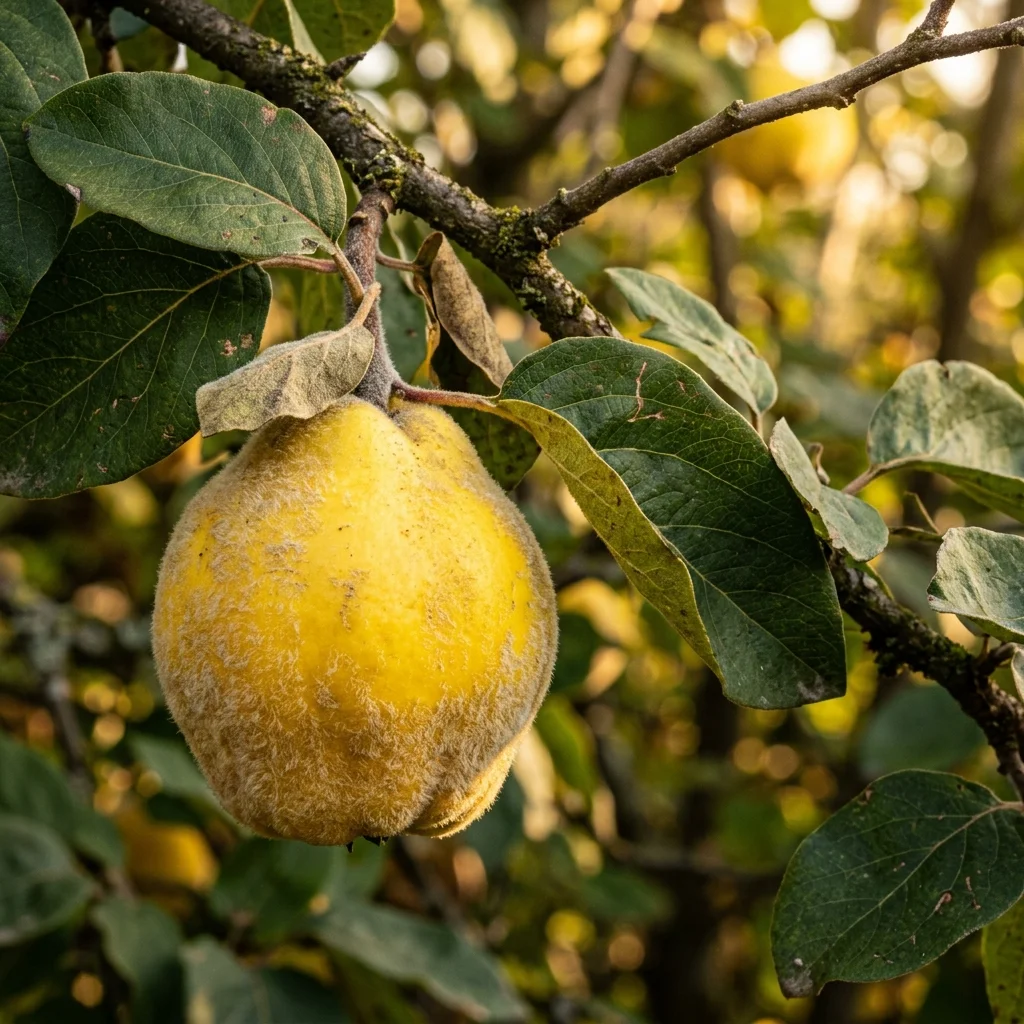
Cydonia oblonga

Quince Growing & Harvesting Guide

Quince (Cydonia oblonga), the ancient golden pear of aromatic orchards, is an exceptionally high-value pome tree. Prized for its highly fragrant pineapple-pear fruits and beautiful spring blooms, this gnarly deciduous species demands shelter from wind, moisture-retaining loam, and fire-blight protection.


Sunlight Icon
Sunlight Full Sun (6+ hours)
Watering Icon
Watering Moderate / Regular
Soil Mix Icon
Soil pH Deep, Fertile, Moisture-Retaining Loam (pH 6.0-7.0)
Temperature Icon
Target Temp 12°C - 30°C
Toxicity Warning Icon
Toxicity Toxic to Pets (Cyanogenic seeds)
Botanical macro photography of Quince (Cydonia oblonga) - Plant AI care database

How to Identify Quince

Quince (Cydonia oblonga) is a highly valued edible crop globally. Recognizing its definitive vegetative and fruit/vegetable structures is key to successful companion growing and harvesting.

  • Key Visual Features: Small deciduous tree or large shrub growing 12 to 15 feet tall with a gnarly branch habit.
  • Leaf & Stems: Round-oval dark green leaves with pale felted undersides; produces large, beautiful pale pink blossoms.
  • Fruit/Edible Part: Large, pear-shaped bright golden-yellow fruit covered in fine, light grey felted woolly down.
💡 Plant AI Tip: Snap a photo with Plant AI to identify garden veggies and diagnose leaf spot diseases in 1 second.

Complete Growing & Harvesting Guide

Follow our detailed scientific agricultural cultivation guide to keep your Quince thriving and high-yielding.

Water deeply once a week, providing 1.5 inches of water during fruiting. Description: Drought-tolerant once established.
Prune in late winter during dormancy. Remove crossing branches and water sprouts to maintain an open canopy.
Apply organic balanced fruit tree food in early spring. Avoid excessive nitrogen which encourages tender, blight-prone growth.
Requires full sun (6+ hours daily) to develop sweet golden fruit skins and trigger abundant spring blossoms.
Prefers deep, rich, moisture-retaining but well-drained loamy soil with moderate organic content (pH 6.0-7.0).
Plant bare-root or potted trees in early spring. Dig a hole twice the root ball width; stake young trees.
Subtropical to temperate tree. Sturdy and cold-hardy down to -15°C; requires low winter chilling (300 hours) to set fruit.
Space trees 15 feet apart. Plant in wind-sheltered areas to prevent heavy golden fruits from bruising.
Prone to codling moth, aphids, and scale. Bag individual young fruits in protective paper sleeves.
Highly susceptible to Fire Blight and Rust. Prune damaged twigs instantly using sterilized tools.
Harvest in late autumn when the fruit turns a uniform bright golden-yellow, loses its grey fuzzy down, and smells aromatic.

Is your Quince leaves turning yellow, spotted or dying?

Protect your kitchen garden. Take a photo with Plant AI to diagnose pests and crop diseases instantly.

Diagnose My Crop

Common Diseases & Treatment

Quince Fire Blight (Erwinia)

Symptoms: Twigs, leaves, and blossoms turn black, shrivel, and look scorched by fire; branches die back rapidly.

Action: Cut infected limbs 12 inches below damage using shears sterilized in 10% bleach, destroy branches, and spray copper.

Quince Rust (Gymnosporangium)

Symptoms: Leaves and developing fruits develop bright orange, swollen spots with tiny cup-like spore tubes.

Action: Plant away from wild juniper trees, collect fallen foliage, and apply preventative copper or organic sulfur sprays.

Frequently Asked Questions

Can I eat quince fruit raw?

Quince is extremely hard, astringent, and sour when raw. Cooking turns the hard white flesh into a beautiful, fragrant pink sweet treat.

Why is my quince fruit covered in a grey fuzzy coating?

This grey fuzzy down (tomentum) is a natural skin protection. It rubs off easily as the fruit ripens and turns golden-yellow.

Why is my quince tree dropping its flowers without setting fruit?

Quince is self-fertle, but cold wet spring weather can prevent bee pollination. Ensure a sunny, wind-protected site to support pollinators.

Are quinces safe for dogs and cats to eat?

The cooked quince flesh is safe in moderation. However, raw quince fruit is highly acidic, and its seeds contain cyanogenic glycosides which are highly toxic to pets.

Harvest bountiful greens. Grow healthy edibles today!

Get Started for Free