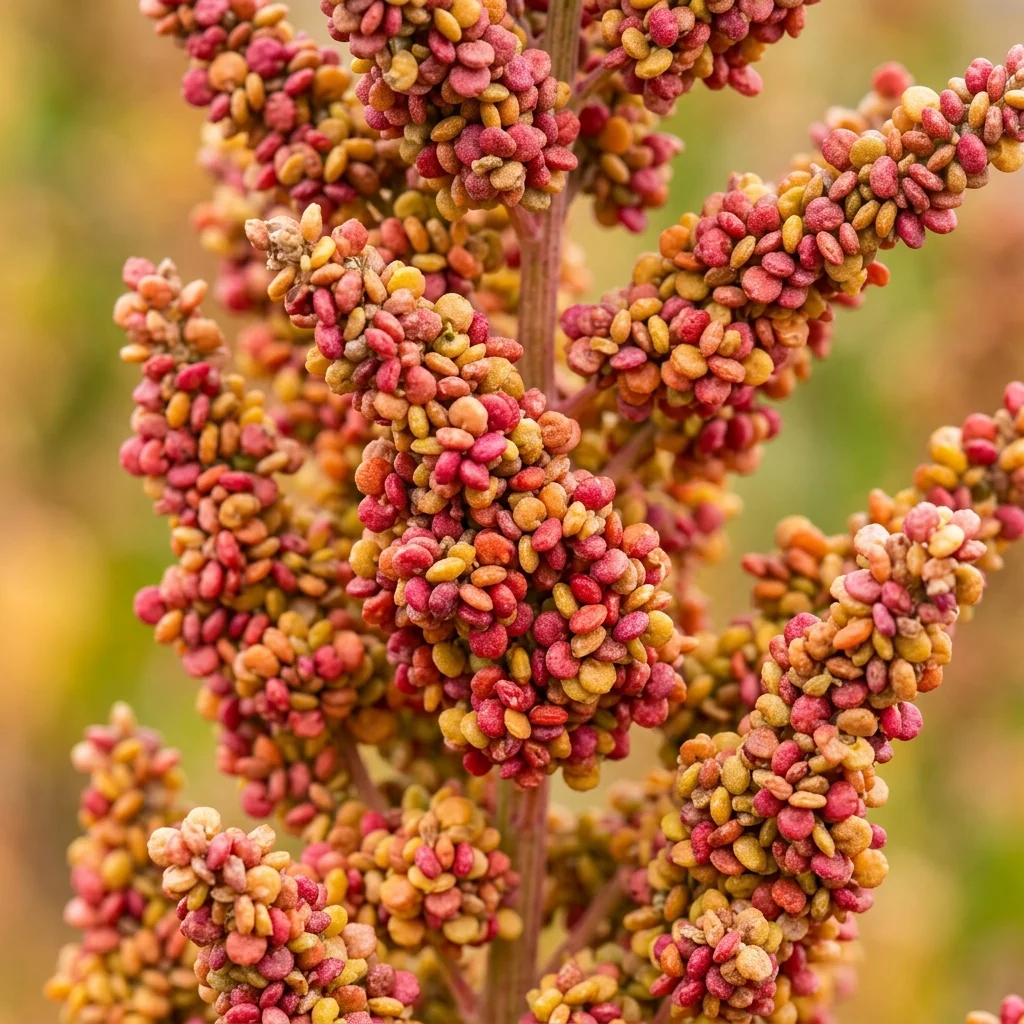
Chenopodium quinoa

Quinoa Growing & Harvesting Guide

Quinoa (Chenopodium quinoa), the colorful super-grain of the Andes, is an exceptionally ornamental pseudocereal. Famous for its high-protein seeds and outstanding drought tolerance, this vibrant annual features seedheads coated in bitter saponin to naturally deter pests.


Sunlight Icon
Sunlight Full Sun (6+ hours)
Watering Icon
Watering Low / Moderate
Soil Mix Icon
Soil pH Sandy, Well-Drained Loam (pH 6.0-8.5)
Temperature Icon
Target Temp 7°C - 25°C
Toxicity Warning Icon
Toxicity Toxic to Pets (Raw/Saponin outer)
Botanical macro photography of Quinoa (Chenopodium quinoa) - Plant AI care database

How to Identify Quinoa

Quinoa (Chenopodium quinoa) is a highly valued edible crop globally. Recognizing its definitive vegetative and fruit/vegetable structures is key to successful companion growing and harvesting.

  • Key Visual Features: Tall, erect herbaceous annual growing 3 to 6 feet high with colorful pink, red, or yellow stalks.
  • Leaf & Stems: Broad, goosefoot-shaped lobed leaves; massive dense terminal flower panicles.
  • Fruit/Edible Part: Terminal seedheads loaded with thousands of small, flat, disc-shaped colorful seeds.
💡 Plant AI Tip: Snap a photo with Plant AI to identify garden veggies and diagnose leaf spot diseases in 1 second.

Complete Growing & Harvesting Guide

Follow our detailed scientific agricultural cultivation guide to keep your Quinoa thriving and high-yielding.

Water sparingly. Quinoa is highly drought-tolerant; water only when the top 2 inches of soil are dry.
No heavy pruning required. Stake the tall stalks early in windy areas to prevent them from snapping under heavy seedheads.
Apply balanced compost before planting. High nitrogen causes excessive leaf growth and weakens the main seedstalks.
Requires absolute full sun, minimum 6 to 8 hours daily. Vital to trigger robust flowering and dry out seedheads.
Thrives in deep, fast-draining, sandy loam. Extremely tolerant of poor soils, drought, and alkaline soils (pH 6.0-8.5).
Sow seeds 0.25 inch deep in spring once soil reaches 10°C. Thin seedlings to 10 inches apart.
Cool-season crop. Prefers temperatures below 25°C; temperatures exceeding 32°C during flowering sterilize pollen, causing seed crop failure.
Space mature plants 10 inches apart in rows 2 feet apart to accommodate broad leaf branches and large seed plumes.
Naturally resistant to most pests and birds due to bitter saponin. Watch for leafminers early in the season.
Susceptible to Downy Mildew and Damping Off. Ensure sharp soil drainage; avoid muddy clay beds.
Harvest in autumn when leaves fall off and seedheads turn dry and papery. Seeds should be hard and dry.

Is your Quinoa leaves turning yellow, spotted or dying?

Protect your kitchen garden. Take a photo with Plant AI to diagnose pests and crop diseases instantly.

Diagnose My Crop

Common Diseases & Treatment

Downy Mildew (Peronospora)

Symptoms: Yellow patches appear on leaf upper surfaces, matching a gray fuzzy mold growth underneath in humid, wet autumns.

Action: Space plants widely for ventilation, irrigate at soil level, and apply copper fungicide proactively.

Damping Off (Pythium)

Symptoms: Young emerging seedlings rot at the soil line, fall over, and collapse, caused by cold, wet, compacted soils.

Action: Delay sowing until soil is warm, utilize raised beds for sharp drainage, and avoid early overwatering.

Frequently Asked Questions

What is saponin and why does quinoa have it?

Saponin is a bitter, soap-like chemical coating that covers raw quinoa seeds. It acts as a natural defense system to deter birds and insects.

How do I remove the bitter saponins before cooking quinoa?

Place harvested quinoa in a fine-mesh strainer and rinse thoroughly with cold running water, rubbing seeds together, until water stops foaming.

Why did my quinoa plant fail to produce seeds?

This is usually due to high heat. If temperatures exceed 32°C during flowering, the pollen becomes sterile, resulting in empty seedheads.

Is raw quinoa safe for dogs and cats?

No. The raw saponin coating on quinoa seeds is highly irritating to a pet's digestive system. Thoroughly rinsed, cooked quinoa is safe in moderation.

Harvest bountiful greens. Grow healthy edibles today!

Get Started for Free