Radish Growing & Harvesting Guide
Radish (Raphanus sativus) is the ultra-fast, crunchy favorite of the early spring vegetable bed. Famed for its highly spicy, round red roots and quick harvesting times, this cool-season crop requires consistent moisture to prevent woodiness and splitting.





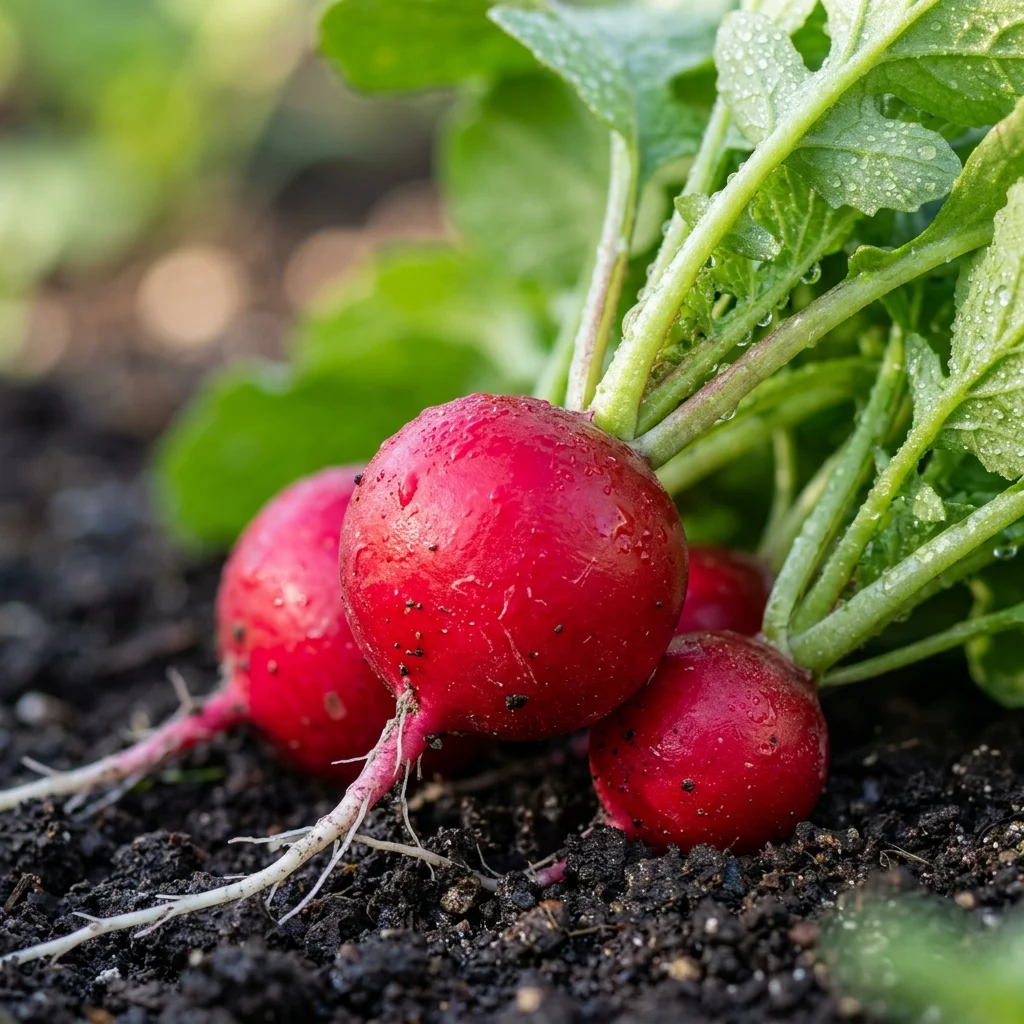
How to Identify Radish
Radish (Raphanus sativus) is a highly valued edible crop globally. Recognizing its definitive vegetative and fruit/vegetable structures is key to successful companion growing and harvesting.
-
✔
Key Visual Features: Low-growing, compact annuals forming small ground-hugging rosettes.
-
✔
Leaf & Stems: Alternate, deeply lobed green leaves with hairy textures; tiny white-purple 4-petal flowers.
-
✔
Fruit/Edible Part: Small, round or elongated bright red or white succulent roots, highly crisp and spicy.
Complete Growing & Harvesting Guide
Follow our detailed scientific agricultural cultivation guide to keep your Radish thriving and high-yielding.
Common Diseases & Treatment
Root Splitting (Physiological)
Symptoms: Radish roots split open vertically, exposing the interior to soil rot and making the flesh tough and unpalatable.
Pithiness (Physiological)
Symptoms: Roots become hollow, spongy, dry, and lose their crisp, juicy crunch, turning woody and bitter.
Frequently Asked Questions
Why are my radishes growing all leaves but no roots?
High nitrogen fertilizer, over-crowding (lack of thinning), or hot summer weather cause radishes to fail to swell their roots.
How fast do radishes grow from seed?
Extremely fast! Cherry radishes are ready to harvest in just 21 to 25 days from sowing, making them the fastest garden crop.
Are radish leaves edible?
Yes! Radish greens are highly nutritious, tasting slightly peppery. Harvest younger, tender leaves for salads or pestos.
Are radishes safe for pet dogs?
Yes. Radishes are completely non-toxic and pet-safe in small quantities. They provide healthy dietary fiber and potassium.