Oryza sativa

Rice Growing & Harvesting Guide

Rice (Oryza sativa), the aquatic lifeblood of global nutrition, is a fascinating and highly productive crop. Famously grown in flooded paddies, this unique semi-aquatic grass thrives in high humidity and clay soils, requiring specialized flood-irrigation and late draining.


Sunlight Icon
Sunlight Full Sun (6+ hours)
Watering Icon
Watering Continuous / Flooded
Soil Mix Icon
Soil pH Heavy Clay, Water-Retentive (pH 5.5-6.5)
Temperature Icon
Target Temp 20°C - 35°C
Toxicity Warning Icon
Toxicity Pet Friendly (Non-toxic)
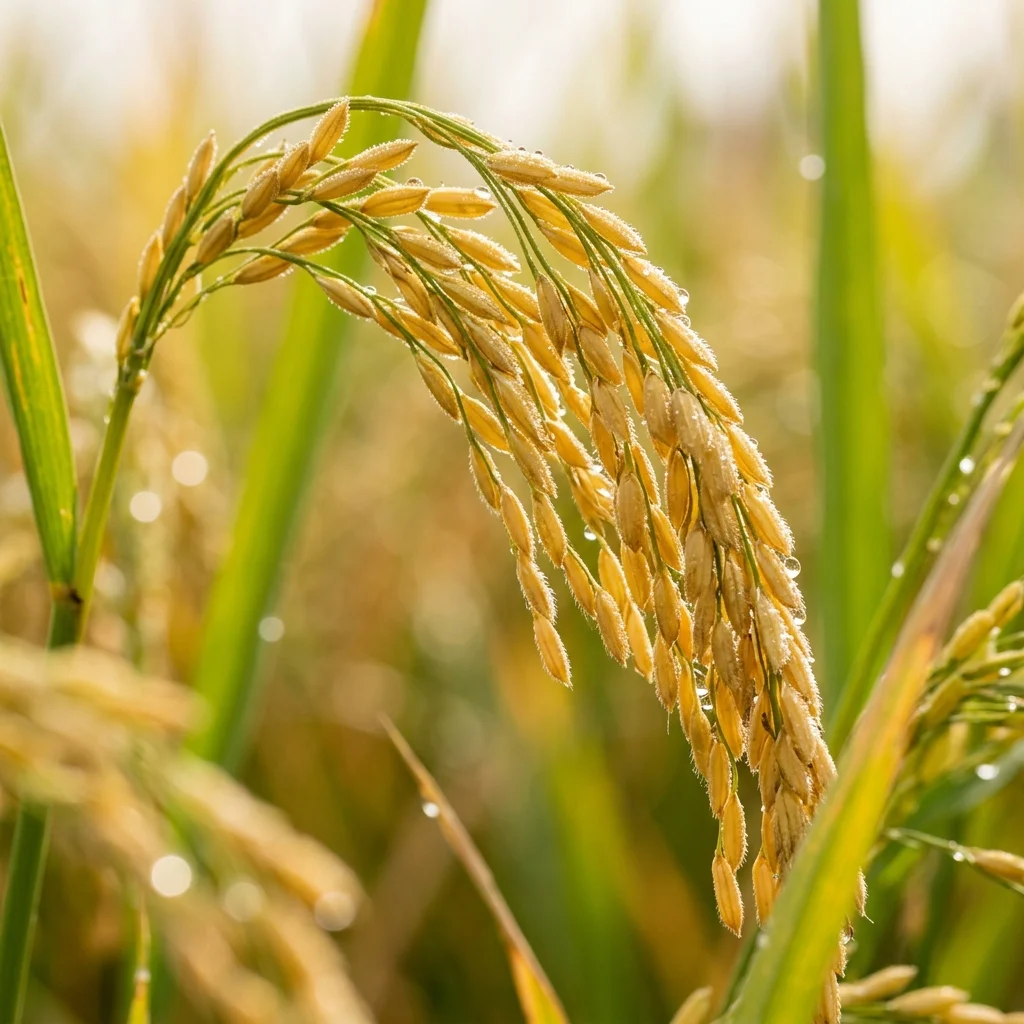
Botanical macro photography of Rice (Oryza sativa) - Plant AI care database

How to Identify Rice

Rice (Oryza sativa) is a highly valued edible crop globally. Recognizing its definitive vegetative and fruit/vegetable structures is key to successful companion growing and harvesting.

  • Key Visual Features: Tufted annual semi-aquatic grass with hollow, erect stalks growing 3 to 5 feet high.
  • Leaf & Stems: Long, flat, rough-edged green leaf blades; branched arching terminal panicles.
  • Fruit/Edible Part: Arching panicle loaded with small golden-brown grains enclosed in rough, fibrous hulls.
💡 Plant AI Tip: Snap a photo with Plant AI to identify garden veggies and diagnose leaf spot diseases in 1 second.

Complete Growing & Harvesting Guide

Follow our detailed scientific agricultural cultivation guide to keep your Rice thriving and high-yielding.

Requires constant flooding. Maintain 2 to 4 inches of standing water over the soil bed throughout the active growing season.
No pruning required. Allow water-growing grass stalks to develop in dense, flooded clusters.
Apply nitrogen-rich organic feed early in the season. Side-dress with high-potassium kelp meal once flower panicles emerge.
Demands absolute full sun, requiring 6+ hours of direct unfiltered sunlight to fuel tropical panicle ripening.
Requires heavy clay or organic clay-loam that holds water indefinitely. Intolerant of fast-draining sandy beds.
Sprout seeds in water, then sow 0.5 inch deep in wet mud. Once seedlings reach 6 inches, flood the bed with 2 inches of water.
Heat-loving tropical crop. Thrives between 20°C and 35°C; growth halts, and plants fail to set seed below 15°C.
Space seedlings 6 inches apart. Flooding acts as a natural weed control by drowning dry-land weed seeds.
Prone to stem borers and leafhoppers. Maintain clean paddy water and encourage natural aquatic predators like frogs.
Susceptible to Rice Blast and Brown Spot. Drain fields late in the season to dry out the soil.
Harvest when panicles turn a golden-yellow and sag downward, and drain the flooded bed completely 2 weeks prior to cutting.

Is your Rice leaves turning yellow, spotted or dying?

Protect your kitchen garden. Take a photo with Plant AI to diagnose pests and crop diseases instantly.

Diagnose My Crop

Common Diseases & Treatment

Rice Blast (Magnaporthe)

Symptoms: Foliage develops spindle-shaped lesions with gray centers and reddish-brown borders; panicle stems rot, causing heads to drop.

Action: Avoid excessive nitrogen feed, plant resistant cultivars, and apply preventative organic copper fungicide.

Brown Spot (Bipolaris)

Symptoms: Leaves and developing grains show numerous tiny, oval brown spots resembling sesame seeds, reducing grain weight.

Action: Improve soil fertility, avoid potassium deficiencies, and drain paddies promptly before the final harvest.

Frequently Asked Questions

Do I have to grow rice in standing water?

While rice can grow in dry land (upland rice), flooding the paddies with 2-4 inches of water is highly recommended to control weeds naturally.

When should I drain my rice bed?

Drain standing water completely 2 weeks before harvest. This dries the soil for easier cutting and accelerates grain ripening.

How do I process harvested raw rice for eating?

Cut golden stalks, dry them, thresh to separate grains, and mill to remove the tough outer hull. Polishing removes the brown bran to make white rice.

Is white or brown rice safe for pet cats and dogs?

Yes! Fully cooked, plain white or brown rice is completely non-toxic and highly digestible for pets, often used to soothe upset dog stomachs.

Harvest bountiful greens. Grow healthy edibles today!

Get Started for Free