Sunflower Seed Growing & Harvesting Guide
Sunflower Seed (Helianthus annuus), the towering golden sentinel of summer gardens, is a highly rewarding crop to cultivate. Valued for its oil-rich seeds and cheerful massive blooms, this sturdy annual demands deep loamy soils, heavy organic composting, and bird-netting care.



How to Identify Sunflower Seed
Sunflower Seed (Helianthus annuus) is a highly valued edible crop globally. Recognizing its definitive vegetative and fruit/vegetable structures is key to successful companion growing and harvesting.
-
✔
Key Visual Features: Tall, thick, hairy upright annual stalk growing 6 to 12 feet tall.
-
✔
Leaf & Stems: Large, coarse heart-shaped leaves; produces massive, flat disc-like yellow flower heads.
-
✔
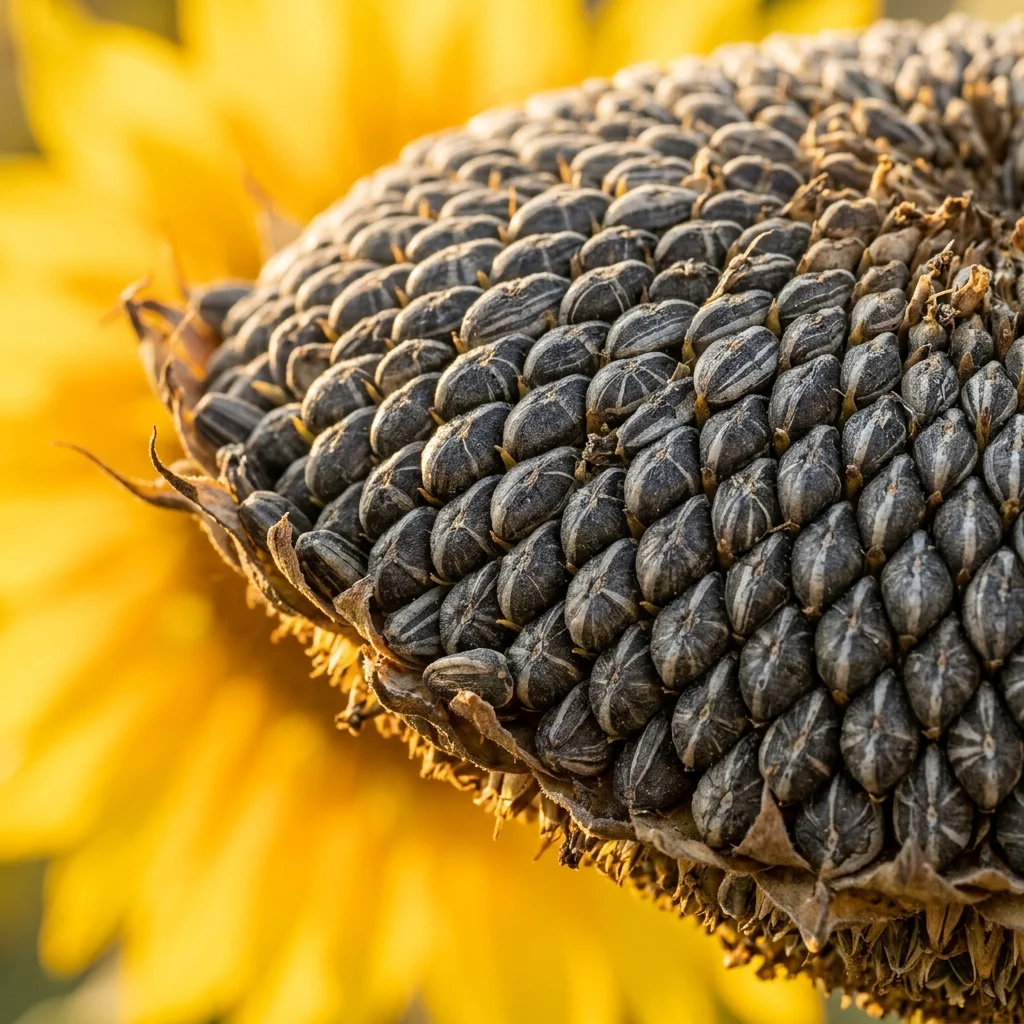
Fruit/Edible Part: Dense flat head filled with concentric rings of tear-shaped black-and-white striped seed hulls.
Complete Growing & Harvesting Guide
Follow our detailed scientific agricultural cultivation guide to keep your Sunflower Seed thriving and high-yielding.
Common Diseases & Treatment
Sclerotinia Head Rot (Sclerotinia)
Symptoms: The back of the flower head turns soft, water-soaked, and decays, forming white cottony mold and hard black pellets.
Rust (Puccinia)
Symptoms: Lower leaves develop small, dusty cinnamon-brown pustules on their undersides, expanding to cause leaf drying.
Frequently Asked Questions
Q: When are sunflower seeds ready to harvest?
A: When the back of the seed head turns from green to yellow-brown, and the seeds look plump with hard black-and-white striped hulls.
Q: How do I protect mature sunflower heads from birds and squirrels?
A: Tie a breathable mesh bag, cheesecloth, or lightweight paper bag over the entire flower head once the yellow petals begin to wither.
Q: Why are the lower leaves of my sunflower turning yellow and drying up?
A: This is normal aging as the plant directs energy to ripening the seed head. However, ensure it is not due to underwatering or rust infection.
Q: Are sunflower seeds safe for pet cats and dogs?
A: Yes! Plain, unsalted, shelled sunflower seeds are highly nutritious and completely non-toxic for dogs and cats in moderation.