Zea mays var. saccharata

Sweet Corn Growing & Harvesting Guide

Sweet Corn (Zea mays var. saccharata), the summer gold of the home garden, is a highly rewarding crop to cultivate. Prized for its sugary, tender kernels and towering stalks, this classic wind-pollinated grass requires block planting rather than single rows to guarantee complete pollination.


Sunlight Icon
Sunlight Full Sun (6+ hours)
Watering Icon
Watering High / Consistent
Soil Mix Icon
Soil pH Rich, Nitrogen-Heavy Loam (pH 6.0-6.8)
Temperature Icon
Target Temp 18°C - 35°C
Toxicity Warning Icon
Toxicity Pet Friendly (Non-toxic)
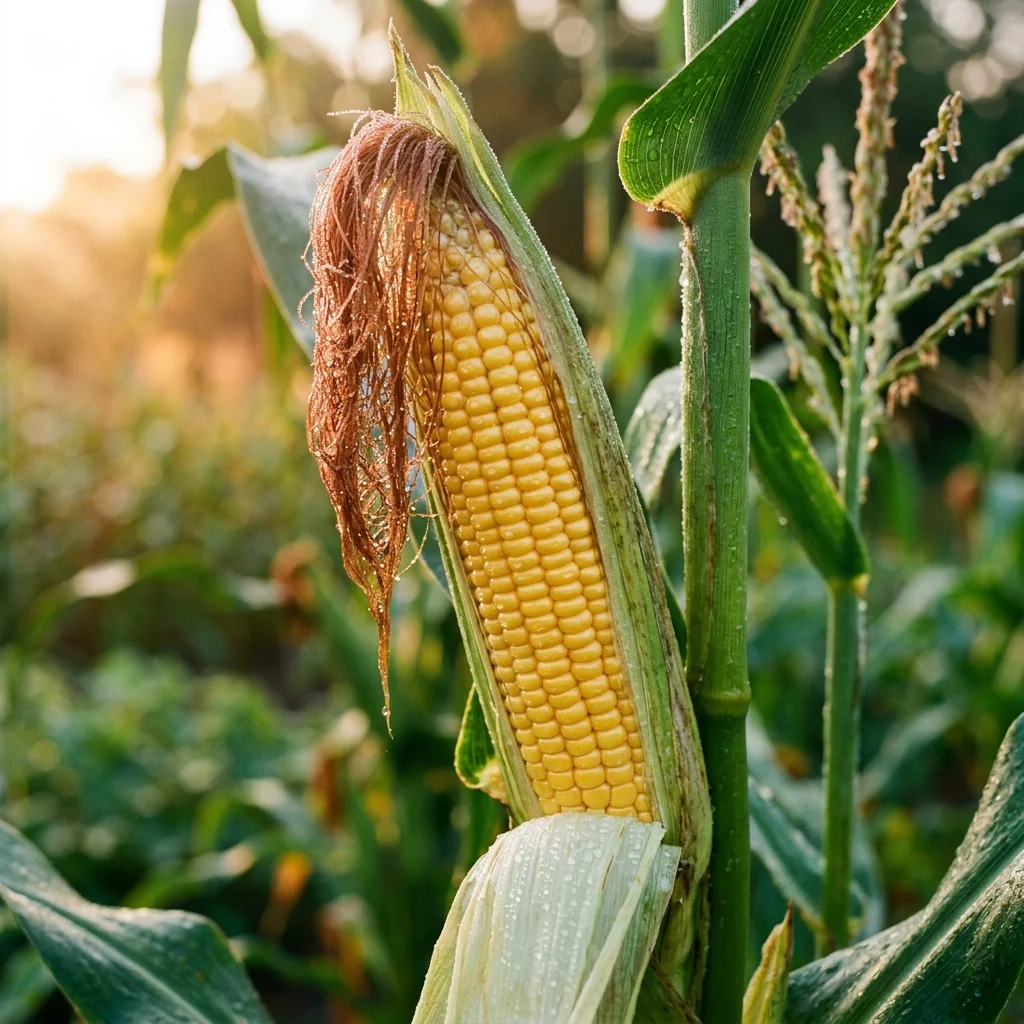
Botanical macro photography of Sweet Corn (Zea mays var. saccharata) - Plant AI care database

How to Identify Sweet Corn

Sweet Corn (Zea mays var. saccharata) is a highly valued edible crop globally. Recognizing its definitive vegetative and fruit/vegetable structures is key to successful companion growing and harvesting.

  • Key Visual Features: Tall, robust, erect grass stalks growing up to 8 feet high with broad leaves.
  • Leaf & Stems: Feathery male tassels at the top; female ears with silky threads at leaf joints.
  • Fruit/Edible Part: Large cylindrical ears packed with sweet, juicy yellow or white kernels under green husks.
💡 Plant AI Tip: Snap a photo with Plant AI to identify garden veggies and diagnose leaf spot diseases in 1 second.

Complete Growing & Harvesting Guide

Follow our detailed scientific agricultural cultivation guide to keep your Sweet Corn thriving and high-yielding.

Keep soil evenly moist, providing 1.5 inches of water weekly. Water is critical during tasseling and silking stages.
Prune away small side-shoots (tillers) at the base of the stalks to improve light penetration and wind movement.
Heavy nitrogen feeder. Incorporate aged manure before planting, and side-dress with high-nitrogen fertilizer when stalks are knee-high.
Requires absolute full sun, minimum 6 to 8 hours daily. Vital to build sweet carbohydrates in kernels.
Prefers deep, rich, moisture-retentive loam enriched with high organic compost and manure (pH 6.0-6.8).
Plant in blocks of at least 4 short rows rather than one long single row. Sow seeds 1 inch deep, spaced 12 inches apart.
Thrives in warm summer conditions. Growth stops below 13°C; plant is highly frost-sensitive.
Space corn plants 12 inches apart in rows spaced 30 inches apart to allow sufficient wind-pollination.
Watch for corn earworms. Proactively apply a drop of organic mineral oil to the silk at the tip of each ear once silks turn brown.
Susceptible to Common Smut and Rust. Remove infected parts immediately; do not compost smut galls.
Harvest during the 'milk stage' when silks turn dark brown and squeezing a kernel squirts sweet milky sap.

Is your Sweet Corn leaves turning yellow, spotted or dying?

Protect your kitchen garden. Take a photo with Plant AI to diagnose pests and crop diseases instantly.

Diagnose My Crop

Common Diseases & Treatment

Common Smut (Ustilago)

Symptoms: Galls develop on ears, stalks, and leaves, turning from silver-white into black powdery spore sacks.

Action: No chemical control. Cut and destroy infected galls before they rupture and release black spores; practice crop rotation.

Common Rust (Puccinia)

Symptoms: Foliage develops small, oval reddish-brown powdery pustules on both upper and lower leaf surfaces, causing early yellowing.

Action: Grow resistant cultivars, water soil base directly, and spray organic sulfur fungicide proactively.

Frequently Asked Questions

Why are my corn ears missing kernels or half-empty?

This is due to poor pollination. Planting corn in single rows rather than blocks prevents wind from carrying pollen from tassels to silks.

What is the 'milk stage' for sweet corn?

This is the peak sweetness harvest window. When you puncture a kernel, it should release a milky liquid. Clear sap means underripe; thick paste means overripe.

Should I remove the tillers or suckers at the base of corn?

No. Removing base tillers is generally unnecessary and can actually reduce the plant's overall photosynthetic ability and root anchorage.

Is sweet corn safe for cats and dogs?

Yes! Sweet corn kernels are completely non-toxic and safe for pets. (Note: Never feed the corn cob to dogs as it is a dangerous choking hazard).

Harvest bountiful greens. Grow healthy edibles today!

Get Started for Free