Swiss Chard Growing & Harvesting Guide
Swiss Chard (Beta vulgaris var. cicla) is the spectacular, high-yielding rainbow of the home vegetable garden. Prized for its exceptionally colorful, succulent leaf stalks and highly textured crinkled leaves, this incredibly hardy biennial provides abundant fresh greens year-round.





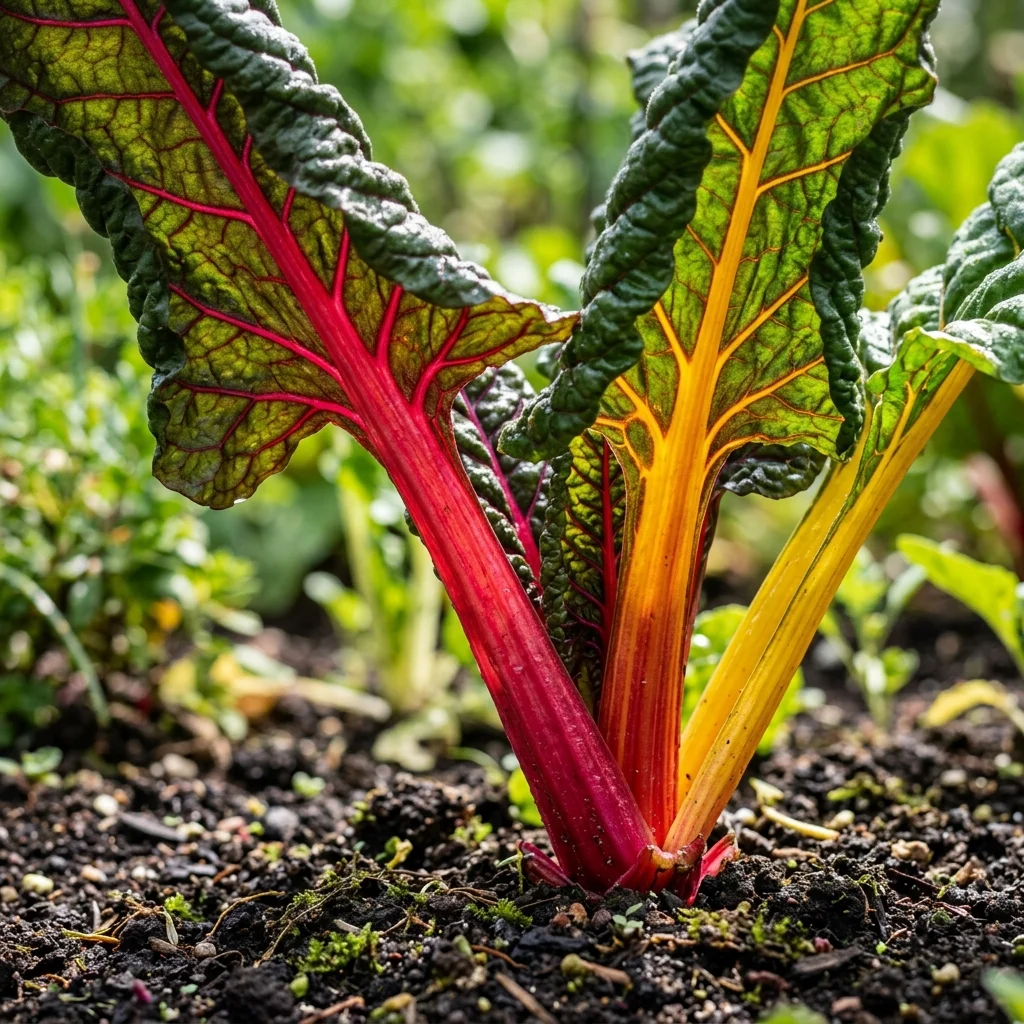
How to Identify Swiss Chard
Swiss Chard (Beta vulgaris var. cicla) is a highly valued edible crop globally. Recognizing its definitive vegetative and fruit/vegetable structures is key to successful companion growing and harvesting.
-
✔
Key Visual Features: Large, upright herbaceous plants forming a dense rosette cluster of towering leaves.
-
✔
Leaf & Stems: Thick, highly colorful (bright red, yellow, orange, white) leaf stalks with broad succulent ribs.
-
✔
Fruit/Edible Part: Deeply textured, crinkled dark green or purple leaves, highly crisp and mild-flavored.
Complete Growing & Harvesting Guide
Follow our detailed scientific agricultural cultivation guide to keep your Swiss Chard thriving and high-yielding.
Common Diseases & Treatment
Cercospora Leaf Spot (Fungal)
Symptoms: Leaves develop small, circular, light brown spots with dark purple-red borders, expanding and causing leaf collapse.
Leafminer Infestation
Symptoms: Leaves develop winding white trails or large paper-like tan blotches caused by larvae chewing inside leaf layers.
Frequently Asked Questions
Q: Does Swiss chard survive the summer heat and winter freeze?
A: Yes! Swiss chard is exceptionally resilient, standing up to summer heat without bolting, and surviving winter down to -5°C.
Q: How do I harvest Swiss chard so it keeps growing?
A: Harvest only the outer mature leaves by cutting them near the base. Leave the center growing bud intact to continuously grow new foliage.
Q: What is rainbow chard?
A: Rainbow chard is not a separate species, but a colorful mix of different Swiss chard varieties (red, yellow, orange, and white stems) planted together.
Q: Are Swiss chard leaves toxic to cats?
A: No. Swiss chard is completely non-toxic and pet-safe in small quantities. Cook or steam lightly before feeding to avoid stomach gas.