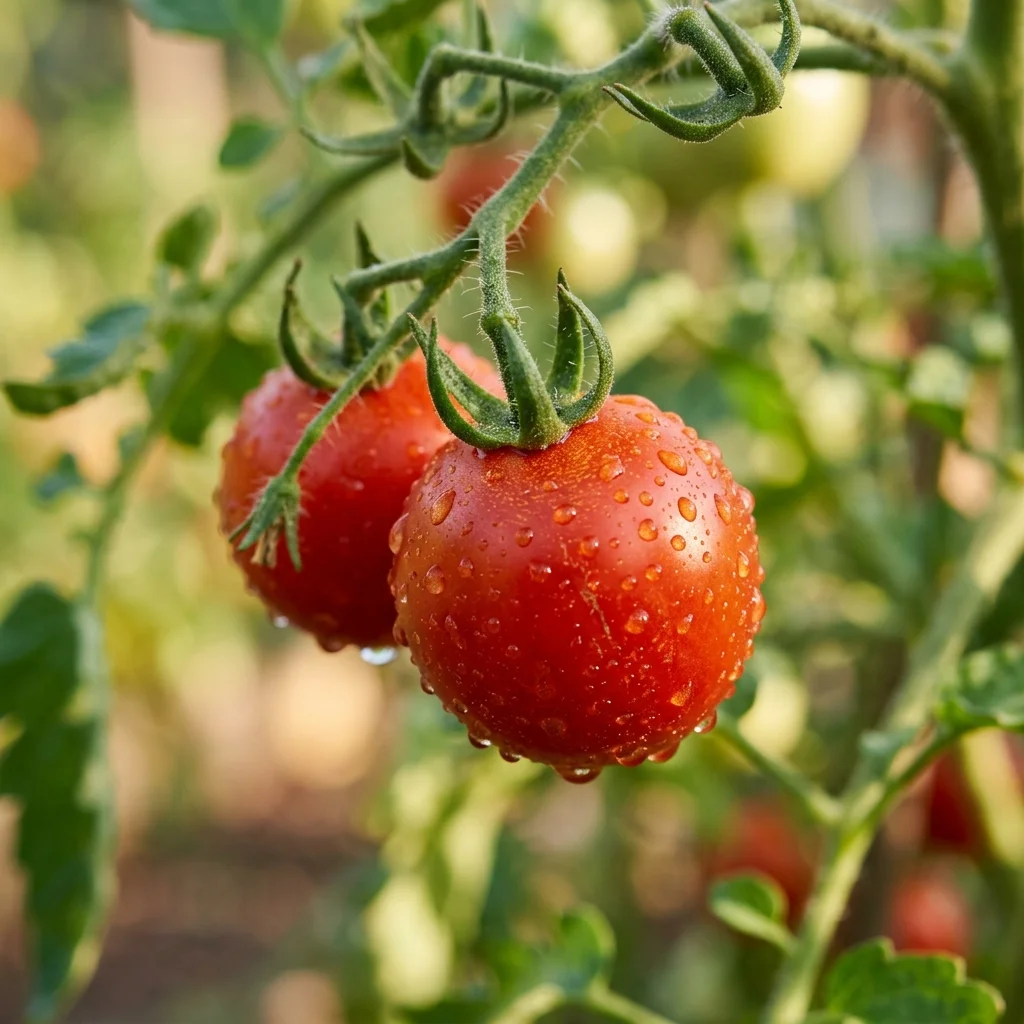
Solanum lycopersicum

Tomato Growing & Harvesting Guide

Tomato (Solanum lycopersicum), the garden legend, is the most cherished edible crop globally. Highly prized for its juicy, vibrant red fruits, this warm-season nightshade vine thrives under structured trellising, bringing succulent summer flavors to home gardens.


Sunlight Icon
Sunlight Full Sun (6-8 hours)
Watering Icon
Watering Deep / Regular
Soil Mix Icon
Soil pH Rich Loam (pH 6.0-6.8)
Temperature Icon
Target Temp 21°C - 32°C
Toxicity Warning Icon
Toxicity Toxic to Pets (Foliage)
Botanical macro photography of Tomato (Solanum lycopersicum) - Plant AI care database

How to Identify Tomato

Tomato (Solanum lycopersicum) is a highly valued edible crop globally. Recognizing its definitive vegetative and fruit/vegetable structures is key to successful companion growing and harvesting.

  • Key Visual Features: Robust, hairy green climbing vines emitting a distinct pungent, botanical scent upon touch.
  • Leaf & Stems: Pinnately compound deeply-lobed leaves; produces small, bright yellow star-like flowers.
  • Fruit/Edible Part: Round, fleshy pulpy berries changing from green to glossy red (or yellow/purple) upon ripening.
💡 Plant AI Tip: Snap a photo with Plant AI to identify garden veggies and diagnose leaf spot diseases in 1 second.

Complete Growing & Harvesting Guide

Follow our detailed scientific agricultural cultivation guide to keep your Tomato thriving and high-yielding.

Irrigate deeply at the base twice a week. Ensure soil stays consistently moist. Avoid overhead watering to reduce fungal leaf spots.
Pinch off side suckers growing in leaf joints regularly to focus nutrients. Tie main vine securely to stakes or cages.
Apply low-nitrogen, high-phosphorus organic fertilizer once every 3-4 weeks once fruit sets to boost yield.
Demands full, intense, direct sunlight for at least 6-8 hours daily. Low light causes weak vine growth and poor fruit set.
Rich, loose, deeply loamy soil loaded with high-quality organic compost. Drains extremely fast to protect feeder roots.
Sow seeds indoors 6-8 weeks before spring frost. Transplant deep in the soil, burying stems up to the first set of leaves.
Thrives in warm air (21°C-32°C). Extremely sensitive to cold drafts; protect or cover if night temperatures drop below 10°C.
Space tomato vines 24-36 inches apart in rows to maximize airflow and avoid rapid fungal blight transmission.
Watch out for large green hornworms, aphids, and whiteflies. Handpick hornworms or apply organic neem oil.
Susceptible to Early Blight and Fusarium Wilt. Prune lower foliage to improve aeration and rotate crops every 3 years.
Harvest when tomatoes are uniformly colored, slightly soft to gentle squeeze, and easily snap off the vine attachment stem.

Is your Tomato leaves turning yellow, spotted or dying?

Protect your kitchen garden. Take a photo with Plant AI to diagnose pests and crop diseases instantly.

Diagnose My Crop

Common Diseases & Treatment

Blossom End Rot

Symptoms: Bottom of the ripening fruits turn flat, leathery, and dark brown or black due to calcium deficiency.

Action: Water consistently to maintain stable soil moisture and spray foliage with liquid organic calcium.

Early Blight (Fungal)

Symptoms: Lower mature leaves develop dark brown concentric target-like rings, yellowing and dropping off quickly.

Action: Prune off infected lower leaves instantly, apply thick mulch, and spray with organic copper fungicide.

Frequently Asked Questions

Why are my tomato flowers falling off without setting fruit?

Extreme heat (above 32°C) or cold nights (below 13°C) disrupt pollen viability, causing blossom drop. Provide slight afternoon shade.

Can I grow tomatoes successfully in pots?

Yes! Choose compact 'determinate' bush varieties and plant them in deep 5-gallon containers with drainage holes and chunky soil.

Why are my ripening tomatoes cracking open on the vine?

Rapid moisture changes (heavy rain after drought) cause the inside of the fruit to expand faster than the skin. Water consistently.

Are tomato leaves toxic to dogs and cats?

Yes. The green leaves and stems contain solanine, a glycoalkaloid which is highly toxic to pets, causing drooling and stomach upset.

Harvest bountiful greens. Grow healthy edibles today!

Get Started for Free