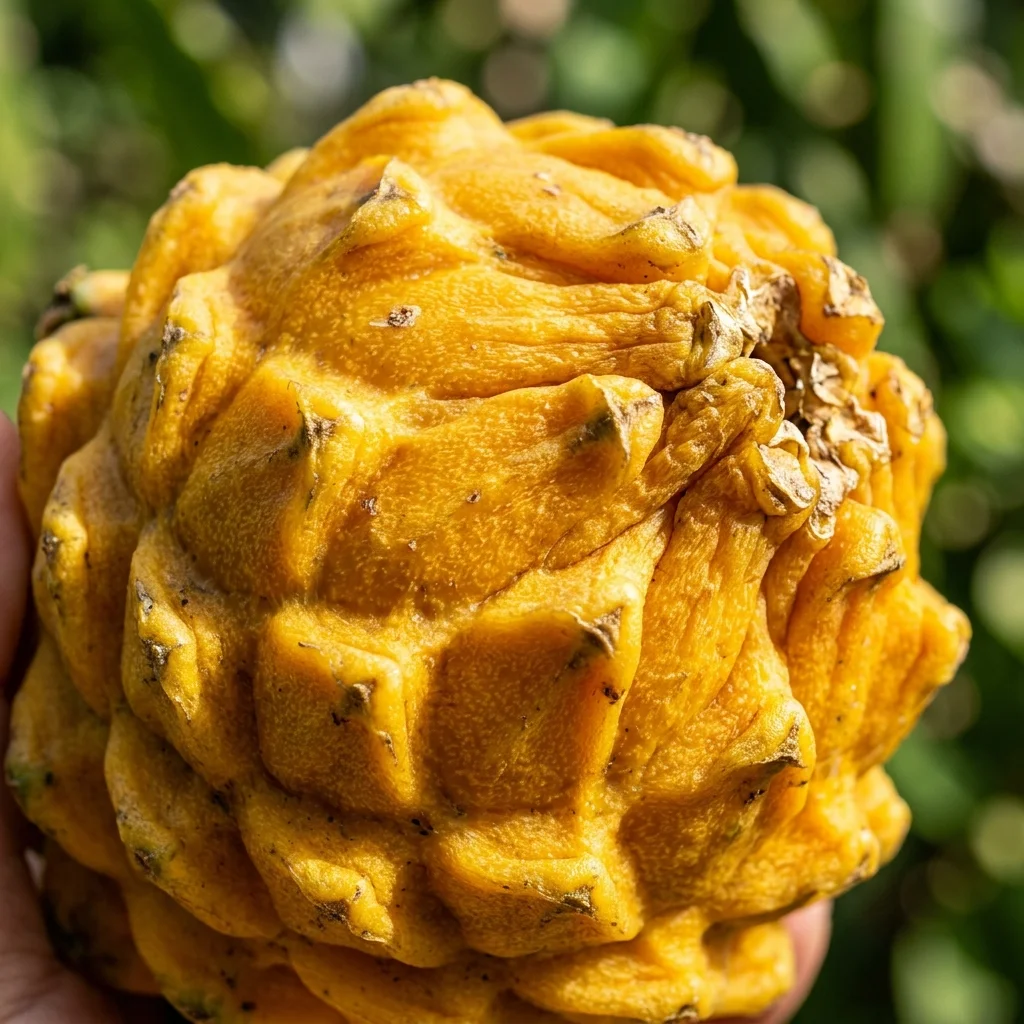
Hylocereus megalanthus

Yellow Dragon Fruit Growing & Harvesting Guide

Yellow Dragon Fruit (Hylocereus megalanthus), the sweet 'nest-fruit' of the cactus family, is a highly prized climbing succulent. Prizes for its intensely sweet, honey-flavored white pulp and golden scales, this exotic climber requires cement-post trellising and sharp spine brushing.


Sunlight Icon
Sunlight Full Sun (6+ hours)
Watering Icon
Watering Low / Moderate
Soil Mix Icon
Soil pH Sandy, Fast-Draining Cactus Mix (pH 6.0-7.0)
Temperature Icon
Target Temp 15°C - 35°C
Toxicity Warning Icon
Toxicity Pet Friendly (Non-toxic)
Botanical macro photography of Yellow Dragon Fruit (Hylocereus megalanthus) - Plant AI care database

How to Identify Yellow Dragon Fruit

Yellow Dragon Fruit (Hylocereus megalanthus) is a highly valued edible crop globally. Recognizing its definitive vegetative and fruit/vegetable structures is key to successful companion growing and harvesting.

  • Key Visual Features: Climbing, vining epiphytic cactus with three-angled jointed fleshy green stems.
  • Leaf & Stems: Stems are armed with short spines; produces massive, nocturnal fragrant white blossoms.
  • Fruit/Edible Part: Oval bright yellow fruit covered in scale-like protrusions that bear long sharp spines before harvest.
💡 Plant AI Tip: Snap a photo with Plant AI to identify garden veggies and diagnose leaf spot diseases in 1 second.

Complete Growing & Harvesting Guide

Follow our detailed scientific agricultural cultivation guide to keep your Yellow Dragon Fruit thriving and high-yielding.

Water moderately. Yellow dragon fruit is a cactus; water deeply only when the top 3 inches of soil dry completely.
Prune away weak, overlapping vining stems. Maintain a single main trunk climbing up to the trellised T-frame top.
Apply balanced organic cactus fertilizer monthly. Top-dress with high-potassium bone meal once spring flower buds appear.
Requires full sun (6+ hours daily) to ripen the sweet yellow fruits. Protect from searing afternoon sun in desert zones.
Requires extremely fast-draining, sandy cactus compost mixed with organic compost (pH 6.0-7.0). Intolerant of muddy soil.
Plant stem cuttings in spring. Bury cuttings 2 inches deep in loose sandy mix; keep soil slightly damp until rooted.
Prefers warm subtropical climates. Highly frost-sensitive; growth halts below 10°C and severe frost kills the succulent stems.
Plant cuttings 12 inches apart next to a heavy-duty single cement post with a top support frame for cascading branches.
Prone to ants, scale insects, and birds. Wrap maturing golden fruits in breathable mesh sleeves.
Susceptible to Stem Rot and Canker. Ensure excellent drainage and avoid overhead watering.
Harvest when fruits turn a solid bright yellow. Crucially, brush off the long sharp outer spines using a stiff brush before cutting.

Is your Yellow Dragon Fruit leaves turning yellow, spotted or dying?

Protect your kitchen garden. Take a photo with Plant AI to diagnose pests and crop diseases instantly.

Diagnose My Crop

Common Diseases & Treatment

Dragon Fruit Stem Rot (Enterobacter)

Symptoms: Fleshy three-angled stems develop soft, yellow-brown watery patches that rapidly turn mushy and exude a foul odor.

Action: Cut away rotten stem segments using sterilized shears, improve air circulation, and reduce watering immediately.

Dragon Fruit Canker (Neoscytalidium)

Symptoms: Fleshy stems and developing golden fruits develop small, circular reddish-brown spots that expand into grey-corky cankers.

Action: Prune heavily infected stem segments, clear fallen debris, and spray copper fungicide proactively during damp weather.

Frequently Asked Questions

Why is Yellow Dragon Fruit much sweeter than Red Dragon Fruit?

Yellow dragon fruit (megalanthus) has a much higher sugar concentration (Brix level over 20%), giving it a delicious honey-like sweetness.

How do I safely harvest Yellow Dragon Fruit?

Maturing yellow dragon fruits are covered in long sharp spines. Brush off the spines using a stiff brush or glove before cutting the fruit.

Why are my dragon fruit cactus stems turning soft and yellow?

This is due to stem rot, caused by overwatering or compacted soil holding too much moisture. Let the soil dry completely.

Is Yellow Dragon Fruit safe for dogs and cats?

Yes! Yellow dragon fruit is completely non-toxic and safe for pets. Sliced dragon fruit makes a sweet, hydrating treat for cats and dogs.

Harvest bountiful greens. Grow healthy edibles today!

Get Started for Free