Alligator Weed Identification & Control
Alligator Weed, botanically known as Alternanthera philoxeroides, is an exceptionally aggressive, highly noxious perennial weed in the Amaranthaceae family. Native to South America but highly invasive globally, it poses a severe threat to waterways and riparian zones. Thriving in both aquatic and terrestrial environments, it forms dense, thick, floating mats on water surfaces that clog canals and exclude native flora. It features hollow, succulent, reddish-green creeping stems and small, white, clover-like flower heads. It reproduces vigorously via broken stem fragments, making physical cutting highly counterproductive as every severed node sprouts into a new clone.





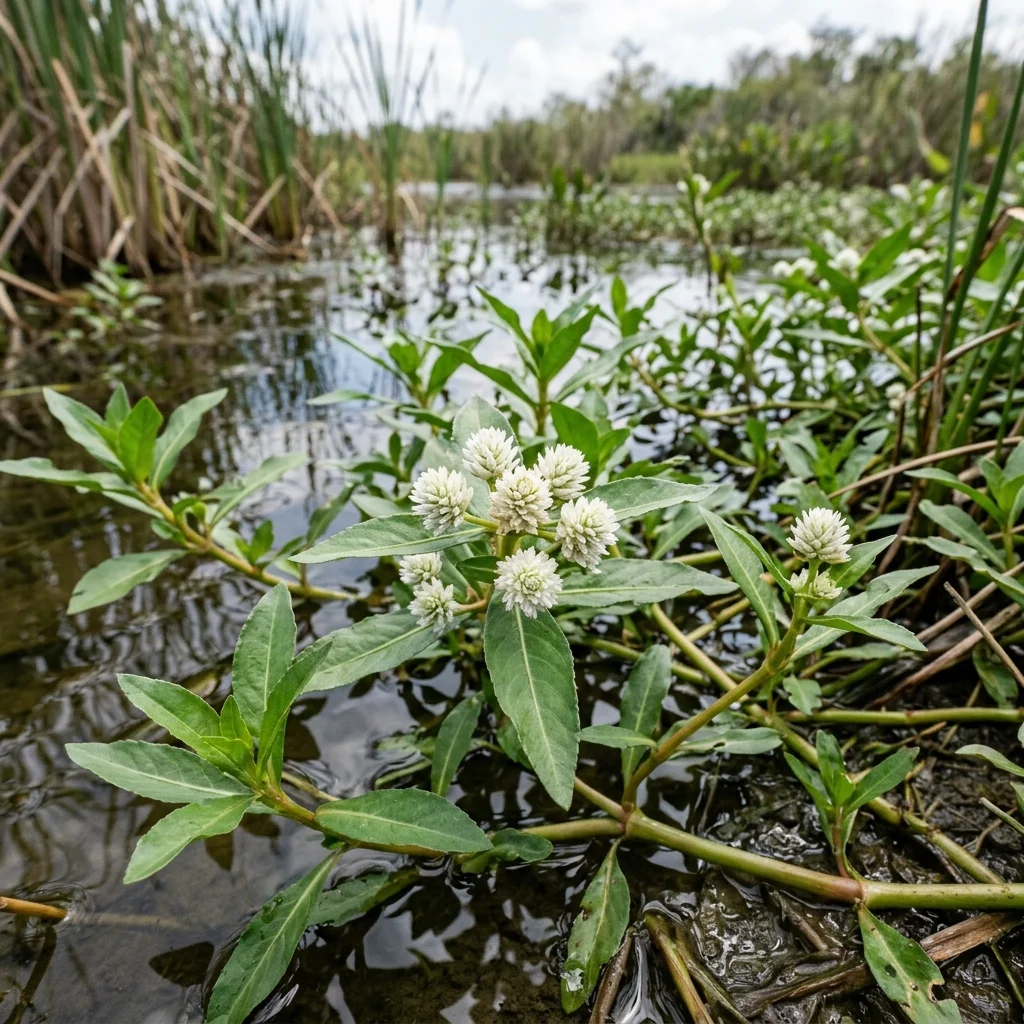
How to Identify Alligator Weed
A creeping perennial with hollow succulent stems, opposite smooth leaves, and single, round white clover-like flower heads, bleeding zero sap.
-
✔
Hollow Creeping Stems: Smooth, fleshy, succulent stems (up to 3 feet long) are distinctly hollow and often show a reddish-green hue, rooting aggressively at nodes.
-
✔
White Clover-Like Heads: Tiny, white, clover-like flower heads (1.5 cm wide) sit on long stalks, composed of paper-like bracts.
-
✔
Opposite Lance Leaves: Narrow, lance-shaped green leaves (2 to 7 cm long) grow in neat, opposite pairs along the stems.
Complete Care & Management Guide
Access highly technical, scientific management directives to control or cultivate Alligator Weed effectively.
Common Diseases & Treatment
Canal Flow Blockage
Symptoms: Thick, interwoven floating mats completely block slow-moving canals, creating stagnant pools and encouraging mosquito breeding.
Wetland Oxygen Suffocation
Symptoms: Dense water hyacinth and alligator weed cover blocks sunlight, causing rapid drop in water oxygen and localized fish die-offs.
Frequently Asked Questions
Why is Alligator Weed so difficult to eradicate physically?
Its hollow stems are highly brittle and root aggressively at every single node. If you pull or cut it, the stems break into fragments that float downstream, establishing new colonies rapidly.
Can Alligator Weed grow on dry land?
Yes. It is a dual-environment threat. While it thrives as a floating aquatic mat, it easily survives dry seasons on terrestrial soils, developing tough woody roots that drill deep.
Is it toxic to animals?
It is generally non-toxic but highly unpalatable to livestock. However, the dense mats block livestock access to clean drinking water, making it a severe pasture nuisance.
What is the best way to get rid of it?
Releasing alligator weed flea beetles (Agasicles hygrophila) is the absolute gold standard of organic, long-term biological control, as they quickly consume the vegetative biomass.