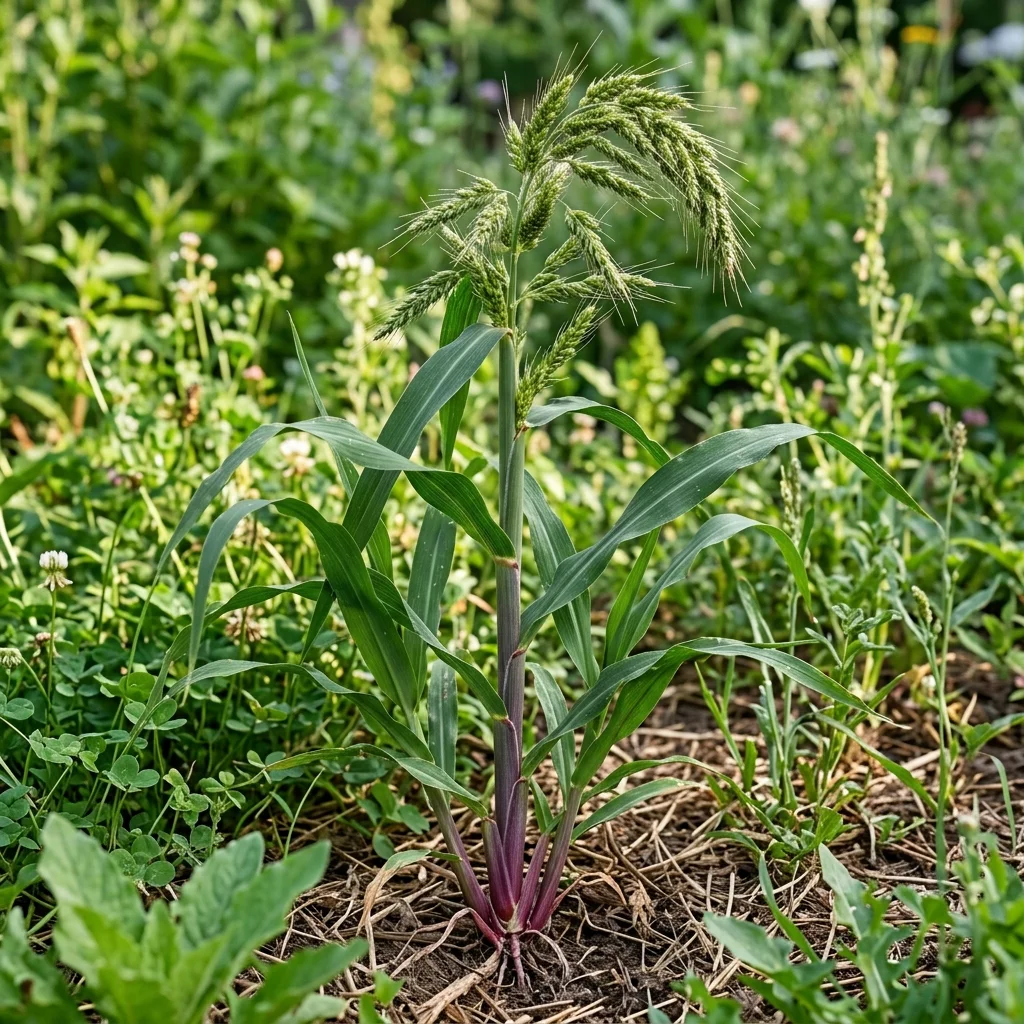
Echinochloa crus-galli

Barnyardgrass Identification & Control

Barnyardgrass is an exceptionally aggressive, thick-stemmed summer annual grassy weed native to Eurasia but globally distributed. A major threat to agriculture and home gardens, it thrives vigorously in moist, rich, or poorly drained soils. It features a coarse, clumping growth habit with thick, flat stems that lie flat at the base before growing upright. Lacking a ligule or auricles at the leaf collar, it produces heavy, purplish, nodding seed heads packed with flat grain seeds.


Sunlight Icon
Sunlight Full Sun
Watering Icon
Watering Tolerance Moderate to High
Soil Mix Icon
Soil Adaptability Wet Clay / Moist Loam / Rich Soil
Temperature Icon
Growth Temp 15°C - 40°C
Toxicity Danger Icon
Danger / Toxicity Pet Safe / Agricultural Pest
Botanical macro photography of Barnyardgrass (Echinochloa crus-galli) - Plant AI care and control database

How to Identify Barnyardgrass

A coarse, thick-stemmed clumping annual grass with hairless leaf blades, a completely smooth leaf collar (no ligule or auricles), and heavy, purplish nodding seed spikes.

  • Smooth Leaf Collar (No Ligule): The leaf collar is completely smooth and hairless, entirely lacking a ligule (ring of hairs) or auricles, a key botanical identifier.
  • Flat Purplish Stems: Stems are distinctly flattened, coarse, thick, and frequently display a deep reddish-purple color near the soil surface.
  • Nodding Purplish Spikes: Heavy, branched, nodding seed heads (10 to 20 cm) that carry bristly, purplish spikelets packed with flat, hard seeds.
💡 Plant AI Tip: Barnyardgrass is a highly aggressive nutrient thief! It can absorb up to 80% of available soil nitrogen, starving nearby garden flowers, lawn turf, and vegetable crops.

Complete Care & Management Guide

Access highly technical, scientific management directives to control or cultivate Barnyardgrass effectively.

Highly adapted to wet, soggy soils. It grows vigorously in low-lying turf areas, overwatered garden beds, and pond margins. Improving soil drainage helps control it.
Controlled moderately by mowing. Regular mowing prevents the tall stems from flowering and seeding, but the plant will adapt by growing shorter stems closer to the ground.
An aggressive nitrogen accumulator. It robs nitrogen from the soil with high efficiency. Avoid over-fertilizing damp, bare lawn spots, as this will only feed the weed.
Requires Full Sun. It cannot tolerate shade and will fail to grow under dense tree canopies or beneath competitive, tall garden shrubs.
Prefers moist to wet loam, rich clay, and damp cultivated gardens. It struggles in extremely dry, sandy soil with low water tables.
Reproduces entirely by seeds. A single plant can produce up to 40,000 seeds that are easily spread by water, lawn mowers, and birds.
A summer annual. Germinates in late spring, grows aggressively in hot summer humidity, and dies out completely with the winter frost, leaving seeds behind.
Features a shallow but extremely dense, wide fibrous root system that clings tightly to moist soil clumps. Hand-pulling is highly effective when the soil is wet.
Occasionally targeted by leafhoppers, though pests rarely cause structural damage to this highly robust annual grass.
Subject to **Leaf Blight** and **Smut Fungus** in wet autumns. *Action*: Dig out and dispose of infected plants; do not compost seeded weeds.
To control barnyardgrass organically, improve lawn drainage, reduce overwatering, hand-pull young clumps in early summer, and mulch garden beds with wood chips.

Is your garden showing thick, flat purplish stems or heavy nodding seed spikes?

Improve soil drainage, hand-pull clumping fibrous roots easily in spring, and mow before purple spikes seed.

Diagnose Weed Instantly

Common Diseases & Treatment

Smut Infection

Symptoms: Symptoms: Seed heads turn into swollen, powdery black masses of fungal spores instead of normal grain seeds.

Action: Action: Cut and discard infected seed heads immediately. Wear gloves and avoid spreading the powdery black spores to surrounding soil.

Wetland Invasion

Symptoms: Symptoms: Barnyardgrass rapidly colonizes low-lying, soggy lawn areas, choking out turf grass.

Action: Action: Fix lawn grading. Aerate compacted clay and add drainage channels to prevent standing water, making soil unfavorable for the weed.

Frequently Asked Questions

How do I identify Barnyardgrass compared to other grassy weeds?

The absolute best way to identify Barnyardgrass is by looking at the leaf collar (where the blade wraps around the stem). It is one of the very few grassy weeds that has absolutely no ligule (hairs or membrane) and no auricles. The collar is completely smooth.

Why does Barnyardgrass grow near water and low spots?

It is highly adapted to wet and saturated soils. Its seeds germinate exceptionally well in muddy conditions, and the roots can tolerate oxygen-deprived wet clay that would rot the roots of normal lawn grasses.

Is Barnyardgrass toxic to pets or livestock?

No, it is non-toxic and is actually used as forage in some agricultural settings. However, it is a highly aggressive crop weed that will rob soil nutrients and choke out your garden vegetables.

What is the best organic way to control it?

Because it has a shallow fibrous root system, it is very easy to pull out by hand when the soil is wet. Manually weed them in early summer before they develop their heavy nodding purple seed spikes.

No more dying plants. Grow healthy greens today!

Get Started for Free