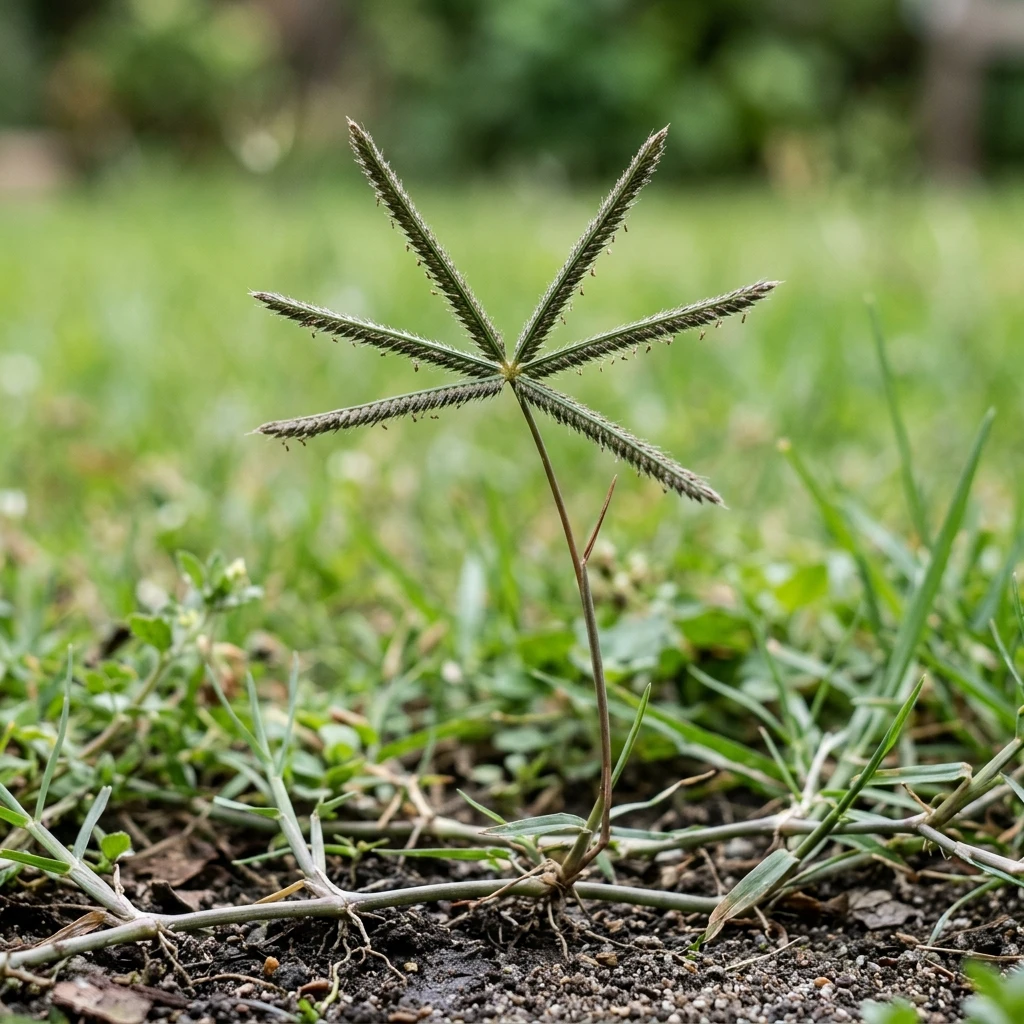
Cynodon dactylon

Bermuda Grass (Weed) Identification & Control

Bermuda Grass, botanically known as Cynodon dactylon, is an exceptionally aggressive, highly persistent warm-season perennial grass. Widely utilized as a durable turf grass in warm climates, it is simultaneously a dreaded, highly invasive weed in garden beds, ornamental borders, and cool-season lawns. Spreading relentlessly via a double-barreled network of above-ground runners (stolons) and deep underground creeping rhizomes, it forms a dense, suffocating mat. It releases allelopathic chemicals that suppress neighboring garden plants and sprouts upright seed spikes arranged in a highly distinct star-like cluster.


Sunlight Icon
Sunlight Full Sun
Watering Icon
Watering Tolerance Low to Moderate
Soil Mix Icon
Soil Adaptability Any Soil / Clay / Sandy / Poor Soil
Temperature Icon
Growth Temp 15°C - 45°C
Toxicity Danger Icon
Danger / Toxicity Relentless Spreader / Garden Invader / Allelopathic
Botanical macro photography of Bermuda Grass (Weed) (Cynodon dactylon) - Plant AI care and control database

How to Identify Bermuda Grass (Weed)

A low-growing creeping perennial grass forming dense mats via stolons and rhizomes, with upright seed heads showing 3 to 7 radiating finger-like spikes.

  • Creeping Double Runners: Spreads aggressively via tough, wiry above-ground stolons and deep white underground rhizomes that root at every node.
  • Radiating Star Seed Spikes: Upright seed heads (growing up to 1 foot tall) consist of exactly 3 to 7 slender, finger-like spikes radiating from a single point.
  • Hairy Collar Ligule: Flat gray-green leaf blades (2 to 15 cm long) feature a highly distinct ring of fine white hairs at the leaf collar (ligule).
💡 Garden Nightmare: Bermuda Grass is a master of chemical warfare! Its roots release toxic **allelopathic chemicals** into the surrounding soil, actively preventing the seed germination and growth of neighboring garden plants.

Complete Care & Management Guide

Access highly technical, scientific management directives to control or cultivate Bermuda Grass (Weed) effectively.

Extremely drought-tolerant once established due to its extensive, deep vertical taproot and horizontal rhizomes. It thrives during hot, dry summer baking that wilts garden crops.
Resistant to mowing. Regular mowing will clip the tall stems but the plant will quickly shoot up new seedheads close to the ground, adapting its growth habit.
Highly aggressive. It actively steals high levels of nitrogen and soil nutrients, severely stunting neighboring garden crops and turf grasses.
Requires Full Sun. It cannot tolerate shade and will fail to grow under trees, beneath thick garden shrubs, or in dense, shaded lawns.
Adapts to dry sandy loam, compacted poor clay, roadsides, and disturbed fields. It struggles in wet, saturated organic bogs.
Spreads aggressively by creeping stolons and seeds. Stems root at every node touching the soil, while mature seed heads produce thousands of durable seeds.
Extremely heat-tolerant perennial. Stems die back and turn completely straw-brown with winter frost, but the deep black rhizomes sprout fresh shoots in spring.
Features an exceptionally deep, sprawling network of creeping horizontal white rhizomes. Excavation requires slicing the root crown deep below the soil.
Occasionally targeted by aphids, but pests rarely slow its aggressive colonization.
Subject to **Bacterial Wilt** and **Tobacco Mosaic Virus**, serving as a dangerous disease reservoir for garden tomatoes and peppers.
To control Bermuda Grass organically, manually dig up young rosettes in spring before they flower, use a hoe to scrape seedlings, and mulch garden beds heavily to block seed light.

Are your garden beds showing wiry creeping runners or star-like seed heads?

Wear gloves, pull the creeping stolon chains slowly, dig out deep white rhizomes, and apply thick mulch.

Diagnose Weed Instantly

Common Diseases & Treatment

Allelopathic Crop Stunting

Symptoms: Symptoms: Neighboring garden vegetables and flowers grow stunted, yellow, and wither due to root chemical suppression.

Action: Action: Dig out the creeping grass stolons. Top-dress the garden bed with fresh, organic soil and compost to dilute the allelopathic compounds.

Lawn Mat Suffocation

Symptoms: Symptoms: Cool-season turf grass is completely overtaken by dense, flat green mats of creeping Bermuda grass.

Action: Action: Hand-pull mats in early spring. Raise mowing height to help grass compete, and sow competitive cool-season grass.

Frequently Asked Questions

Why is Bermuda Grass considered a weed in gardens?

While valued for turf, it spreads relentlessly into garden beds via tough creeping runners (stolons and rhizomes), choking out flowers and vegetables and wrapping around plant bases.

Is Bermuda Grass allelopathic?

Yes. Its roots exude allelopathic chemicals into the surrounding soil, actively suppressing the seed germination and growth of neighboring ornamental and vegetable plants.

How do you identify Bermuda Grass?

Identify it by its wiry, low stolons, a highly distinct ring of fine white hairs at the leaf collar (ligule), and upright seed heads radiating exactly 3-7 finger-like spikes.

What is the best way to get rid of it?

Moisten soil and slowly pull creeping stolon chains. Dig deep to remove white creeping rhizomes, then cover beds with cardboard and 4 inches of wood mulch for a full year.

No more dying plants. Grow healthy greens today!

Get Started for Free