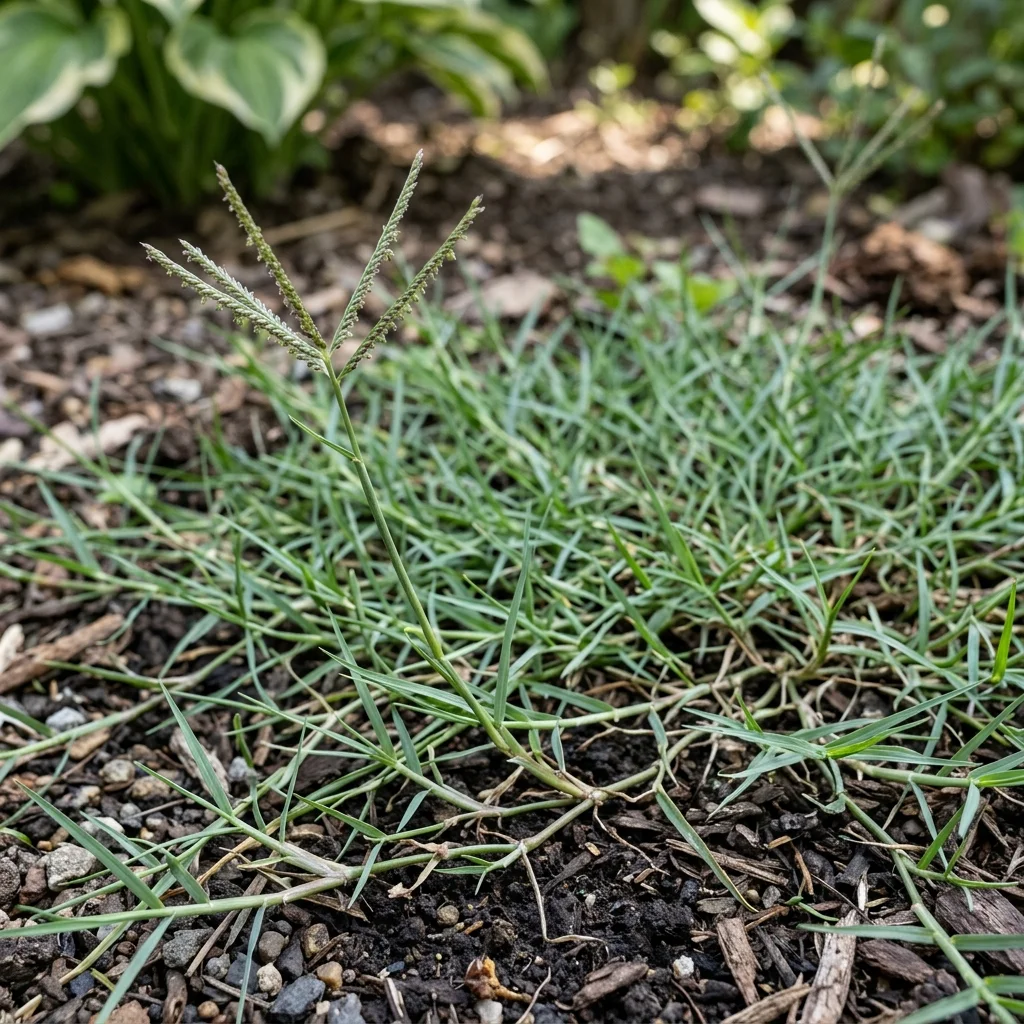
Cynodon dactylon

Bermuda Grass Identification & Control

Bermuda Grass, widely prized as a highly durable warm-season turf grass, is simultaneously one of the most aggressive, invasive, and dreaded weeds in home flower beds, vegetable gardens, and cool-season lawns. Native to Africa but naturalized globally, it spreads with terrifying speed via a dual network of creeping horizontal runners above ground (stolons) and thick rooting stems below ground (rhizomes). It easily climbs over landscape borders, chokes out ornamental shrubs, and invades bare soil.


Sunlight Icon
Sunlight Full Sun
Watering Icon
Watering Tolerance Low to Moderate
Soil Mix Icon
Soil Adaptability Any Soil / Sandy / Clay
Temperature Icon
Growth Temp 20°C - 48°C
Toxicity Danger Icon
Danger / Toxicity Pet Safe / Highly Invasive
Botanical macro photography of Bermuda Grass (Cynodon dactylon) - Plant AI care and control database

How to Identify Bermuda Grass

A low-growing, wiry perennial grass spreading via aggressive creeping stolons and rhizomes, with fine gray-green leaf blades and finger-like seed clusters.

  • Creeping Stolons & Rhizomes: Spreads via tough, wiry, creeping runners above ground (stolons) and scaly, sharp-pointed stems below ground (rhizomes).
  • Hairy Ligule Ring: Features a highly distinct ring of fine white hairs (ligule) at the junction where the leaf blade meets the stem sheath.
  • Finger-Like Seed Head: The seed head branches into 3 to 7 slender, finger-like spikes clustered at the top of a wiry stalk, resembling a bird's foot.
💡 Plant AI Tip: Bermuda Grass rhizomes can drill up to 5 feet deep into the soil and grow through plastic weed barriers! To block it from entering flower beds, install deep, solid steel or plastic landscape edging at least 8 inches deep.

Complete Care & Management Guide

Access highly technical, scientific management directives to control or cultivate Bermuda Grass effectively.

Extremely drought-tolerant. It survives prolonged summer droughts by entering dormancy (turning brown) and quickly revives to lush green within days of watering.
Highly resistant to mowing. It thrives under low mowing heights, which promotes denser stolon growth. Mowing actually stimulates it to spread further horizontally.
Requires high nitrogen to maintain dense growth. In garden beds, it aggressively robs nutrients and water from flowers and vegetable crops, stunting their growth.
Requires Full Sun to survive. It has zero shade tolerance and will quickly thin out and die under a dense tree canopy or beneath thick shrub shading.
Adapts to sandy, clay, salty, and nutrient-poor soils. It thrives in hot, sunny, and compacted ground where cool-season grasses collapse.
Spreads aggressively by creeping stolons, underground rhizomes, and seeds. Stolon nodes root instantly upon touching moist soil, forming dense mats.
A warm-season perennial. It grows vigorously in hot summer temperatures but turns completely straw-brown and dormant when temperatures drop below 50°F (10°C) in winter.
Features an exceptionally deep, sprawling network of scaly rhizomes and fibrous roots. Digging it out requires shifting large amounts of soil to find all rhizomes.
Occasionally targeted by armyworms and sod webworms, though pests rarely cause structural damage to its highly aggressive creeping network.
Susceptible to **Spring Dead Spot** and **Dollar Spot Fungus** under damp cool weather, which causes circular dead patches in the dense turf mats.
To eradicate Bermuda Grass from flower beds organically, lay down a double layer of heavy woven landscape fabric, cover with deep mulch, and manually dig out any invading stolons immediately.

Are your flower beds being choked by wiry creeping runners?

Install deep metal landscape edging, dig out scaly underground rhizomes, and clear wiry stolons.

Diagnose Weed Instantly

Common Diseases & Treatment

Spring Dead Spot

Symptoms: Symptoms: Circular patches of Bermuda grass fail to green up in spring, remaining straw-brown and rotting.

Action: Action: Rake out the dead thatch to improve air circulation. Keep soil slightly dry and avoid high-nitrogen feeds in late autumn.

Stolon Invasion

Symptoms: Symptoms: Long, wiry green runners crawl over brick borders and anchor roots inside your flower garden beds.

Action: Action: Manual tracing. Grasp the runner and pull slowly, digging out the rooting nodes. Install a physical barrier at least 6-8 inches deep.

Frequently Asked Questions

Why is Bermuda Grass considered a weed if people plant it for lawns?

Bermuda Grass makes an excellent, wear-tolerant lawn for warm climates. However, its aggressive stolons and rhizomes do not respect boundaries; they easily invade flower beds, vegetable gardens, and cool-season lawns, where they are incredibly difficult to eradicate.

How deep do Bermuda Grass roots grow?

While the majority of the fibrous roots stay in the top 6 inches of soil, its scaly underground rhizomes can drill up to 5 feet deep into the soil, allowing the plant to survive severe drought, freezes, and mechanical digging.

Can I kill Bermuda Grass by covering it with mulch?

Standard light mulching will not work because Bermuda grass has sharp stolons that can easily grow through 3 inches of mulch. To suffocate it, you must use a thick barrier like overlapping cardboard or heavy landscape fabric covered in deep mulch.

What is the best way to get Bermuda Grass out of my flower beds?

First, dig a trench and install solid, deep landscape edging (at least 8 inches deep) to block creeping rhizomes. Next, carefully dig up the existing grass in the bed, ensuring you trace and remove every single scaly white rhizome.

No more dying plants. Grow healthy greens today!

Get Started for Free