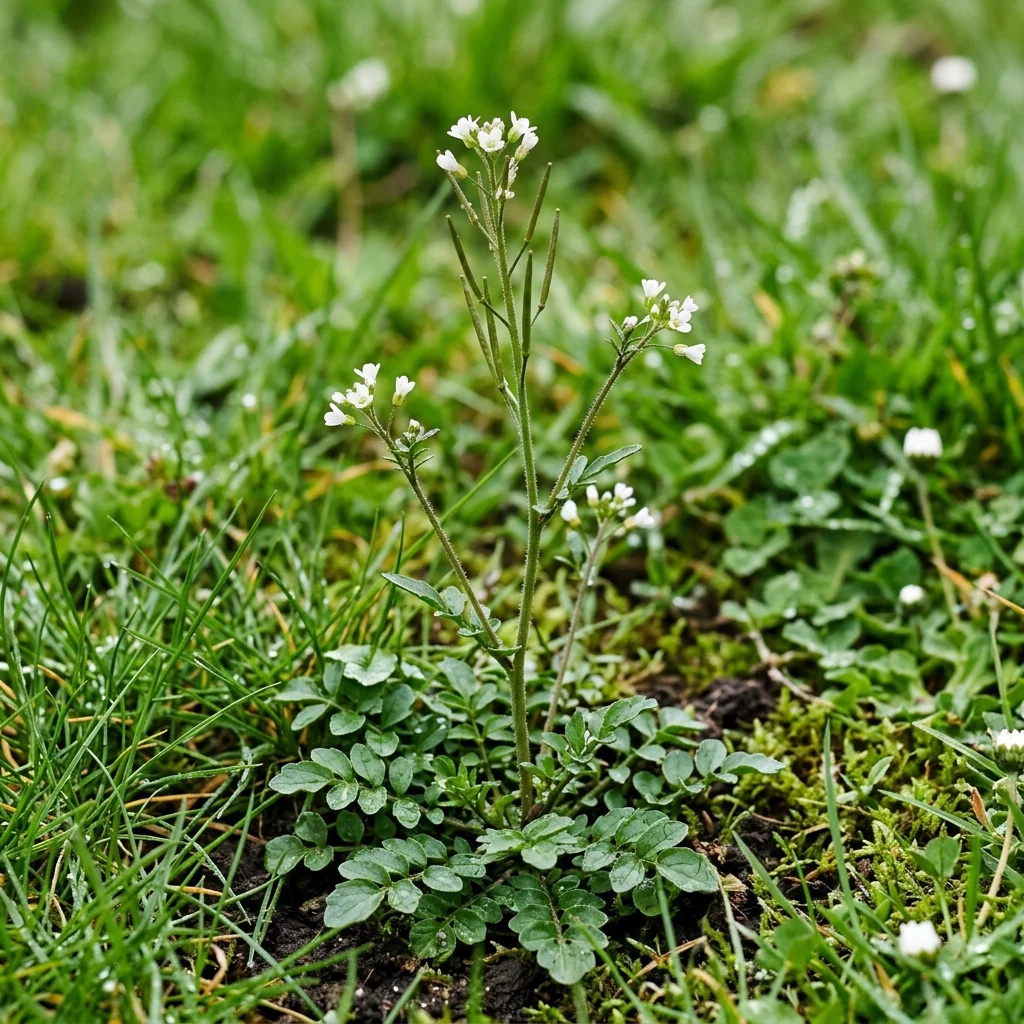
Cardamine hirsuta

Bittercress Identification & Control

Hairy Bittercress, infamously known as Shotgun Weed or Popweed, is an exceptionally prolific winter annual broadleaf weed in the mustard family. Native to Europe but thoroughly naturalized globally, it is a major nuisance in home gardens, greenhouses, and lawns. It features a unique life cycle, producing a flat rosette of compound leaves in winter and shooting up upright stalks with tiny white flowers in spring, tipped with explosive seed capsules that shoot seeds up to 10 feet.


Sunlight Icon
Sunlight Full Sun to Shade
Watering Icon
Watering Tolerance Moderate to High
Soil Mix Icon
Soil Adaptability Moist Loam / Wet Clay / Rich Soil
Temperature Icon
Growth Temp 4°C - 28°C
Toxicity Danger Icon
Danger / Toxicity Pet Safe / Shotgun Seeds
Botanical macro photography of Bittercress (Cardamine hirsuta) - Plant AI care and control database

How to Identify Bittercress

A flat basal rosette of compound leaves, upright green stems with tiny white flowers, and distinctive, needle-like explosive seed capsules.

  • Flat Basal Rosette: Low-growing, flat rosette of compound green leaves (5 to 10 cm wide) with rounded leaflets.
  • Needle-Like Seed Capsules (Siliques): Slender, needle-like green capsules (2 cm long) that project upward at a sharp angle.
  • Tiny White Flowers: Small clusters of tiny, 4-petaled white flowers (2 mm wide) blooming at stem tips in late spring.
💡 Plant AI Tip: Bittercress is a winter annual! It germinates in autumn, stays small in winter, and blooms explosively in early spring. Mulching garden beds in late summer is the best way to block autumn germination.

Complete Care & Management Guide

Access highly technical, scientific management directives to control or cultivate Bittercress effectively.

Requires consistent moisture. It thrives in damp, wet, poorly drained soils, riverbanks, and overwatered garden beds. Allowing the top soil layer to dry out helps slow its spread.
Resistant to mowing. Regular mowing will clip the tall stems but will not kill the deep creeping root system. The jointed stems will quickly sprout new branches from ground nodes.
Thrives in nutrient-poor, highly acidic, and low-oxygen soils. Adding lime to raise soil pH (making it more alkaline) and fertilizing helps turf outcompete it.
Highly shade-tolerant. It easily colonizes damp, shaded lawn areas beneath trees where competitive turf grasses like Kentucky Bluegrass struggle and thin out.
Prefers wet clay, acidic loam, sandy soils, and damp gravelly driveways. It does not require loose, rich organic soils.
Spreads aggressively strictly by seeds. The seed pods explode when dry, flinging seeds up to 10 feet horizontally. A single plant can produce thousands of seeds.
Extremely cold-hardy perennial. Leaves die back under freezing winter temperatures, but the woody taproot crown survives easily, sprouting in early spring.
Features an exceptionally deep, sprawling network of black creeping rhizomes that can drill up to 6 feet deep. The rhizomes are highly brittle and snap easily upon pulling.
Occasionally targeted by aphids, but pests rarely cause significant damage to this highly robust annual grass.
Subject to **Browning Rust** and **Leaf Spots** in damp autumns, though diseases rarely kill the weed before it successfully sets seed.
To control Bittercress organically, manually dig up young rosettes in spring before they flower, use a hoe to scrape seedlings, and mulch garden beds heavily to block seed light.

Are your spring garden beds showing tiny white flowers or needle-like seed capsules?

Hand-pull the shallow fibrous roots easily in spring, watch for explosive seed capsules, and mow early.

Diagnose Weed Instantly

Common Diseases & Treatment

Shotgun Seed Explosion

Symptoms: Symptoms: Needle-like green capsules burst violently upon light touch, flinging seeds up to 10 feet.

Action: Action: Place a clear plastic bag over the seeded stems before cutting to catch the flying seeds, and dispose in trash bags.

Downy Mildew

Symptoms: Symptoms: Pale yellow streaks appear on leaf blades, with a fuzzy white-gray fungal growth forming underneath.

Action: Action: Hand-pull the infected grass clumps. Avoid overhead watering to keep leaf surfaces dry, and apply organic copper fungicide.

Frequently Asked Questions

Why is it called 'Shotgun' Weed or 'Bittercress'?

It is named 'Shotgun' Weed because its seed capsules burst violently upon the slightest touch, flinging seeds up to 10 feet like a shotgun. 'Bittercress' comes from the peppery, slightly bitter taste of the leaves.

Are the leaves edible?

Yes! Hairy Bittercress leaves are completely edible and taste like peppery watercress. They are rich in vitamin C and are widely harvested in spring to make salads, pestos, or sandwich greens.

Is Bittercress toxic to pets?

No, Bittercress is completely non-toxic and safe for dogs and cats. In fact, it is a highly valued wild edible herb.

What is the best way to get rid of it?

Because it has a shallow fibrous root system, it is very easy to pull out by hand. Manual weeding or close mowing in mid-summer before the flower stalks open is the most effective organic control method.

No more dying plants. Grow healthy greens today!

Get Started for Free