Black Nightshade Identification & Control
Black Nightshade, botanically known as Solanum nigrum, is an exceptionally common, highly toxic summer annual broadleaf weed in the nightshade family. Globally naturalized, it is a severe agricultural pest and a dreaded weed in residential gardens. It features upright branched stems, small star-like white flowers, and produces clusters of small green berries that mature into highly attractive, glossy black berries that are packed with lethal doses of solanine, posing a fatal threat to children and pets.





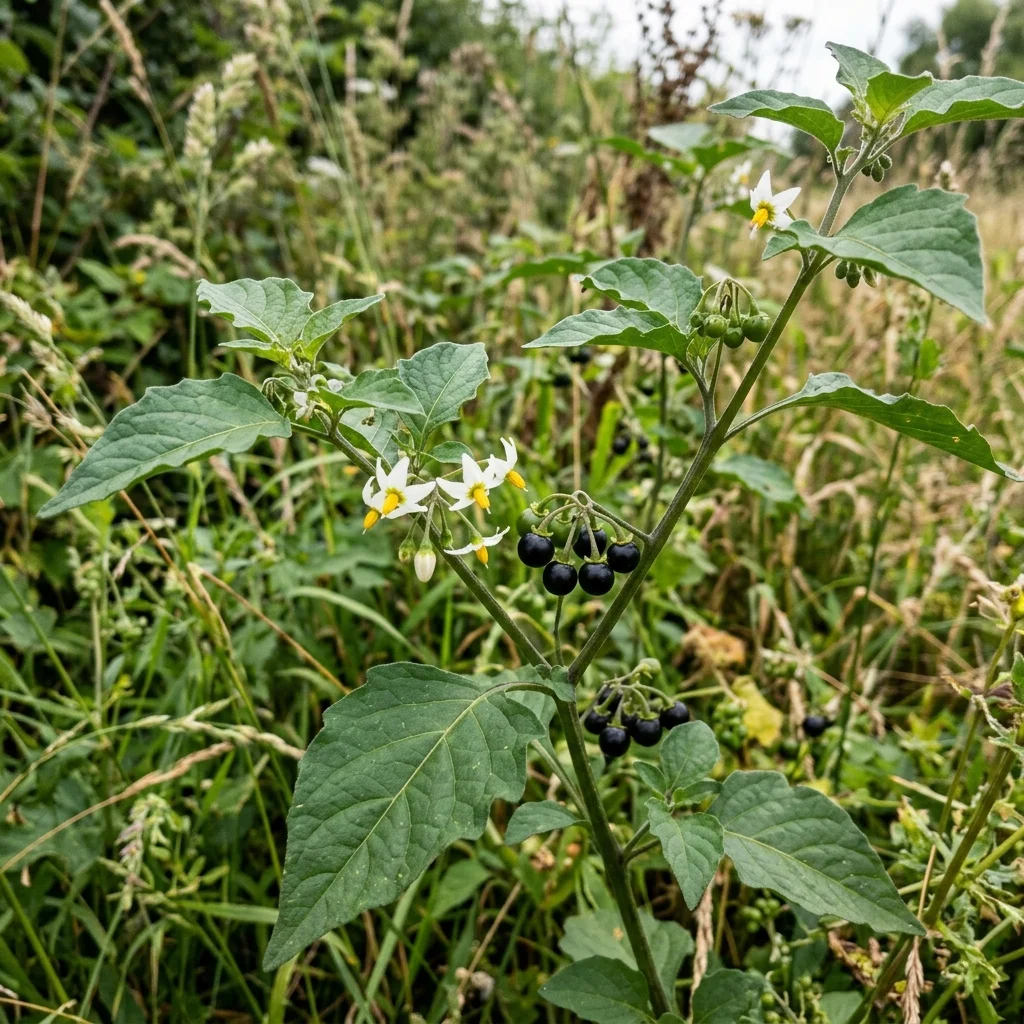
How to Identify Black Nightshade
An upright, branched annual with smooth green stems, oval wavy-toothed leaves, tiny white star-like flowers, and clusters of glossy black berries.
-
✔
Glossy Black Berries: Small, round berries (8 mm wide) in clusters, green when young and maturing to a highly shiny, deep jet-black.
-
✔
White Star-Like Flowers: Small clusters of 5-petaled white flowers with a highly distinct, prominent cone of bright yellow stamens in the center.
-
✔
Wavy-Toothed Oval Leaves: Alternate green leaves (4 to 10 cm long) are oval with coarsely, irregularly wavy-toothed margins.
Complete Care & Management Guide
Access highly technical, scientific management directives to control or cultivate Black Nightshade effectively.
Common Diseases & Treatment
Solanine Alkaloid Poisoning
Symptoms: Ingestion of green berries leads to immediate dilated pupils, severe colic, vomiting, paralysis, and hypothermia.
Tomato Virus Reservoir
Symptoms: Leaves develop yellow mosaic mottling, spreading the viral infection to neighboring garden tomatoes and eggplants.
Frequently Asked Questions
Is Black Nightshade the same as Deadly Nightshade?
No, they are different species. Deadly Nightshade (Atropa belladonna) has tubular purple flowers and large, single black berries with a large green calyx, and is extremely lethal. Black Nightshade (Solanum nigrum) has star-like white flowers with yellow centers, and berries grow in small hanging clusters.
Why is the green berry so much more toxic than the black one?
Unripe green berries contain the highest concentration of the toxic glycoalkaloid solanine. As the berry matures to deep black, the solanine level drops significantly, though it still remains toxic enough to cause severe poisoning in dogs and children.
Does Black Nightshade damage vegetable gardens?
Yes. Besides stealing nitrogen and water, Black Nightshade belongs to the Solanaceae family and acts as a major harbor and reservoir for devastating agricultural viruses (like Tobacco Mosaic Virus) and pests like Colorado Potato Beetles.
What is the best way to get rid of it?
Wear thick gloves. Grip the base of the stem and pull upward; the fibrous root pops out easily from moist soil. Cut off and bag any berry clusters to prevent them from seeding, and dispose of them in a landfill.