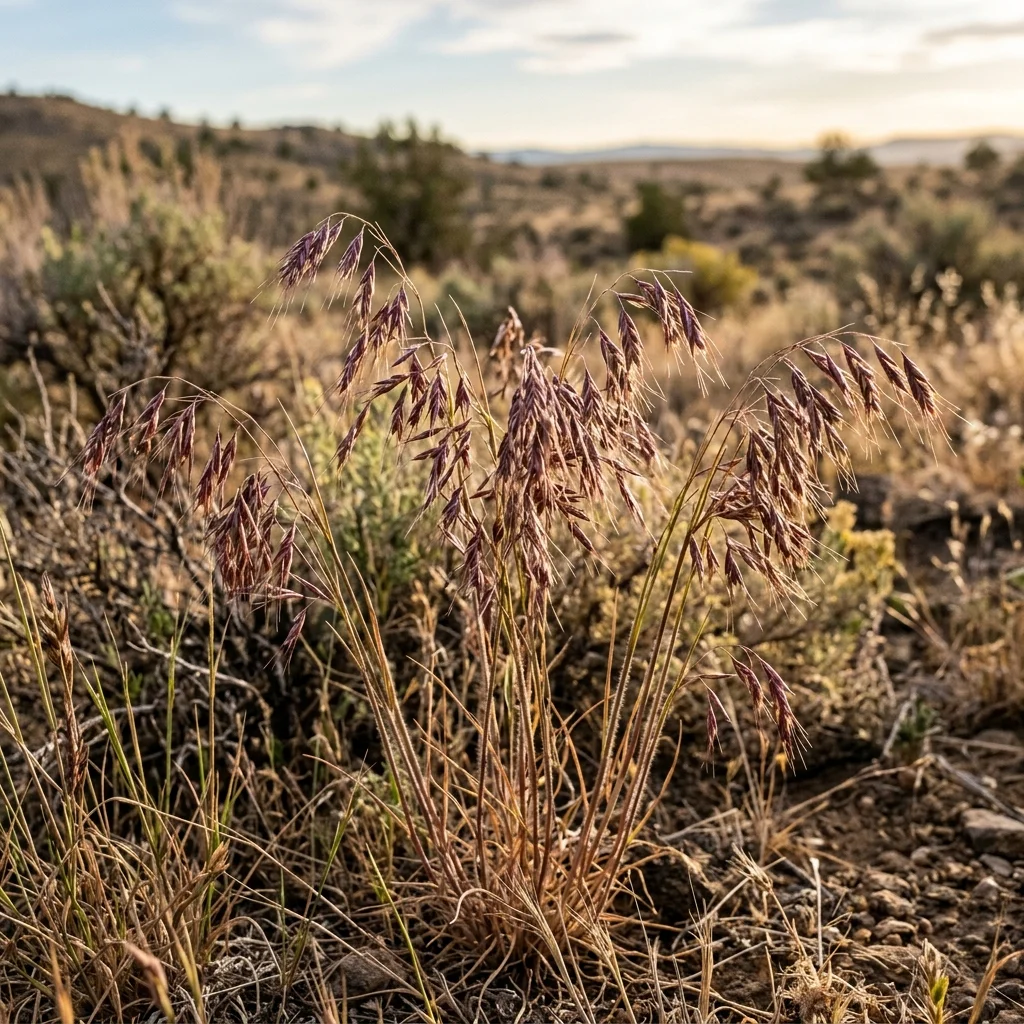
Bromus tectorum

Cheatgrass Identification & Control

Cheatgrass, botanically classified as Bromus tectorum and commonly known as Downy Brome, is an exceptionally destructive winter annual grass weed in the Poaceae family. Native to Europe but highly invasive globally, it has completely transformed millions of acres of dry rangeland. It germinates in autumn, grows rapidly in cool spring, and dries out completely by early summer into highly flammable straw. It creates an aggressive wildfire cycle that completely destroys native shrublands. It features drooping, reddish-purple seed heads armed with long, sharp awns. When dry, these sharp awns pose a severe physical hazard to dogs, easily piercing their paws, ears, and gums, causing severe infections.


Sunlight Icon
Sunlight Full Sun
Watering Icon
Watering Tolerance Low
Soil Mix Icon
Soil Adaptability Dry Sterile Sand / Gravel / Poor Clay
Temperature Icon
Growth Temp 2°C - 35°C
Toxicity Danger Icon
Danger / Toxicity Severe Wildfire Fuel / Sharp Pet-Hazard Awns
Botanical macro photography of Cheatgrass (Bromus tectorum) - Plant AI care and control database

How to Identify Cheatgrass

A drooping winter annual grass covered in fine downy hairs, turning a highly distinct reddish-purple to straw color at early summer maturity.

  • Drooping Purple Panicles: Nodding, highly open flower panicles (up to 15 cm long) with drooping spikelets that turn a highly distinct reddish-purple.
  • Downy Hairy Foliage: Flat green leaf blades and sheaths are densely covered in exceptionally soft, fine, velvety downy hairs.
  • Sharp Needle-Like Awns: Each seed is equipped with a sharp, straight, needle-like awn (up to 1.5 cm long) that clings aggressively to fur.
⚠️ Dog Danger: Dry Cheatgrass is a dreaded hazard for dog owners! The sharp, arrow-like seeds (foxtails) have backward-pointing scales. Once they pierce a dog's paw, ear, or throat, they **can only travel forward**, migrating deep into tissue and requiring emergency veterinary surgery.

Complete Care & Management Guide

Access highly technical, scientific management directives to control or cultivate Cheatgrass effectively.

Extremely drought-tolerant. It thrives in dry, barren, and rainfall-starved sandy rangelands, outcompeting native grasses by completing its lifecycle before summer dry spells start.
Resistant to mowing. Regular mowing will clip the tall stems but the plant will quickly shoot up new seedheads close to the ground, adapting its growth habit.
Thrives in nutrient-poor, highly disturbed soils. Shifting soil fertility helps garden grass compete and crowd it out.
Requires Full Sun. It cannot tolerate shade and will fail to grow under trees, beneath thick garden shrubs, or in dense, shaded lawns.
Adapts to dry sand dunes, sterile gravel driveways, compacted poor clay, and dry pasture borders. It struggles in wet, saturated organic bogs.
Reproduces strictly by seeds. A single cheatgrass plant can produce up to 5,000 seeds. The sharp seeds cling to animal fur and vehicle tires for rapid dispersal.
A winter annual. Seeds germinate in autumn rain, grow roots all winter, grow rapidly in early spring, and die by mid-summer, leaving massive dry straw behind.
Features a shallow but extremely dense, tough fibrous root network anchored to creeping stolons that root at every node touching the soil.
Occasionally targeted by aphids, but pests rarely slow its aggressive colonization.
Subject to **Smut Fungus** (*Ustilago bromivora*), which turns the seeds into black spore powder, acting as a minor natural biological control.
To control Cheatgrass organically, manually pull young green rosettes in spring before the seed heads turn purple, and mulch bare soil heavily to block light.

Are your dry pastures showing drooping purple grass spikes or velvety hairy leaves?

Wear gloves, pull green rosettes in early spring, mow before seeds mature, and check dog paws for sharp awns.

Diagnose Weed Instantly

Common Diseases & Treatment

Wildfire Fuel Cycle

Symptoms: Symptoms: Large pasture borders turn dry, brittle, straw-colored in early summer, acting as a highly flammable wildfire fuse.

Action: Action: Create firebreaks. Mow down dry grass patches close to the ground, and clear the dry straw from buildings before summer fire season.

Awn Tissue Migration

Symptoms: Symptoms: A dog whimpers, showing a swollen, draining abscess between its toes where a sharp cheatgrass seed has drilled deep into the skin.

Action: Action: Emergency veterinary extraction immediately! Do not let the dog lick the area. Keep pets on trails during dry summer months.

Frequently Asked Questions

Why is Cheatgrass a high wildfire threat?

Cheatgrass matures and dies in early summer, turning into a highly flammable, dry straw bed. It easily ignites, burning hot and driving a severe wildfire cycle that wipes out native woody shrubs.

Why are Cheatgrass seeds so dangerous to dogs?

The sharp seeds have backward-facing tiny scales. Once they hook and pierce a dog's skin (especially ears, paws, or gums), they cannot travel backward and actively migrate deep into tissue, causing painful abscesses.

How does it outcompete native grasses?

It behaves as a winter annual. Seeds germinate in autumn, growing roots all winter. In spring, it drains soil moisture and nutrients before native warm-season grasses even begin growing.

What is the best way to control it organically?

Grip the base and hand-pull green rosettes in early spring before seed spikes turn purple, and apply thick mulch over bare soil to block seed light.

No more dying plants. Grow healthy greens today!

Get Started for Free