Common Mallow Identification & Control
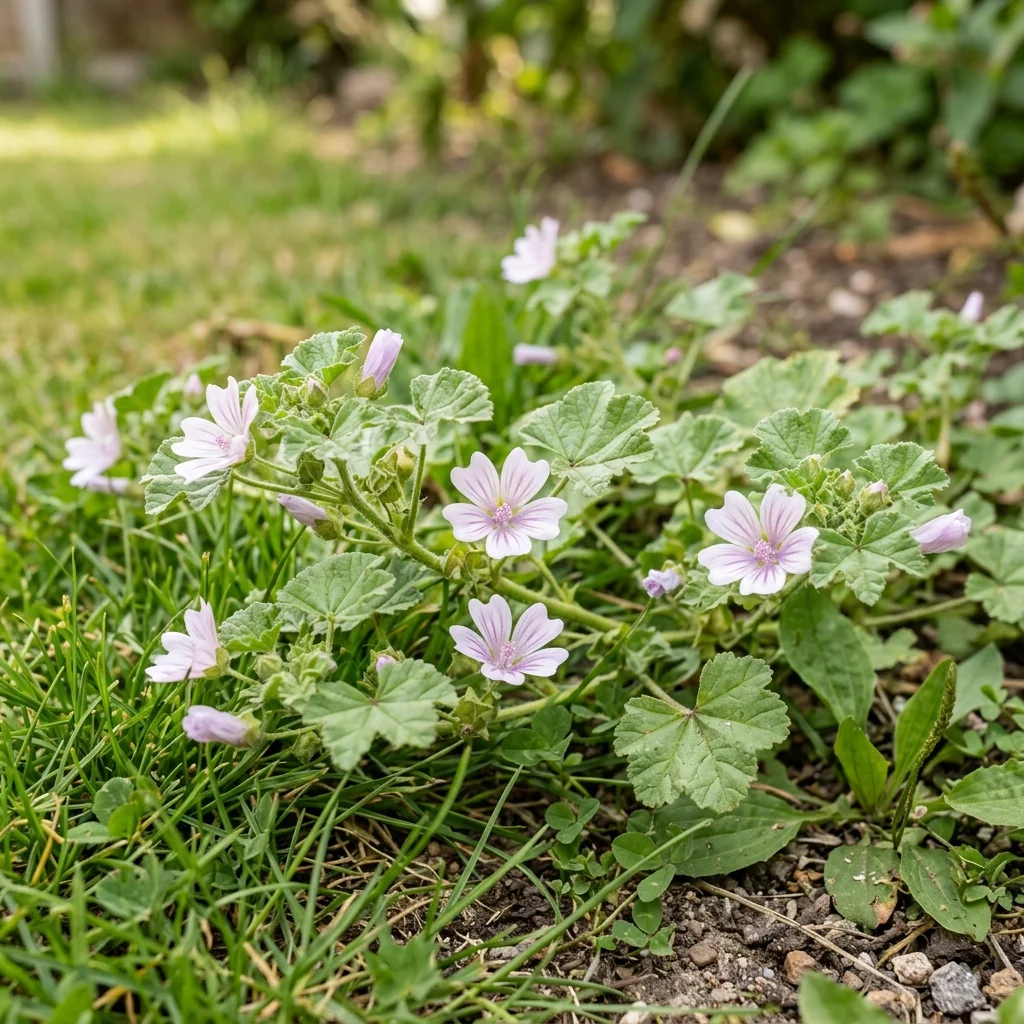
Common Mallow, also known as Cheeseweed, is a highly persistent, deep-rooted annual or biennial broadleaf weed in the hibiscus family. Native to Eurasia but thoroughly naturalized across North America, it aggressively invades lawns, crop fields, and home gardens. Famous for its thick, woody taproot and rounded, hollyhock-like leaves, it produces small, pale lavender-to-white flowers that mature into unique circular seedpods resembling tiny cheese wheels.





How to Identify Common Mallow
A spreading annual or biennial with rounded, kidney-shaped leaves on long stalks, small pale lavender-white flowers, and circular button-like seedpods.
-
✔
Rounded Lobed Leaves: Rounded, crinkly, kidney-shaped leaves (2 to 6 cm) with 5 to 7 shallow lobes and finely toothed margins, on long stalks.
-
✔
Cheese-Wheel Seedpods: Unique, flat, circular seedpods divided into 10 to 15 wedge-like sections, looking exactly like a tiny wheel of cheese.
-
✔
Woody Taproot: A highly tough, thick, vertical woody taproot that anchors deep into compacted soil, making manual pulling difficult.
Complete Care & Management Guide
Access highly technical, scientific management directives to control or cultivate Common Mallow effectively.
Common Diseases & Treatment
Mallow Rust (Puccinia)
Symptoms: Bright orange, yellow, or dark brown raised pustules densely covering the undersides of the rounded leaves.
Woody Taproot Snapping
Symptoms: Trying to pull mature mallow snaps the stem at the soil line, leaving the tough woody taproot deep inside.
Frequently Asked Questions
Why is it called 'Cheeseweed'?
It is nicknamed 'Cheeseweed' because its unique, flat, circular seed capsules are divided into neat wedge-shaped sections, looking exactly like a miniature round wheel of gourmet cheese.
Is Common Mallow safe for pets?
Yes. Common Mallow is non-toxic and safe for dogs, cats, and livestock. In fact, all parts of the plant—leaves, flowers, roots, and seeds—are edible and have a pleasant, mild, slightly mucilaginous texture.
How long do the seeds survive in the soil?
Mallow seeds have an extremely hard, protective outer coat. This allows them to remain dormant and viable in the soil for 20 years or more, germinating rapidly when the soil is turned and exposed to light.
What is the best way to get rid of Common Mallow?
Eradicate them when they are young seedlings, as the taproot is still soft and pulls out easily. For mature plants, use a weeding fork or spade to dig deep and remove the entire woody taproot, then mulch the area.