Crabgrass Identification & Control
Crabgrass (specifically Large or Hairy Crabgrass) is one of the most notorious summer annual grassy weeds invading lawns and gardens worldwide. Native to Europe but thoroughly naturalized across North America, it thrives aggressively in hot, dry, and compacted soils. It features a sprawling, crab-like growth habit with wide, pale-green blades that sprout from a central root crown. A single plant can produce up to 150,000 seeds, easily outcompeting thin turf grass during late summer baking.





How to Identify Crabgrass
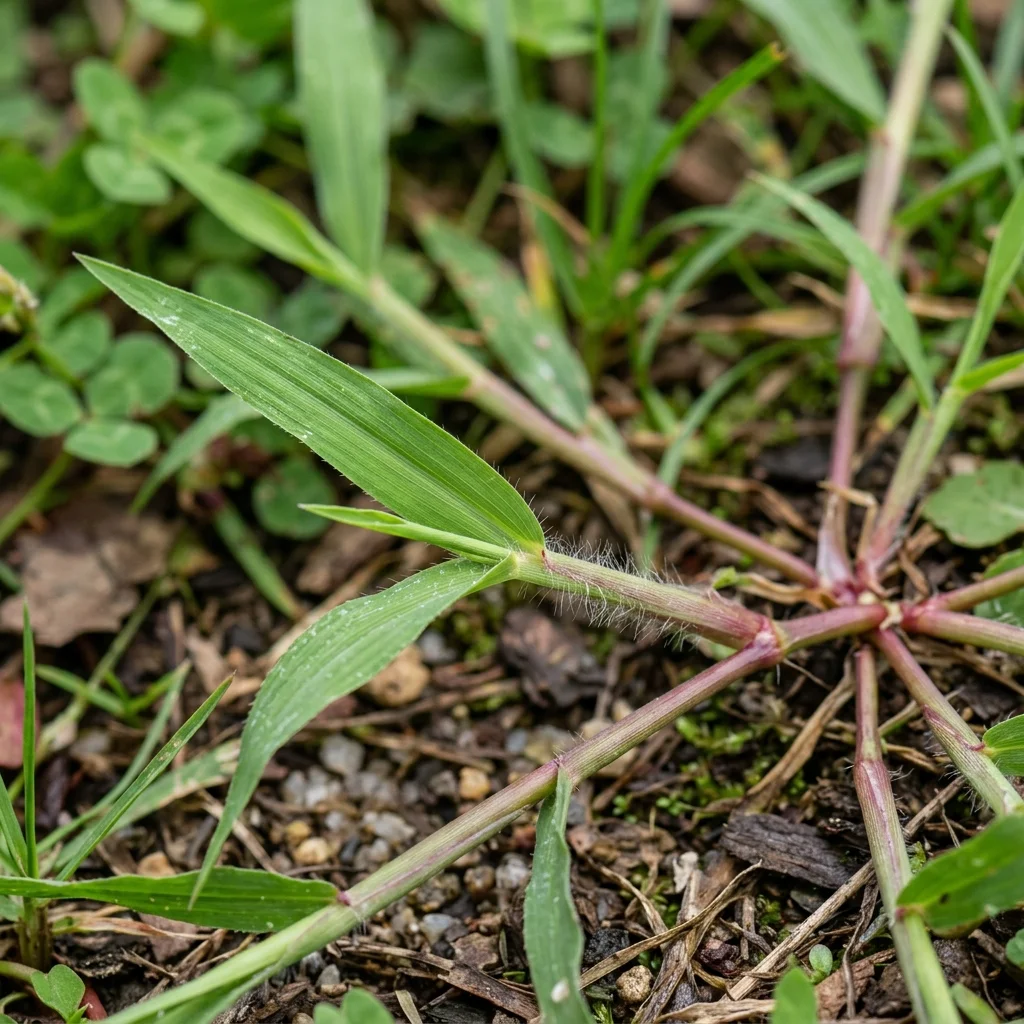
A sprawling, multi-stemmed grassy rosette with coarse, light-green blades spreading flat in a crab-like shape, featuring purple-tinged stem joints and tall, finger-like seed spikes.
-
✔
Sprawling Crab-Like Rosette: Coarse, flat, wide pale-green stems radiate outwards horizontally from a central crown, hugging the soil surface tightly.
-
✔
Hairy Sheaths & Leaves: Leaves and leaf sheaths (especially lower ones) are covered in dense, stiff hairs, distinguishing it from smooth grassy species.
-
✔
Finger-Like Seed Spikes: Stalks branch into 2 to 10 finger-like spikes (digitate clusters) arranged in whorls, carrying thousands of small seeds.
Complete Care & Management Guide
Access highly technical, scientific management directives to control or cultivate Crabgrass effectively.
Common Diseases & Treatment
Leaf Blight
Symptoms: Small, water-soaked brown spots on leaf blades that merge, turning the sprawling stems yellow and dry.
Node-Rooting Spread
Symptoms: Sprawling stems root at joints, forming a vast, multi-anchored mesh that makes pulling the plant intact impossible.
Frequently Asked Questions
Why is Crabgrass so difficult to control?
Crabgrass is highly prolific; a single weed produces up to 150,000 seeds that survive in soil for years. Furthermore, it thrives in hot, dry summer conditions that weaken cool-season lawn grasses, quickly colonizing any thin or bare spots.
Will mowing the lawn low kill Crabgrass?
No, mowing low will actually make the problem worse! Crabgrass stems grow horizontally and lie very flat, so low mowing will miss the weed while scalping your lawn grass, reducing turf competition and giving crabgrass more sunlight to thrive.
What is the difference between pre-emergent and post-emergent control?
Pre-emergent control prevents crabgrass seeds from successfully germinating in early spring. Post-emergent control targets weeds that have already sprouted and are actively growing in summer. Pre-emergents are far more effective.
Are Crabgrass leaves toxic to dogs or cats?
No, Crabgrass is completely non-toxic to pets. However, the leaves are rough and coarse, and mature seed heads have sharp husks that can cause mild throat irritation if chewed by curious dogs.