Dog Fennel Identification & Control
Dog Fennel, botanically known as Eupatorium capillifolium, is an exceptionally common, highly toxic perennial broadleaf weed in the Asteraceae family. Native to the southeastern United States, it is a severe noxious weed along pastures, fence lines, and turf grass. Growing up to an impressive 6 feet tall, it is easily recognized by its deeply divided, thread-like, exceptionally fine feather-like leaves that release a highly pungent, sour aromatic scent when crushed. Crucially, every part of the plant contains toxic Pyrrolizidine Alkaloids, which cause severe, irreversible liver damage and failure in horses and cattle.





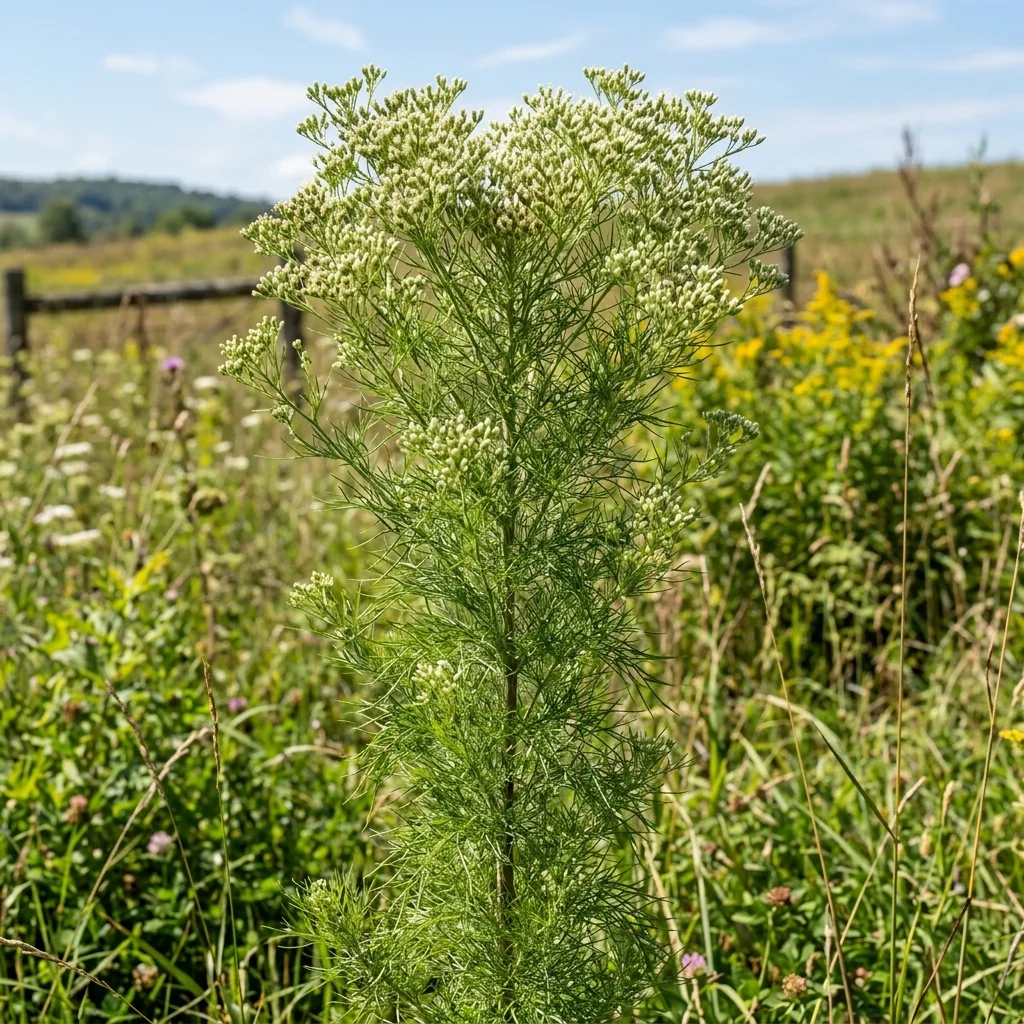
How to Identify Dog Fennel
A tall, erect perennial up to 6 feet tall with extremely fine thread-like feathery leaves, a woody stem, and a pungent herbal scent.
-
✔
Thread-Like Feathery Leaves: Bright green leaves are deeply divided into exceptionally thin, hair-like or thread-like segments, showing a highly distinct feathery appearance.
-
✔
Pungent Herbal Scent: Crushing the feathery leaves or stems releases a highly distinct, sour, pungent, herbal or diesel-like scent.
-
✔
Erect Woody Stems: Stems are upright, highly branched at the top, hollow, and turn tough and woody at the base.
Complete Care & Management Guide
Access highly technical, scientific management directives to control or cultivate Dog Fennel effectively.
Common Diseases & Treatment
Pyrrolizidine Liver Toxicosis
Symptoms: Ingestion of dog fennel by horses leads to progressive weight loss, jaundice, sun sensitivity, and fatal liver failure.
Pasture Thread Invasion
Symptoms: Dry pasture corners are completely overtaken by tall, feathery dog fennel clumps, outcompeting forage grass.
Frequently Asked Questions
Is Dog Fennel toxic to horses and cattle?
Yes, extremely toxic! Dog Fennel contains pyrrolizidine alkaloids. Ingestion by livestock causes progressive, irreversible liver damage (cirrhosis) and photosensitivity. It can lead to liver failure and death if grazed continuously.
Why do animals eat Dog Fennel if it is toxic?
Under normal conditions, livestock avoid it due to its highly pungent, sour, bitter taste. However, if pastures are overgrazed and desirable forage is scarce, or if Dog Fennel is dried and mixed into hay, animals will ingest it.
Does Dog Fennel spread by roots or seeds?
Both. It spreads vigorously by wind-dispersed seeds from its dense autumn flower heads, and also spreads locally via a thick, woody, creeping underground root crown and rhizome network.
What is the best way to eradicate Dog Fennel organically?
Dig up the central woody root crowns using a spade in spring when the plants are small and green. Mowing pastures in early summer before they flower will exhaust the root system and completely prevent seed production.