Giant Foxtail Identification & Control
Giant Foxtail, botanically known as Setaria faberi, is an exceptionally common, highly aggressive summer annual grass weed in the Poaceae family. Native to East Asia but thoroughly naturalized globally, it is a severe agricultural pest in row crops and a major nuisance in residential lawns. Growing up to 5 feet tall, it features limp, hairy leaves and produces prominent, cylindrical, nodding seed spikes densely covered in green-to-purplish bristles. This heavy seed head characteristically droops or nods in an arch, resembling a bushy fox tail. The tiny, microscopic hairs on the seed glumes are abrasive and can cause painful throat irritation in livestock.





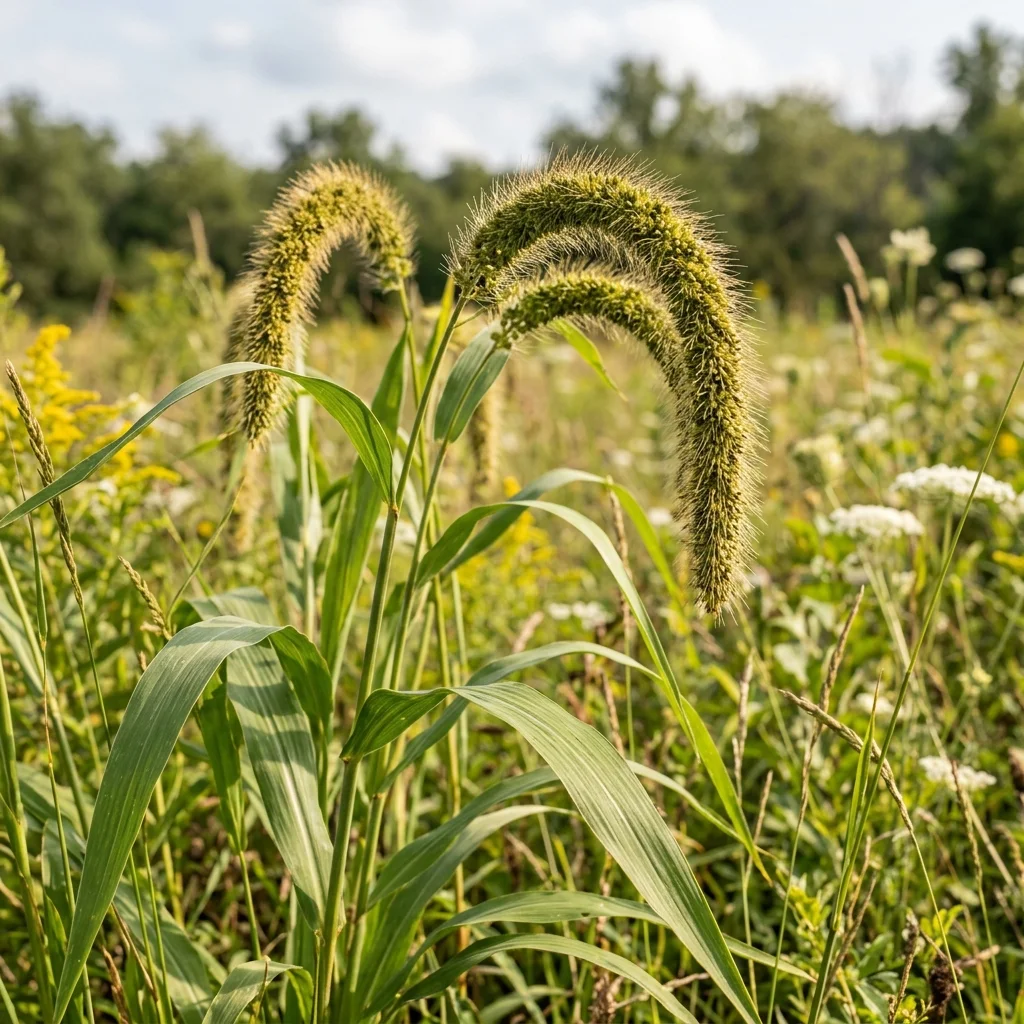
How to Identify Giant Foxtail
An upright annual grass with limp hairy leaves, and nodding, cylindrical, bristly green-purple flower spikes drooping in an arch.
-
✔
Nodding Bristly Spikes: Cylindrical flower spikes (up to 15 cm long) are densely covered in green-to-purplish bristles, nodding in a highly distinct arch.
-
✔
Hairy Leaf Blades: The upper surface of the flat, limp leaf blades is covered in dense, soft, short hairs that are highly distinct under a magnifying glass.
-
✔
Erect jointed Stems: Stems are upright, branched at the base, hollow (growing up to 5 feet tall), and show swollen joints.
Complete Care & Management Guide
Access highly technical, scientific management directives to control or cultivate Giant Foxtail effectively.
Common Diseases & Treatment
Abrasive Bristle Irritation
Symptoms: Grazing pets chew mature dry foxtail heads, leading to severe throat scratching, drooling, and persistent coughing.
Silt Compaction Invasion
Symptoms: Bare lawn patches with heavy clay compaction are completely overtaken by bright green foxtail mats.
Frequently Asked Questions
Why is Giant Foxtail dangerous to livestock?
The flower spikes are covered in stiff bristles that possess microscopic, backward-pointing barbs. If consumed, these bristles irritate and lodge in the animal's mouth and throat, causing painful ulcers.
How is Giant Foxtail different from other foxtails?
Giant Foxtail grows much taller (up to 5 feet) and features fine, dense, velvety hairs covering the upper leaf blade surface, whereas green and yellow foxtails are hairless.
Does it indicate poor soil quality?
No, it actually indicates highly fertile but disturbed, bare soils in full sun. It loves high-nitrogen soils and quickly invades open vegetable beds.
What is the best way to get rid of it?
Perform close mowing in early summer before the seed heads turn purple and dry, and manually pull young rosettes while the fibrous root crown is small.