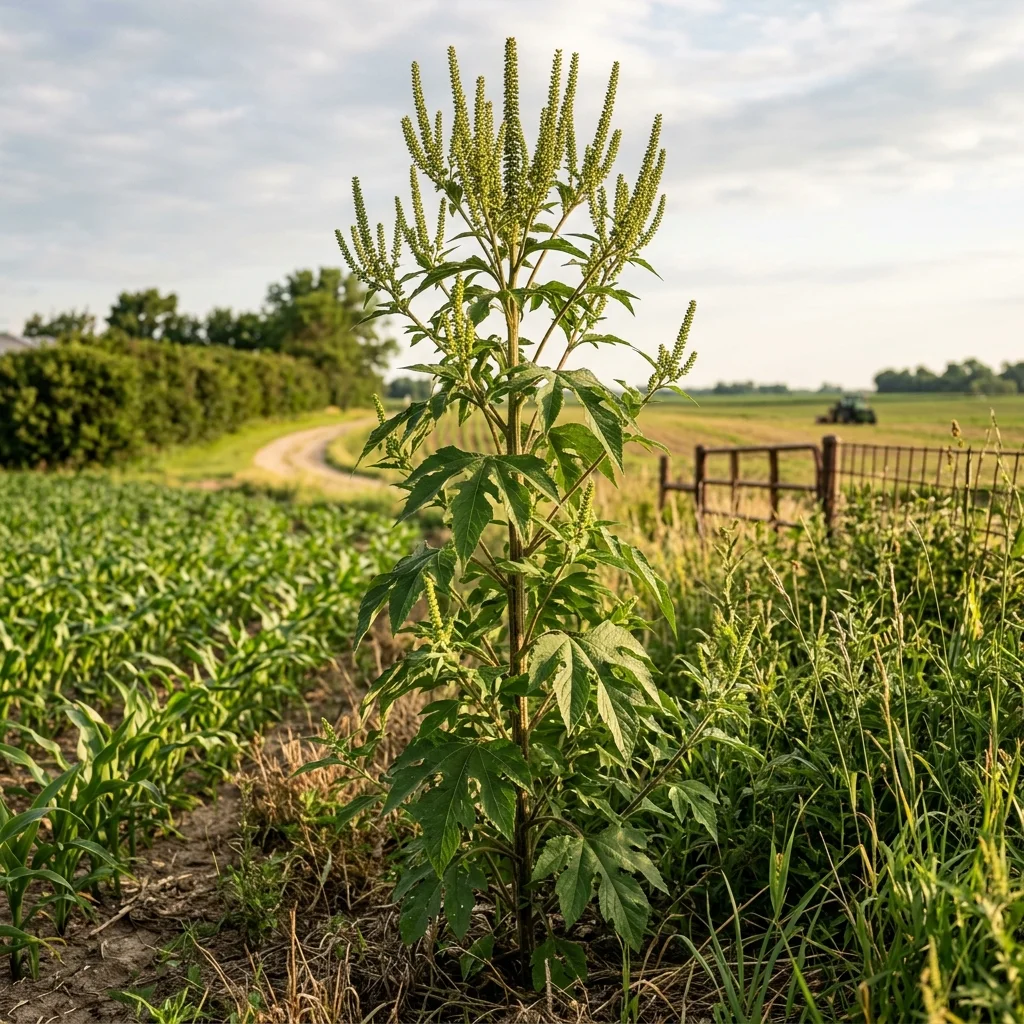
Ambrosia trifida

Giant Ragweed Identification & Control

Giant Ragweed is an exceptionally colossal, highly aggressive summer annual broadleaf weed in the aster family. Native to North America, it is a devastating agricultural pest that thrives in fertile riverbanks, crop fields, and damp yard margins. Growing to an astonishing height of up to 17 feet tall, it towers over crops, completely blocking out sunlight. Like its smaller cousin, it produces massive amounts of highly allergenic wind-blown pollen, making it a severe public health hazard in late summer.


Sunlight Icon
Sunlight Full Sun
Watering Icon
Watering Tolerance Moderate to High
Soil Mix Icon
Soil Adaptability Moist Rich Loam / Wet Clay
Temperature Icon
Growth Temp 12°C - 40°C
Toxicity Danger Icon
Danger / Toxicity Severe Allergy / Colossal Growth
Botanical macro photography of Giant Ragweed (Ambrosia trifida) - Plant AI care and control database

How to Identify Giant Ragweed

A colossal annual weed up to 15 feet tall with massive, deeply three-lobed leaves, exceptionally rough hairy stems, and tall yellow pollen spikes.

  • Gargantuan Three-Lobed Leaves: Leaf blades are massive (up to 30 cm long), opposite, and deeply divided into exactly three large, sharply toothed lobes.
  • Colossal Rough Stems: Stems are exceptionally thick, woody at the base, and covered in stiff, coarse, sandpaper-like white hairs.
  • Tall Yellow Flower Plumes: Male flowers form long, terminal, green-yellow spikes (up to 30 cm long) that release massive clouds of yellow pollen.
💡 Plant AI Tip: Giant Ragweed is a colossal light thief! Due to its rapid height growth (up to 15 feet in a single season) and massive three-lobed leaves, it can block 90% of sunlight from reaching underlying crops and grass, killing them.

Complete Care & Management Guide

Access highly technical, scientific management directives to control or cultivate Giant Ragweed effectively.

Highly adapted to moist, rich soils. It grows vigorously in low-lying turf grass, wet ditch margins, and pond edges. Improving drainage helps control it.
Controlled moderately by early cutting. Mowing the weed close to the ground in mid-summer before the green-yellow flower spikes open completely stops pollen and seed release.
Highly aggressive. It actively steals high levels of soil nutrients, outcompeting pasture grasses and garden flowers. Improving lawn density is key.
Requires Full Sun. It cannot tolerate shade and will fail to grow under a dense forest canopy. It quickly climbs urban structures to capture sunlight.
Prefers moist, rich loam, clay, and damp gravelly soils. It struggles in extremely dry, sterile sandy substrates.
Spreads aggressively strictly by seeds. A single giant ragweed plant can produce up to 5,000 seeds that easily float on water or blow in wind.
A summer annual. Germinates in spring, grows rapidly to flower in late summer, and is completely killed by the first winter frost, leaving seeds behind.
Features an exceptionally deep, thick vertical taproot anchored to a massive woody root crown. Excavation requires heavy digging equipment.
Occasionally targeted by ragweed leaf beetles (*Zygogramma suturalis*), which feed heavily on the leaves, acting as a helpful natural biological control.
Highly disease-resistant. It suffers virtually zero structural damage from natural plant diseases, maintaining highly aggressive growth.
To control Giant Ragweed organically, hand-pull young rosettes in early summer before they develop their tough, woody red taproot and bristly seed spikes, and mulch heavily.

Is your yard showing colossal three-lobed leaves or tall yellow pollen spikes?

Mow early to cut off seed heads, pull the shallow fibrous roots, and keep dogs away from dry patches.

Diagnose Weed Instantly

Common Diseases & Treatment

Pollen Explosion

Symptoms: Symptoms: Tall, green-yellow flower spikes release massive clouds of fine yellow dust under wind in late August.

Action: Action: Hand-pull immediately wearing a dust mask. Dispose of the weed in trash bags to prevent pollen and seed spread near homes.

Colossal Stem Shading

Symptoms: Symptoms: Giant ragweed leaves grow up to 15 feet tall, forming a dark canopy that kills all surrounding lawn grass.

Action: Action: Wear full protective clothing and eye protection. Use a long-handled spade to slice the taproot 3-4 inches below the soil surface to kill the crown.

Frequently Asked Questions

How is Giant Ragweed different from Common Ragweed?

Giant Ragweed (Ambrosia trifida) is a giant that grows up to 15+ feet tall, with massive leaves deeply divided into exactly three large lobes. Common Ragweed (Ambrosia artemisiifolia) grows only 3-5 feet tall and has highly delicate, fern-like leaves.

Why does it release so much pollen?

It is a wind-pollinated (anemophilous) plant. Because wind is an inefficient way to transport pollen, the plant has evolved to produce billions of microscopic, lightweight pollen grains per season to ensure successful fertilization of female flowers.

Is the plant toxic to horses?

No, it is non-toxic and is actually used as forage in some agricultural settings. However, it is a highly aggressive crop weed that will rob soil nutrients and choke out your garden vegetables.

What is the best organic way to control it?

Because it has a shallow fibrous root system, it is very easy to pull out by hand when the soil is wet. Manually weed them in early summer before they develop their heavy nodding purple seed spikes.

No more dying plants. Grow healthy greens today!

Get Started for Free