Goosegrass Identification & Control
Goosegrass, also widely known as Crowfoot Grass or Wiregrass, is an exceptionally tough, flat-growing annual grassy weed. Native to the Old World but now a massive pest worldwide, it is highly notorious for its extreme resistance to compaction, heavy foot traffic, and low mowing heights. It commonly dominates compacted sports fields, golf courses, walkways, and high-traffic lawns, growing in a tight, silver-white rosette that acts like a solid concrete anchor.





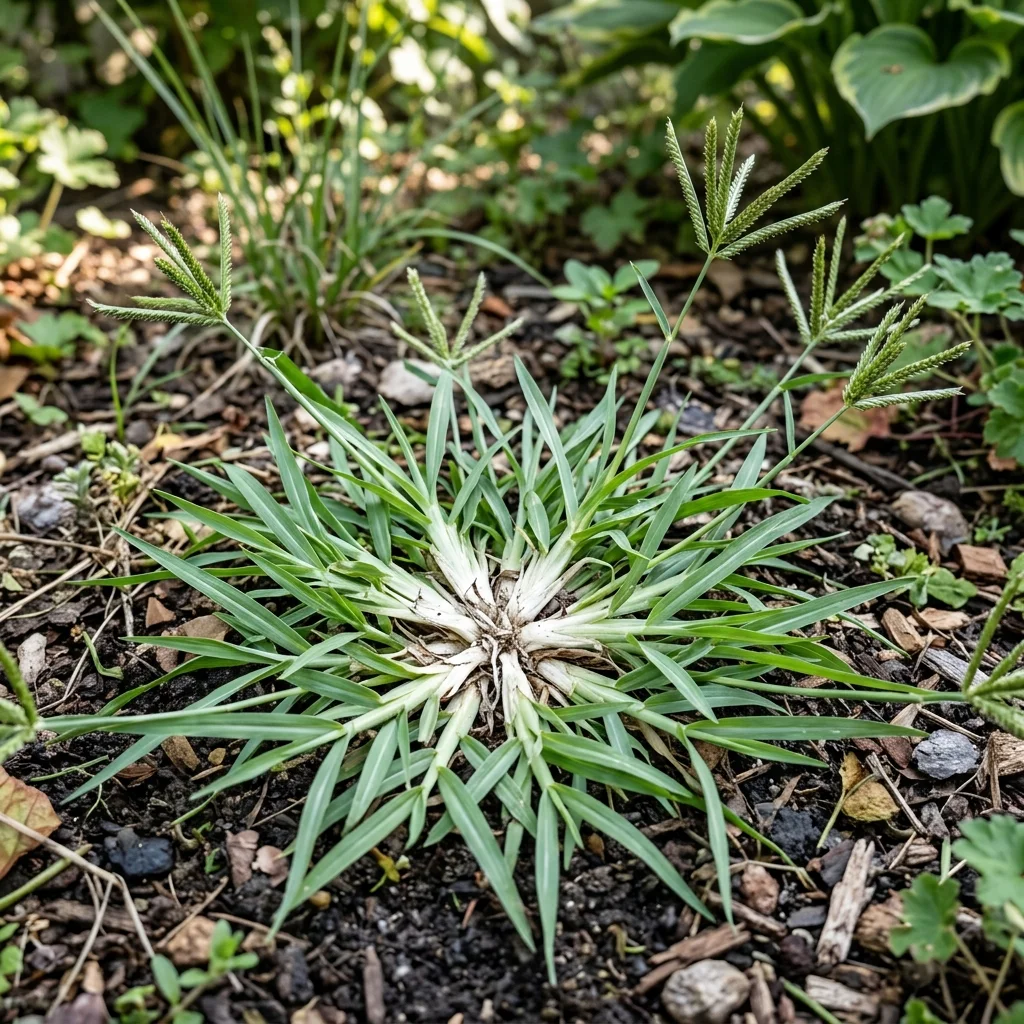
How to Identify Goosegrass
A flat, dark-green grassy rosette with a highly distinct silvery-white center, extremely tough wire-like stems, and heavy, zipper-like seed spikes resembling a crow's foot.
-
✔
Silvery-White Center: The base of the stems near the central crown is strongly flattened and displays a highly characteristic pale, silvery-white color.
-
✔
Tough Wiry Stems: Stems are exceptionally tough, fibrous, and flattened, resisting breaking even when stepped on by heavy athletic cleats.
-
✔
Crowfoot Seed Spikes: The seed head features 2 to 6 flat, finger-like spikes clustered at the top of a stiff stem, resembling a bird's footprint.
Complete Care & Management Guide
Access highly technical, scientific management directives to control or cultivate Goosegrass effectively.
Common Diseases & Treatment
Browning Rust
Symptoms: Small, dusty orange-brown spots appearing on the tough, flattened dark-green leaf blades.
Mower Dullness Damage
Symptoms: Goosegrass stems are shredded and frayed rather than cleanly cut, leaving unsightly brown fibrous tips.
Frequently Asked Questions
How is Goosegrass different from Crabgrass?
Goosegrass has extremely flat, tough stems with a highly distinct silvery-white color near the center of the rosette, and its seed heads resemble a crow's foot. Crabgrass has rounder, hairier stems that are pale-green, and lacks the silver-white center.
Why does Goosegrass grow in sports fields and walkways?
Goosegrass is incredibly resistant to compaction and physical crushing. High traffic kills off turf grasses, leaving bare, heavily packed soil where goosegrass seeds germinate and thrive without grass competition.
Can you pull Goosegrass out by hand?
It is very difficult because the stems are wire-like and the fibrous roots anchor deeply into packed clay. Trying to pull it by hand often breaks the stems off the crown, which will quickly regrow. Use a weeding tool to pry it out.
Does Goosegrass die in the winter?
Yes, Goosegrass is a summer annual. It is killed by winter freezes, but the dormant seeds remain in the soil, ready to sprout in late spring when soil temperatures reach 65°F (18°C).