Groundsel Identification & Control
Groundsel, botanically known as Senecio vulgaris, is an exceptionally common, highly toxic summer annual broadleaf weed in the Asteraceae family. Globally naturalized, it is a severe agricultural pest and a dreaded weed in residential gardens. It features upright, highly branched stems, deeply lobed ruffled leaves, and produces clusters of small, yellow, cylinder-shaped flower heads surrounded by black-tipped green bracts. Every part of the plant contains toxic Pyrrolizidine Alkaloids, which cause progressive, irreversible liver failure in grazing horses and cattle, and can be fatal to small pets.





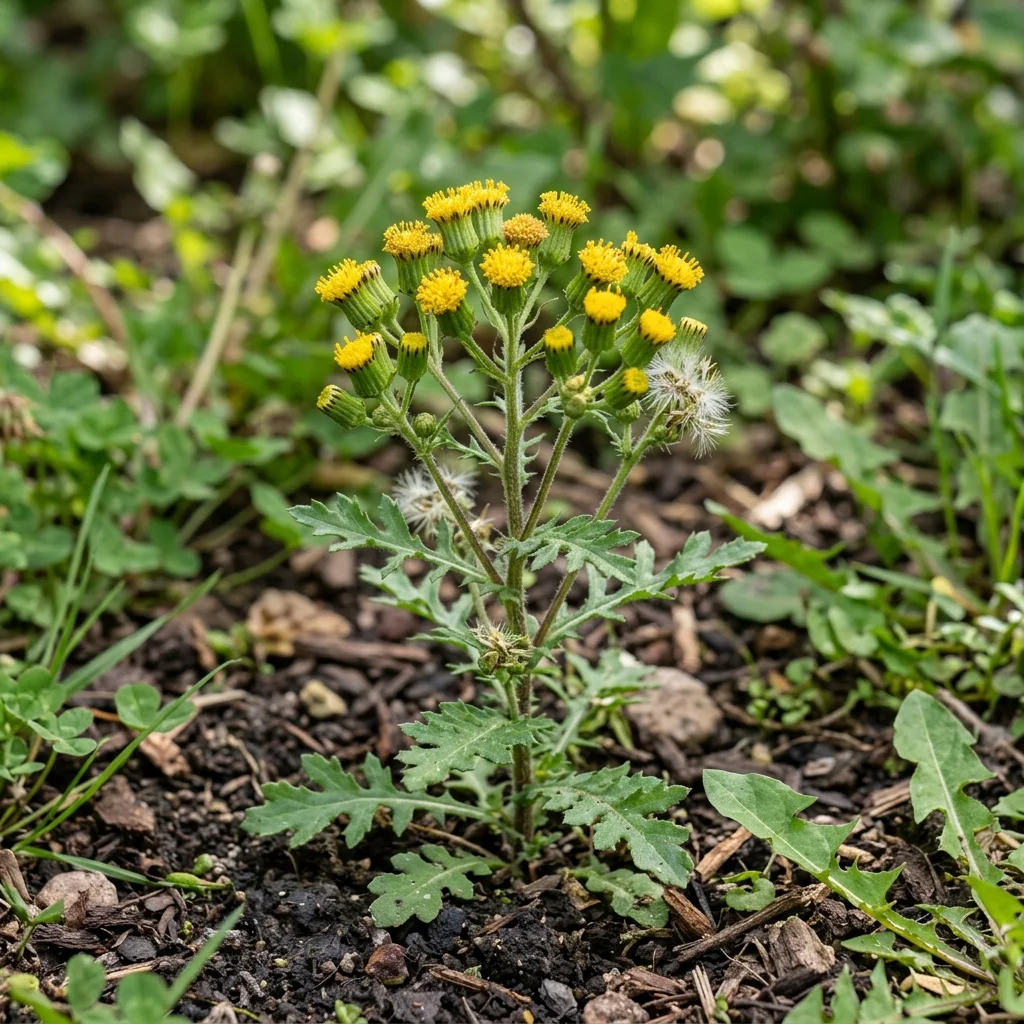
How to Identify Groundsel
An upright annual with ruffled lobed leaves, and small yellow cylinder-shaped flower heads surrounded by black-tipped green bracts.
-
✔
Black-Tipped Bracts: The green cup (involucre) surrounding the yellow flower head is lined with highly distinct, tiny, black-tipped green scales (bracts).
-
✔
Yellow Cylindrical Flowers: Small, upright, cylinder-like flower heads (1 cm long) composed of tiny yellow flowers, lacking outer daisy-like petals.
-
✔
White Fluffy seedballs: Yellow flowers mature rapidly into white fluffy seedballs (clocks) that are carried by the wind.
Complete Care & Management Guide
Access highly technical, scientific management directives to control or cultivate Groundsel effectively.
Common Diseases & Treatment
Pyrrolizidine Liver Failure
Symptoms: Ingestion of groundsel by horses leads to progressive lethargy, jaundice, sun photosensitivity, and irreversible liver failure.
Explosive Seed ball Spread
Symptoms: Yellow cylinder flower heads turn into white fluffy seedball puffballs within days, spreading rapidly on wind drafts.
Frequently Asked Questions
Why is Common Groundsel considered so dangerous in pastures?
Every part of Common Groundsel is packed with highly toxic pyrrolizidine alkaloids. Ingestion causes chronic, irreversible liver destruction in horses, cattle, and rabbits. The toxin is cumulative and remains highly active even in dried hay.
How does Groundsel reproduce so quickly?
Groundsel has a very short lifecycle, maturing from seed to flower in just 5 to 6 weeks. A single plant can produce up to 20,000 seeds that mature into white fluffy blowballs, enabling multiple generations per year.
Does Groundsel have outer daisy petals?
No. Unlike other daisy-family weeds, Groundsel's yellow cylindrical flower heads consist only of disc florets. They lack the showy, outer ray petals, making the flowers look like closed yellow buds.
What is the best way to get rid of Groundsel organically?
Since it has a very shallow taproot, you can easily hand-pull or hoe the green rosettes when the soil is moist. Make sure to pull them before the yellow flower heads turn into fluffy white seedballs to prevent wind dispersal.