Johnsongrass Identification & Control
Johnsongrass, botanically classified as Sorghum halepense, is an exceptionally colossal, highly invasive perennial grass weed in the Poaceae family. Native to the Mediterranean region but globally naturalized, it is ranked among the world's 10 worst agricultural weeds. Growing up to an astonishing 8 feet tall, it features thick, cane-like stems, broad leaves with a prominent white midvein, and massive, open reddish-purple seed panicles. It spreads aggressively via a sprawling, unstoppable network of thick white rhizomes. Crucially, when stressed by frost, drought, or physical cutting, Johnsongrass accumulates lethal levels of prussic acid (hydrogen cyanide), which causes rapid, fatal cyanide poisoning in grazing cattle and horses.





How to Identify Johnsongrass
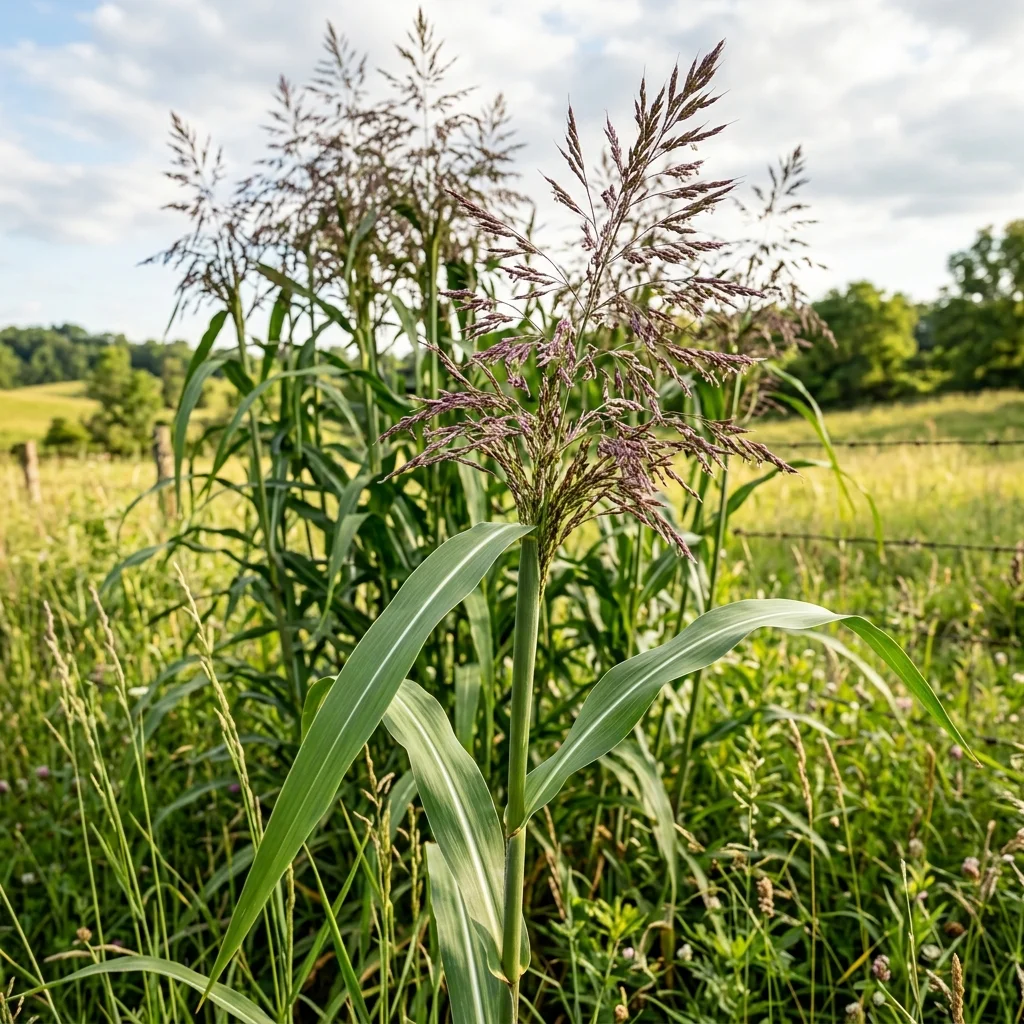
A colossal, cane-like perennial grass up to 8 feet tall with broad leaves showing a white midvein, and massive, open reddish-purple seed heads.
-
✔
White Midvein Leaves: Broad, flat, smooth leaves (up to 2 feet long) possess a highly distinct, prominent, bright white central vein.
-
✔
Reddish-Purple Panicles: Massive, open, branched, pyramid-shaped flower clusters (up to 50 cm long) that turn a highly distinct reddish-purple at seed maturity.
-
✔
Thick Creeping Rhizomes: Features a massive, sprawling network of thick, white, fleshy, creeping rhizomes with purple-brown scales.
Complete Care & Management Guide
Access highly technical, scientific management directives to control or cultivate Johnsongrass effectively.
Common Diseases & Treatment
Prussic Acid Poisoning
Symptoms: Cattle consume frosted or wilted Johnsongrass leaves, leading to severe gasping, frothing at the mouth, muscle tremors, seizures, and rapid death.
Rhizome Regeneration
Symptoms: Pulling the stalks snaps the stems at the soil line, leaving massive purple-scaled creeping rhizomes to shoot back up.
Frequently Asked Questions
Why is Johnsongrass so toxic to grazing cattle?
Under physical stress such as frost, drought, or cutting, the leaves produce cyanogenic glycosides which release toxic hydrogen cyanide (prussic acid), causing swift asphyxiation in grazing livestock.
How fast does Johnsongrass spread?
It spreads extremely fast via seed (up to 80,000 seeds per plant) and creeping underground rhizomes that can grow over 30 feet in a single season, quickly choking out native plants.
Does it have an allelopathic effect?
Yes. Johnsongrass roots secrete toxic allelopathic chemical compounds into the surrounding soil, suppressing seed germination and growth of neighboring agricultural crops.
What is the best way to get rid of it?
Dig up the thick white rhizome chains deep using a garden fork in early spring, ensuring you do not leave any fragments behind, as even tiny root sections sprout new stems.