Bryophyta

Moss Identification & Control

Moss, belonging to the ancient division of non-vascular plants (Bryophyta), is an exceptionally common, persistent yard weed. Thriving in deeply shaded, moist, poorly drained, and highly acidic soils, it aggressively invades lawns where grass is struggling. It forms a dense, velvety green carpet of tiny, overlapping leaves that suffocates lawn grass by hogging water and nutrients, indicating severe soil issues.


Sunlight Icon
Sunlight Deep Shade to Partial Shade
Watering Icon
Watering Tolerance High
Soil Mix Icon
Soil Adaptability Wet Acidic Clay / Compacted / Poor Soil
Temperature Icon
Growth Temp 2°C - 28°C
Toxicity Danger Icon
Danger / Toxicity Pet Safe / Compaction Indicator
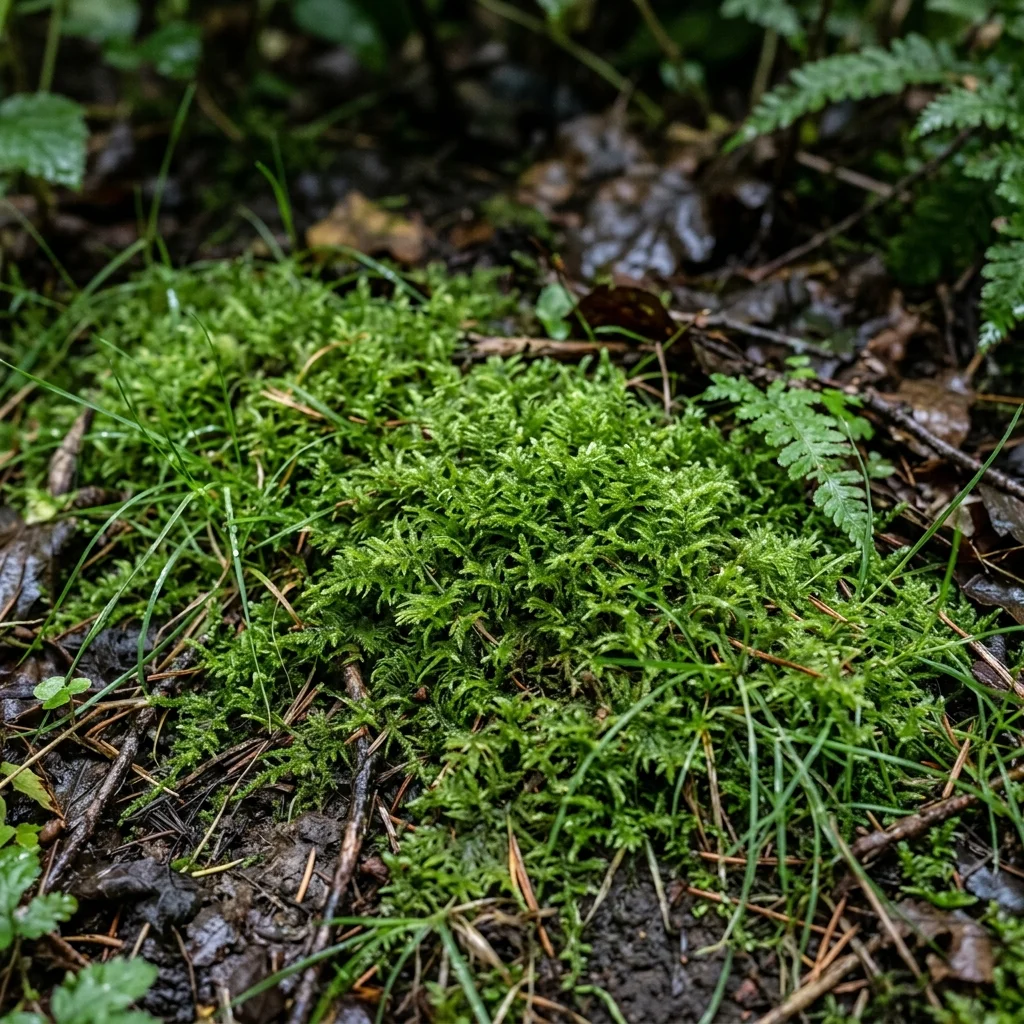
Botanical macro photography of Moss (Bryophyta) - Plant AI care and control database

How to Identify Moss

A low-growing, non-vascular velvety green mat of tiny, overlapping scale-like leaves, lacking true roots, stems, or flowers.

  • Velvety Green Carpet: Forms a dense, soft, velvety green or yellow-green carpet that cushions the ground in damp lawn spots.
  • No Flowers or Seeds: Lacks flowers, seeds, and vascular veins, reproducing instead via wind-dispersed microscopic green spores.
  • Shallow Root-Like Rhizoids: Lacks true roots, anchoring to the soil surface using fine, delicate, hair-like rhizoids.
💡 Plant AI Tip: Moss is the ultimate indicator of four lawn problems: Deep shade, poor soil drainage, low pH (acidic soil), and compacted soil! Fixing these four issues will make moss disappear naturally.

Complete Care & Management Guide

Access highly technical, scientific management directives to control or cultivate Moss effectively.

Requires consistent moisture. It thrives in damp, wet, poorly drained soils, riverbanks, and overwatered garden beds. Allowing the top soil layer to dry out helps slow its spread.
Mowing has no effect on moss, as it grows lower than the mower blades. Raking or dethatching is required to physically remove the moss mats.
Thrives in nutrient-poor, highly acidic, and low-oxygen soils. Adding lime to raise soil pH (making it more alkaline) and fertilizing helps turf outcompete it.
Highly shade-tolerant. It easily colonizes damp, shaded lawn areas beneath trees where competitive turf grasses like Kentucky Bluegrass struggle and thin out.
Prefers wet clay, acidic loam, sandy soils, and damp gravelly driveways. It does not require loose, rich organic soils.
Does not produce seeds. It reproduces via wind-dispersed microscopic spores released from tiny capsules on slender stalks, and by fragmentation.
Extremely cold-hardy. Moss often remains green throughout the winter and actively grows during cool, damp weather when lawn grasses go dormant.
Lacks true roots. It anchors itself to the soil surface using fine, shallow, hair-like structures called rhizoids, making it very easy to rake out.
Virtually immune to pests due to its high silica and toxic chemical composition, which acts as a powerful natural pest deterrent.
Highly disease-resistant. It suffers virtually zero structural damage from natural plant diseases, maintaining highly aggressive growth.
To control Moss organically, improve soil drainage, apply agricultural lime to raise soil pH, and rake the moss mats out using a heavy lawn rake or dethatcher.

Is your wet lawn being suffocated by a velvety green carpet?

Improve drainage, raise soil pH with agricultural lime, and rake out the dense moss mats to let your grass breathe.

Diagnose Weed Instantly

Common Diseases & Treatment

Soil Compaction & Poor Drainage

Symptoms: A dense velvety green mat takes over lawn areas that stay continuously wet, suffocating the grass.

Action: Aerate the soil to improve drainage and reduce compaction. Prune overhanging tree branches to increase sunlight.

High Soil Acidity

Symptoms: Moss thrives while lawn turf struggles, yellows, and thins out, indicating a very low soil pH.

Action: Test soil pH. Apply fast-acting agricultural lime to raise the pH (sweeten the soil), making it favorable for grass and unfavorable for moss.

Frequently Asked Questions

Why is Moss growing in my lawn?

Moss is an opportunistic invader. It grows where lawn grass is weak, primarily due to deep shade, poor soil drainage, high compaction, or high soil acidity (low pH).

Is Moss toxic to dogs?

No, Moss is completely non-toxic and safe for pets. However, it can harbor ticks and fleas, and its presence indicates severe soil issues that should be addressed.

Does Moss produce seeds?

No. Moss is a primitive, non-vascular plant. It reproduces via wind-dispersed microscopic green spores released from capsules on slender stalks.

What is the best way to get rid of Moss organically?

First, raise the soil pH. Moss loves acidic soils; applying agricultural lime makes the soil unfavorable. Next, improve drainage to dry the area, and rake out the moss mats using a heavy lawn rake.

No more dying plants. Grow healthy greens today!

Get Started for Free