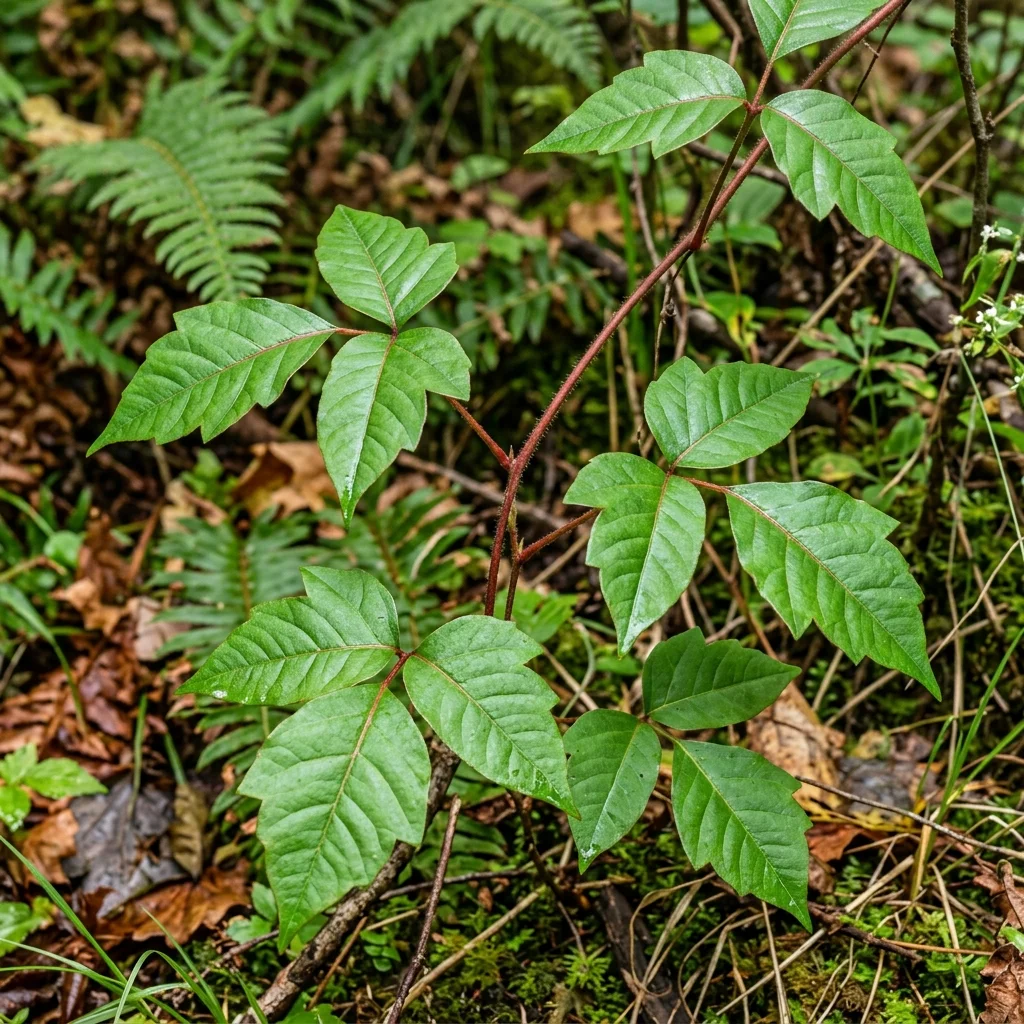
Toxicodendron radicans

Poison Ivy Identification & Control

Poison Ivy is an exceptionally notorious, hazardous perennial woody weed famed for its ability to cause severe, agonizing skin rashes and blisters. Native to North America, it thrives abundantly in forest margins, home gardens, and climbing up trees. Spreading aggressively as a ground cover or a climbing woody vine, the entire plant is saturated with **urushiol**—a highly potent, sticky, and invisible oil that remains active on dead vines, clothing, and pet fur for years, posing a constant danger.


Sunlight Icon
Sunlight Partial Shade to Full Sun
Watering Icon
Watering Tolerance Low to Moderate
Soil Mix Icon
Soil Adaptability Any Soil / Moist / Dry
Temperature Icon
Growth Temp 5°C - 40°C
Toxicity Danger Icon
Danger / Toxicity Highly Toxic / Severe Rash
Botanical macro photography of Poison Ivy (Toxicodendron radicans) - Plant AI care and control database

How to Identify Poison Ivy

A woody vine or shrub with compound leaves grouped in threes ('leaves of three, let it be'), smooth or notched margins, and hairy climbing stems.

  • Leaves of Three, Let It Be: Leaves are compound, divided into exactly three distinct leaflets. The central leaflet has a longer stalk than the two side leaflets.
  • Hairy Climbing Vines: Climbing vines are covered in dense, dark-brown, hair-like aerial roots that anchor the woody stem tightly to tree bark.
  • Waxy White Berries: Sprouts small, waxy, grey-white berries in late summer, which are highly sought after by birds but toxic to humans.
⚠️ CRITICAL WARNING: Never burn Poison Ivy! Burning the plant vaporizes the toxic **urushiol** oil into the smoke. Inhaling poison ivy smoke can cause severe, life-threatening internal blistering of the lungs, requiring immediate emergency medical care.

Complete Care & Management Guide

Access highly technical, scientific management directives to control or cultivate Poison Ivy effectively.

Extremely resilient. It thrives in damp woodland soils but survives dry summers easily due to its tough, woody perennial root system and deep taproots.
Extremely hazardous. Mowing or weed-whacking poison ivy is highly dangerous as it flings toxic urushiol oil droplets onto your skin, eyes, and clothing. Manual hand-pulling requires strict safety gear.
Highly adaptable to sterile soils. It actively climbs trees and structures, competing with ornamental plants for light while anchoring its roots in garden beds.
Highly versatile. Thrives in Full Sun but exhibits high shade tolerance, allowing it to colonize dense forest understories and shaded backyard edges.
Adapts to virtually all garden soils, clay, sandy loam, and gravelly forest edges. It prefers damp, rich soils but tolerates dry substrates easily.
Spreads via seeds and underground root creeping. Birds eat the waxy white berries and deposit seeds along fence lines, while the root system spreads horizontally.
A woody perennial. Leaves turn a beautiful bright red-orange in autumn and drop in winter, but the bare woody stems and hairy vines remain highly loaded with toxic urushiol oil all winter.
Features an extensive underground root network and creeping rhizomes. Complete extraction requires wearing heavy-duty chemical-resistant gloves and digging up the root crown.
Rarely targeted by insect pests due to its toxic resinous chemistry, which acts as a powerful natural pest deterrent.
Highly disease-resistant. It suffers virtually zero structural damage from natural plant diseases, maintaining highly aggressive growth.
To eradicate Poison Ivy organically, wear thick long sleeves, long pants, and heavy chemical-resistant gloves. Carefully dig out the root crown, put all parts in a trash bag, and wash all clothing and tools with specialized urushiol-removing soap (like Tecnu).

Are your yard margins showing climbing hairy vines or compound leaves of three?

Wear heavy chemical-resistant gloves, dig out the woody root crown, and NEVER burn the plant.

Diagnose Weed Instantly

Common Diseases & Treatment

Urushiol Contact

Symptoms: Symptoms: Touching the glossy leaves triggers severe skin itching, followed by red streaks, swelling, and oozing fluid blisters.

Action: Action: Wash the skin immediately (within 10-30 minutes) with dish soap and cold water, or specialized urushiol-remover Tecnu. Apply hydrocortisone cream.

Hairy Vine Choking

Symptoms: Symptoms: Dark, hairy woody vines climb up your backyard trees, covered in grey-white waxy berries.

Action: Action: Wear complete protective gear. Cut the vine base near the ground. Let the upper vine die on the tree; do not rip it off as urushiol will spray.

Frequently Asked Questions

What does 'leaves of three, let it be' mean?

It is a classic warning phrase. Poison Ivy always has compound leaves composed of exactly three leaflets. The leaflets can be smooth-edged or notched, but the group of three arrangement is constant.

Is Poison Ivy toxic to dogs and cats?

Dogs and cats are mostly immune to the rash because of their thick fur. However, the toxic urushiol oil will stick to their fur when they run through it. Touching your pet's fur can then transfer the oil to your skin, causing a severe rash.

Can I kill Poison Ivy by spraying it with vinegar?

High-strength horticultural vinegar (20% acetic acid) can burn the green leaves, but it will not kill the deep, woody perennial roots. The plant will quickly sprout new leaves from the root crown.

What is the best way to wash urushiol oil off my tools?

Wipe your gardening tools thoroughly with rubbing alcohol or mineral spirits, then wash them with hot soapy water. Urushiol is highly insoluble in water alone and must be dissolved with alcohol or degreasing soap.

No more dying plants. Grow healthy greens today!

Get Started for Free