Purslane Identification & Control
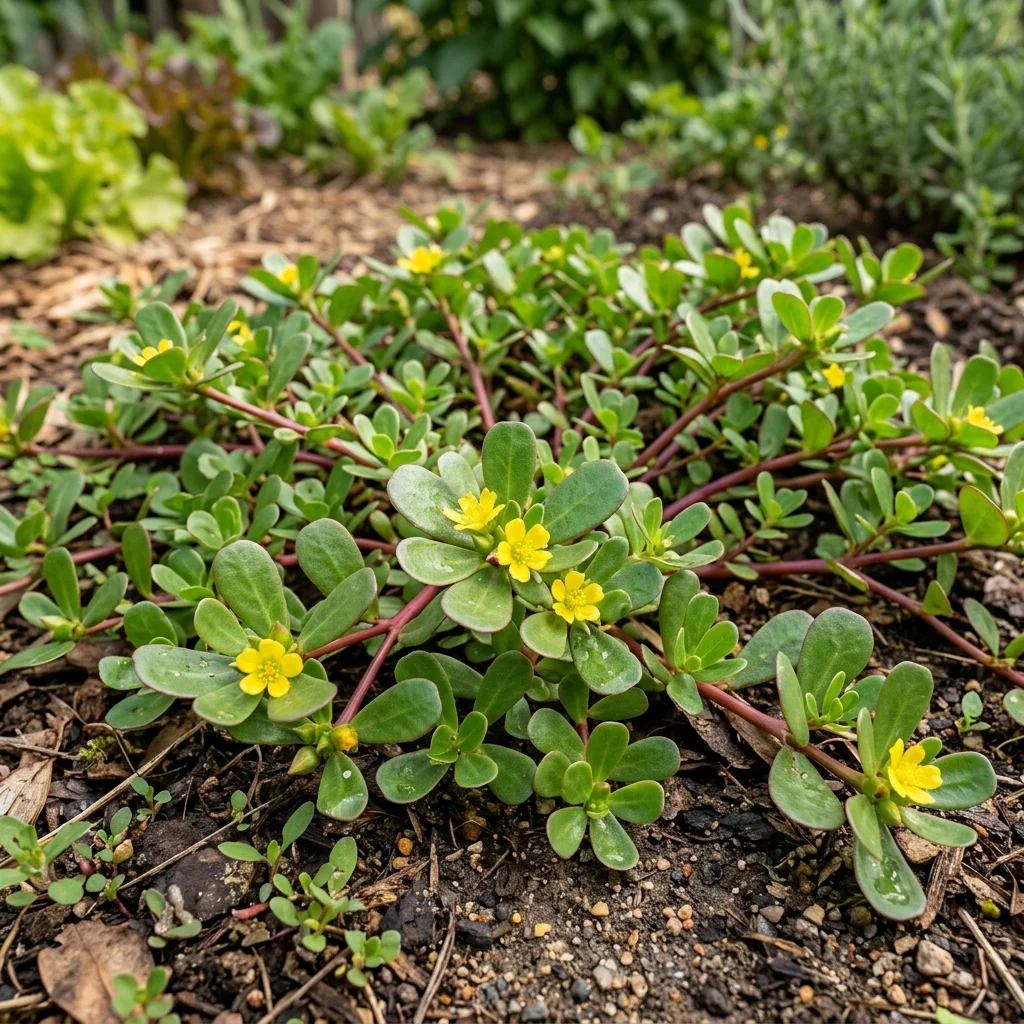
Purslane is an exceptionally resilient, low-growing succulent annual weed native to North Africa and Eurasia, now globally naturalized. Famous for its outstanding heat and drought tolerance, it thrives vigorously in dry garden beds, urban sidewalk cracks, and gravel driveways. Featuring thick, fleshy, reddish stems and smooth, paddle-shaped leaves, it forms flat, expanding mats that produce tiny yellow flowers, representing a highly successful weed and nutritious wild herb.





How to Identify Purslane
A prostrate, mat-forming succulent annual with thick, smooth, reddish stems, paddle-shaped fleshy leaves, and tiny yellow flowers.
-
✔
Fleshy Reddish Stems: Smooth, round, highly succulent stems (10 to 30 cm) that are bright reddish-green, creeping flat along the ground.
-
✔
Paddle-Shaped Leaves: Thick, fleshy, paddle-shaped green leaves clustered at stem joints, storing massive amounts of water.
-
✔
Tiny Yellow Flowers: Small, 5-petaled yellow flowers (6 mm) blooming at stem tips, opening only in bright morning sunlight.
Complete Care & Management Guide
Access highly technical, scientific management directives to control or cultivate Purslane effectively.
Common Diseases & Treatment
Stem Rot
Symptoms: Thick reddish stems turn dark brown, soft, mushy, and rot during prolonged damp rains.
Re-Rooting Fragments
Symptoms: Broken purslane stems left on the soil sprout fresh roots and start growing new mats.
Frequently Asked Questions
Why is Purslane growing in my sidewalk cracks?
Purslane is a succulent that thrives in extreme heat and dry soil. Sidewalk cracks absorb massive heat from the sun and offer dry, sandy soil, creating the perfect desert-like environment for purslane.
Does Purslane contain Omega-3?
Yes! Purslane is a famous superfood. It contains more Omega-3 fatty acids than most fish oils, as well as high concentrations of vitamins A, C, and E, making it a highly nutritious edible weed.
Can pulled Purslane grow back?
Yes. If you pull purslane and leave it on the ground, its thick succulent stems can survive for days without soil. The moment it rains or receives moisture, the stem nodes will sprout fresh roots.
What is the best way to get rid of Purslane?
Hand-pull the central root, bag the entire plant immediately, and sweep up any broken stem fragments. Apply a thick layer of organic mulch or sow a dense cover crop to block sunlight.