Redroot Pigweed Identification & Control
Redroot Pigweed is an exceptionally aggressive, highly prolific summer annual broadleaf weed in the amaranth family. Native to tropical America but thoroughly naturalized globally, it is a severe agricultural and garden pest. Growing up to 6 feet tall, it features a highly distinctive, bright pink-to-red fleshy taproot. It is a legendary seed producer, with a single robust plant capable of producing up to 100,000 to 200,000 seeds, aggressively robbing soil nitrogen and outcompeting crops.





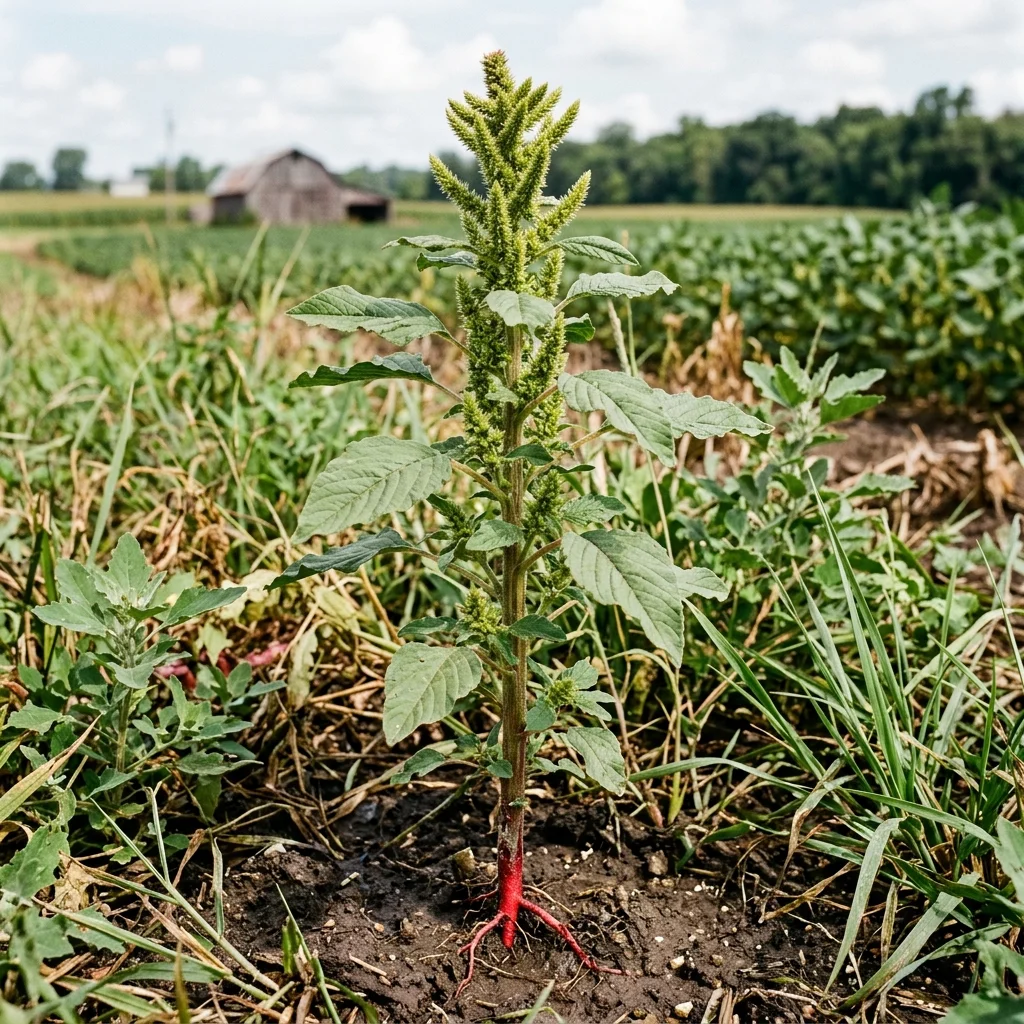
How to Identify Redroot Pigweed
An erect annual with rough, hairy stems, egg-shaped dull-green leaves, a brilliant red or pink fleshy taproot, and dense, bristly green flower spikes.
-
✔
Silky Pink-Red Taproot: The central taproot and lower stem base are colored a highly distinct, brilliant pinkish-red to bright rose-purple.
-
✔
Rough Hairy Stems: Stems are stout, branched, and densely covered in short, stiff, rough hairs, growing up to 6 feet tall.
-
✔
Bristly Green Flower Spikes: Tiny green flowers are clustered in exceptionally dense, stiff, prickly, bristly spikes at the top of stems.
Complete Care & Management Guide
Access highly technical, scientific management directives to control or cultivate Redroot Pigweed effectively.
Common Diseases & Treatment
Nitrate Toxicity Accumulation
Symptoms: Leaves accumulate high levels of chemical nitrates, becoming dark-green and extremely toxic to grazing pets.
Late-Season Stolon Branching
Symptoms: Cut pigweed stems quickly grow low, horizontal lateral branches that produce seeds despite mowing.
Frequently Asked Questions
Why is it called 'Redroot' Pigweed?
It is named 'Redroot' because the plant's lower stem and central fleshy taproot are colored a highly distinct, brilliant rose-purple or reddish-pink, which makes it incredibly easy to identify when pulled from the ground.
Are the seeds edible?
Yes! Redroot Pigweed belongs to the amaranth family. Historically, Native Americans harvested the abundant tiny black seeds to grind into a highly nutritious, protein-rich flour, and the young tender spring leaves are edible cooked.
Is Redroot Pigweed toxic to dogs?
Yes, if eaten in large quantities. The plant accumulates high levels of nitrates and soluble oxalates, which can cause gastrointestinal distress, weakness, and potential kidney failure in curious pets.
What is the best way to prevent it organically?
Because it is a summer annual that germinates from seed in warm soils, applying 3 inches of organic wood mulch or straw in late spring completely blocks light from reaching the dormant seeds, preventing germination.