Russian Thistle Identification & Control
Russian Thistle, classically celebrated as the iconic Tumbleweed of the American West, is an exceptionally aggressive, tough summer annual broadleaf weed in the Amaranthaceae family. Native to Eurasia but thoroughly naturalized, it is a massive threat to arid agricultural fields and dry lawns. Growing into a dense, rounded, spiny green bush up to 4 feet tall, the plant dries out in autumn, breaks off at the soil surface, and is blown by wind across the landscape as a rolling 'tumbleweed', scattering up to 250,000 seeds along its path.





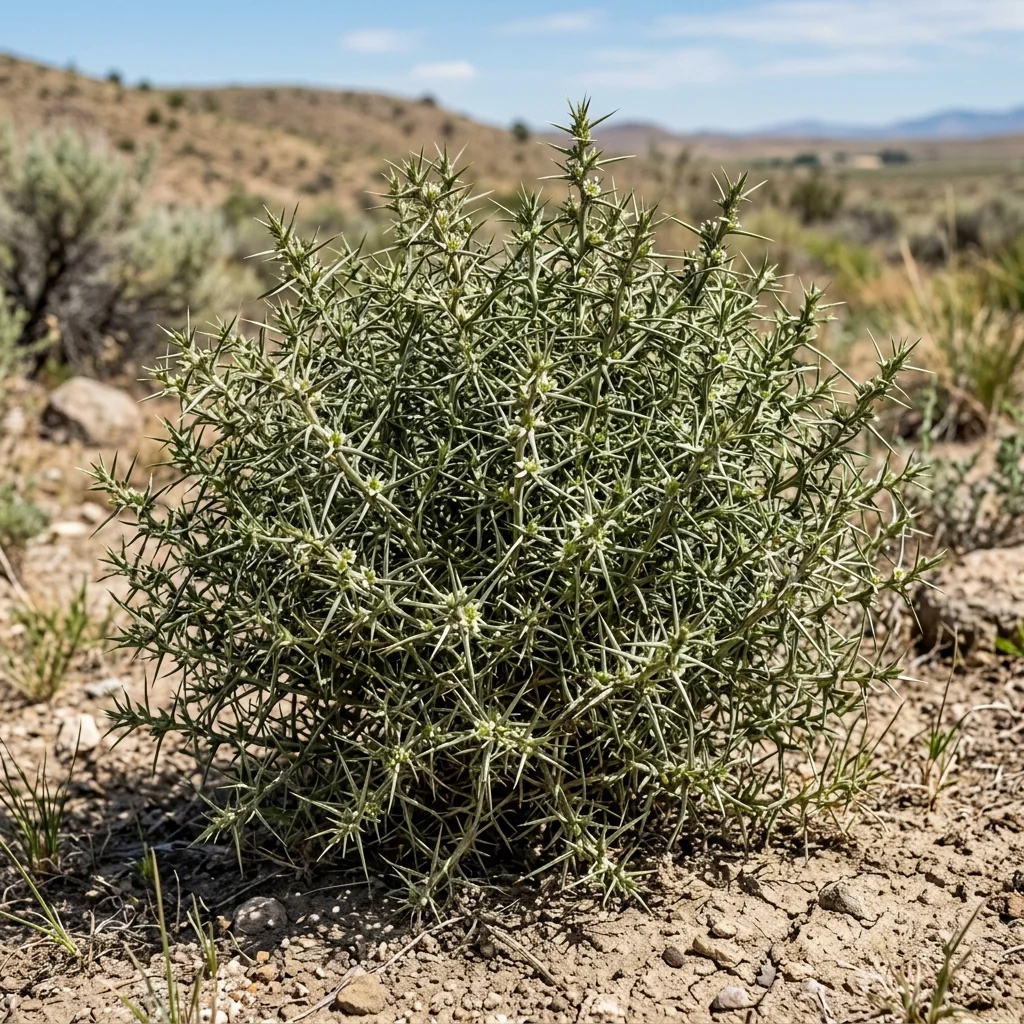
How to Identify Russian Thistle
An upright, heavily branched, rounded annual bush with stiff spine-tipped leaves, purple-striped stems, and rolling tumbleweed habit in autumn.
-
✔
Spine-Tipped Needle Leaves: Young leaves are soft and fleshy, but mature leaves turn short, exceptionally stiff, needle-like, and tipped with a sharp spine.
-
✔
Purple-Striped Woody Stems: Stems are highly branched, stiff, woody at maturity, and frequently show bright reddish-purple longitudinal stripes.
-
✔
Wind-Blown Tumbleweed Habit: The dry, brown, spiny spherical bush snaps at the base in autumn, rolling with the wind across open land.
Complete Care & Management Guide
Access highly technical, scientific management directives to control or cultivate Russian Thistle effectively.
Common Diseases & Treatment
Fire Tinder Hazard
Symptoms: Dry spherical tumbleweed bushes pile up along fences and porches, dry, brittle, and highly flammable.
Spine Puncture Dermatitis
Symptoms: Stiff, woody needle-like leaf spines puncture the skin during handling, causing immediate stinging and redness.
Frequently Asked Questions
How does Russian Thistle roll?
In autumn, when the seeds are mature, a specialized layer of cells at the base of the stem turns brittle and snaps easily under wind. The lightweight, spherical, spiny bush is caught by the wind and rolls across fields, scattering seeds as it bounces.
Is Russian Thistle native to America?
No. Despite being the classic symbol of the American Wild West, Russian Thistle was accidentally imported to South Dakota in 1873 by Russian immigrants in flax seed. By 1890, it had spread across the entire western USA.
Is Russian Thistle toxic to livestock?
Young, tender green thistle sprouts are actually nutritious and eaten by cattle. However, mature plants are extremely toxic due to exceptionally high levels of chemical nitrates and soluble oxalates, which cause kidney failure in sheep.
What is the best way to get rid of it?
Use a sharp garden spade to slice the thick vertical taproot 3 inches below the soil surface in spring when the plant is still soft and green. Bag and destroy them before the woody spines and seeds form in late summer.