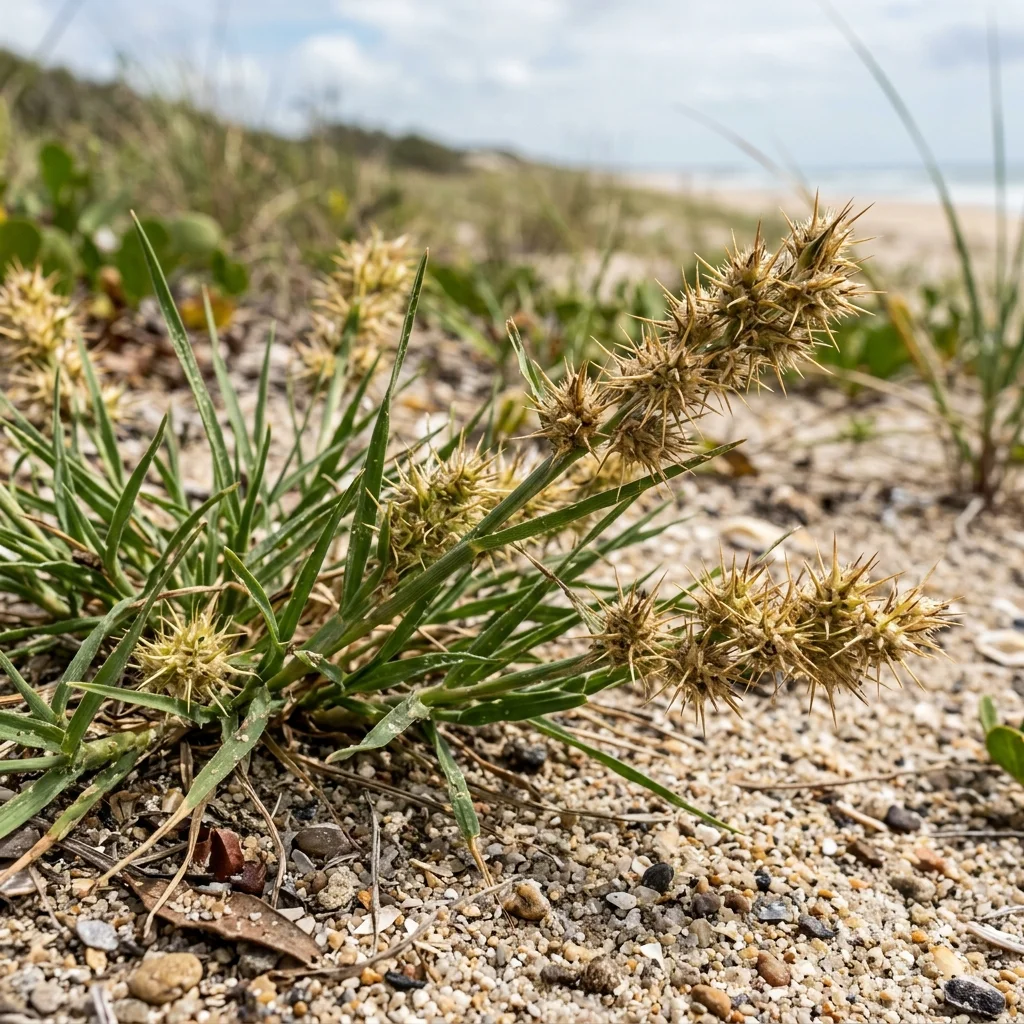
Cenchrus spinifex

Sandbur Identification & Control

Sandbur, botanically known as Cenchrus spinifex, is an exceptionally troublesome, low-growing grassy annual or short-lived perennial weed in the grass family. Highly adapted to parched, sterile sand-dunes, coastal banks, and dry home lawns, it is notorious for producing seedheads packed with extremely sharp, spiny woody burs. The spines are equipped with backward-pointing barbs that easily pierce shoe soles and pet paws, causing immediate pain and infection, making this a highly dreaded summer grass.


Sunlight Icon
Sunlight Full Sun
Watering Icon
Watering Tolerance Low
Soil Mix Icon
Soil Adaptability Dry Sandy / Sterile / Any Poor Soil
Temperature Icon
Growth Temp 15°C - 45°C
Toxicity Danger Icon
Danger / Toxicity Spiny Burs / Pet & Foot Injury
Botanical macro photography of Sandbur (Cenchrus spinifex) - Plant AI care and control database

How to Identify Sandbur

A spreading, clump-forming annual grass with flat leaf blades, rough sheaths, and spikes producing clusters of spiny, straw-colored burs.

  • Sharp Spiny Burs: Terminal flower spikes are densely packed with green-to-straw colored burs (5 to 10 mm wide) armed with stiff, vicious spines.
  • Rough Spreading Culms: Stems are flat, branched, and bent at lower joints, spreading horizontally before growing erect up to 2 feet tall.
  • Hairy Collar Sheath: The leaf sheaths are highly flattened and possess a ring of short hairs (ligule) at the collar zone.
⚠️ Pet Alert: Sandbur spines have tiny backward-pointing microscopic barbs! If a dog steps on a bur, it will hook deep into the paw skin, causing severe limping and abscesses. Specialized tweezers are needed for extraction.

Complete Care & Management Guide

Access highly technical, scientific management directives to control or cultivate Sandbur effectively.

Extremely drought-tolerant. It thrives in dry sand baking where competitive turf grasses like Bermuda struggle. Reducing irrigation is a great way to let dense turf choke it out.
Resistant to mowing. Although upright stems are clipped, the flat-growing lateral branches escape the blades easily, continuing to sprout spiny burs close to the ground.
Thrives in nutrient-starved soils. Improving soil fertility by adding organic compost and nitrogen lawn fertilizers helps desirable grass outcompete sandbur.
Requires Full Sun. It cannot tolerate shade and will fail to grow under trees or beneath thick shrub shading. Overseeding shaded areas is highly effective.
Highly adapted to dry sandy soil, gravelly driveways, and nutrient-deficient clay. It struggles in soggy, wet organic loam.
Reproduces strictly by seeds enclosed in the hard, spiny bur. The burs hitchhike on animal fur, socks, and tires, spreading seeds over miles.
A summer annual. Germinates when soil temperatures reach 65°F (18°C) in late spring, grows rapidly in summer heat, and dies with winter frost.
Features a shallow, fibrous root system that is very easy to pull out when young before the plant begins to tiller and produce spiny burs.
Virtually immune to pests. Grass hoppers occasionally feed on leaves, but damage is negligible to its aggressive growth.
Rarely suffers from diseases, though damp autumns can bring mild leaf rust spots that fail to kill the plant before it drops burs.
To control Sandbur organically, hand-pull young clumps in early spring before seedheads harden, and apply pre-emergent organic corn gluten meal to block seeds.

Are your dry sandy lawn edges showing sharp straw-colored burs?

Hand-pull the grass clumps before burs turn straw-colored, feed your lawn to increase density, and wear thick gloves.

Diagnose Weed Instantly

Common Diseases & Treatment

Paw Infestation

Symptoms: Symptoms: Spiny woody burs stick tightly to animal paws and coat fur, causing skin irritation, limping, and raw bites.

Action: Action: Use pliers or thick leather gloves to carefully slide the burs out of fur. Disinfect any paw wounds with antiseptic spray.

Low Mowing Escape

Symptoms: Symptoms: Flattened stems continue to flower and drop spiny burs below your mower blade height.

Action: Action: Install a lawn mower clipping catcher bag. Mow high to let turf grass shade the soil, and manually dig out flat root crowns.

Frequently Asked Questions

Why is Sandbur so painful?

The seed spikes of Sandbur are covered in stiff, woody spines. Each spine is tipped with microscopic, backward-pointing barbs. Once they puncture the skin, they lock in place, making pulling them out extremely painful and prone to leaving tiny tips behind.

Does Sandbur indicate a soil problem?

Yes. The presence of Sandbur is a classic indicator of dry, sterile, sandy, and nutrient-poor soils. It thrives where lawn grass thins out due to lack of nitrogen and water.

Is Sandbur toxic to pets?

It is not chemically toxic, but it causes severe physical trauma. If swallowed by a dog, the sharp spines can puncture the mouth, esophagus, and stomach lining, requiring emergency veterinary surgery.

What is the best way to get rid of Sandbur?

Because it is an annual, prevention is key. Dig out young grass clumps in spring before the burs form. Bag all debris. In autumn, overseed the lawn heavily to create a thick turf that blocks sandbur germination.

No more dying plants. Grow healthy greens today!

Get Started for Free