Digitaria ischaemum

Smooth Crabgrass Identification & Control

Smooth Crabgrass is a highly aggressive summer annual grassy weed native to Eurasia and widely naturalized across temperate regions globally. Very similar to Hairy Crabgrass, it is a major nuisance in home lawns and golf courses. It features a sprawling, crab-like growth habit with wide leaf blades, but can be distinguished by its lack of hairs on both the leaves and sheaths, and its ability to creep flat along the soil surface, escaping mower blades easily.


Sunlight Icon
Sunlight Full Sun
Watering Icon
Watering Tolerance Low to Moderate
Soil Mix Icon
Soil Adaptability Compacted Clay / Poor Soil / Sandy
Temperature Icon
Growth Temp 15°C - 40°C
Toxicity Danger Icon
Danger / Toxicity Pet Safe / Turf Competitor
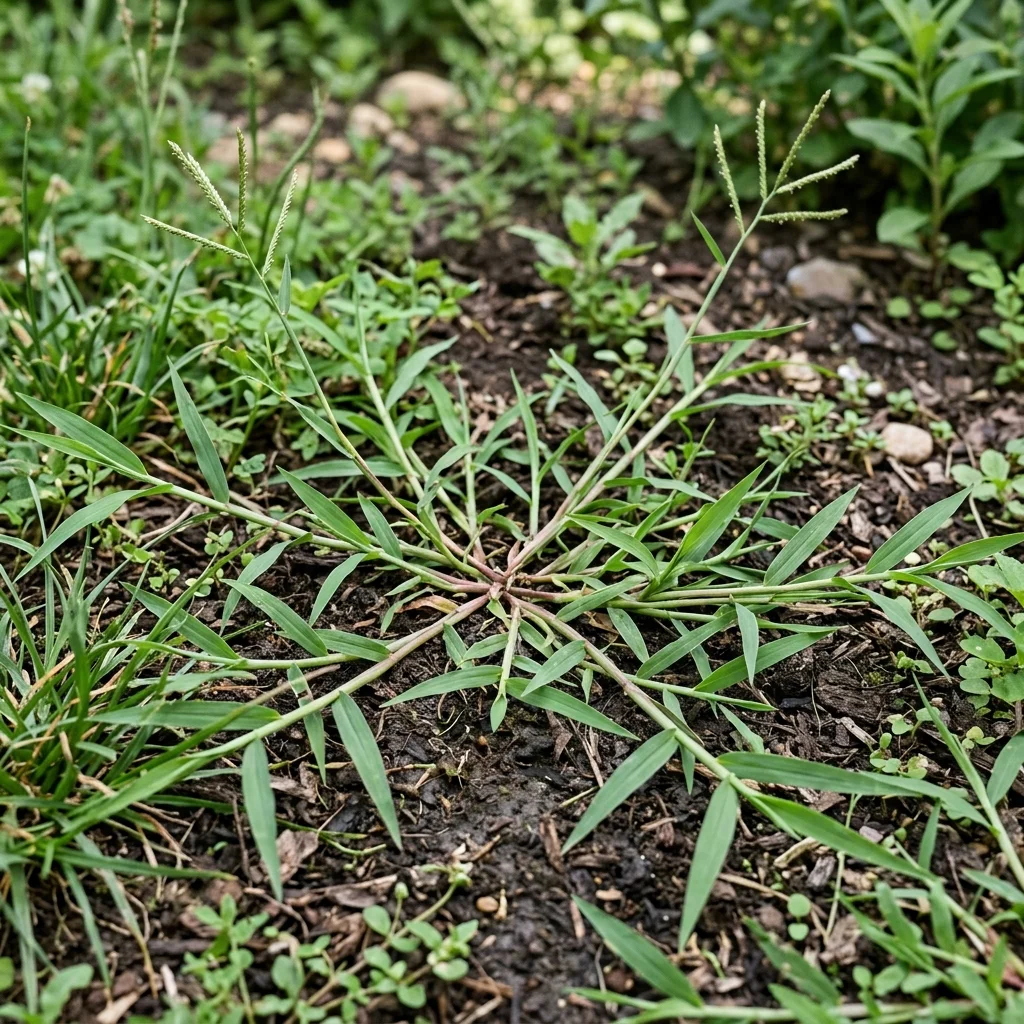
Botanical macro photography of Smooth Crabgrass (Digitaria ischaemum) - Plant AI care and control database

How to Identify Smooth Crabgrass

A sprawling, flat-growing grassy rosette with smooth, hairless pale-green blades, purple-tinged stems, and finger-like seed spikes.

  • Smooth Hairless Leaves: Leaf blades and sheaths are completely smooth and hairless (or have only a few hairs near the collar), a key difference from Hairy Crabgrass.
  • Flat Sprawling Growth: Stems grow flat along the soil surface, radiating horizontally from a central crown in a crab-like shape.
  • Slender Finger Spikes: The seed head features 2 to 6 slender, finger-like spikes clustered at the top of a thin stem, carrying flat seeds.
💡 Plant AI Tip: Smooth Crabgrass seeds require light to germinate! Maintaining a thick, tall lawn (mowed at 3 inches) blocks light from reaching the soil surface, naturally suppressing seed germination.

Complete Care & Management Guide

Access highly technical, scientific management directives to control or cultivate Smooth Crabgrass effectively.

Highly drought-tolerant once established. It thrives in dry, baked summer lawns, expanding rapidly when desirable turf grasses enter drought dormancy.
Extremely resistant to mowing. Because the smooth stems crawl flat on the ground, mower blades pass completely over them, only clipping the seed heads.
Thrives in nutrient-poor soils. Regular turf fertilization and dense turf competition are required to crowd out emerging smooth crabgrass seedlings.
Requires Full Sun to thrive. It cannot tolerate shade and will fail to grow under a dense, competitive grass canopy or beneath trees.
Prefers compacted clay, sandy loam, sidewalk cracks, and bare lawn spots. It easily tolerates poor soil aeration that weakens lawn grasses.
Spreads aggressively strictly by seeds. A single plant can produce thousands of seeds that survive in the soil for years, waiting for warm spring temperatures.
A summer annual. Germinates in late spring when soil temps reach 55°F (13°C). It is completely killed by the first hard winter frost.
Features a shallow, fibrous root system anchored to a strong central crown. It occasionally roots at the stem nodes where they touch damp soil.
Rarely targeted by pests. It occasionally hosts lawn thrips, but suffers zero structural damage, maintaining strong growth.
Susceptible to **Leaf Blight** in wet autumns, though diseases rarely kill the weed before it successfully drops seeds.
To control smooth crabgrass organically, raise mowing heights to shade the soil, core-aerate compacted turf, and manually dig out young rosettes in early summer.

Is your lawn showing flat-growing, hairless grassy rosettes?

Relieve soil compaction through aeration, mow high to shade the soil, and hand-pull central crowns.

Diagnose Weed Instantly

Common Diseases & Treatment

Leaf Blight

Symptoms: Symptoms: Small, water-soaked brown spots on leaf blades that merge, turning the sprawling stems yellow.

Action: Action: Hand-dig the affected clumps. Avoid overwatering the lawn in late afternoon, and ensure good air circulation.

Sidewalk Crack Colonization

Symptoms: Symptoms: Smooth crabgrass roots deeply into sidewalk and driveway cracks, resisting standard weeding tools.

Action: Action: Use a specialized crevice weeding tool to scrape out the root crown, or pour boiling water directly on the clump to kill the roots.

Frequently Asked Questions

How is Smooth Crabgrass different from Hairy Crabgrass?

Smooth Crabgrass (Digitaria ischaemum) has leaf blades and sheaths that are completely hairless, and it tends to grow smaller and flatter to the ground. Hairy Crabgrass (Digitaria sanguinalis) has dense, stiff hairs on its leaves and lower sheaths.

Will weed-whacking kill Smooth Crabgrass?

No. Weed-whacking only removes the upper leaves. Since the central growth crown sits flat at the soil surface, the weed will quickly regrow fresh leaves within a few days.

Does Smooth Crabgrass root at stem nodes?

Yes, but less aggressively than Hairy Crabgrass. When the sprawling stems crawl over moist, bare soil, they can grow roots from the stem joints, anchoring the weed tightly.

What is the best organic way to control it?

Aerate compacted lawn soil and overseed with dense turf grass. In early spring, apply corn gluten meal to block seed germination, and hand-pull young weeds in early summer.

No more dying plants. Grow healthy greens today!

Get Started for Free