Spotted Spurge Identification & Control
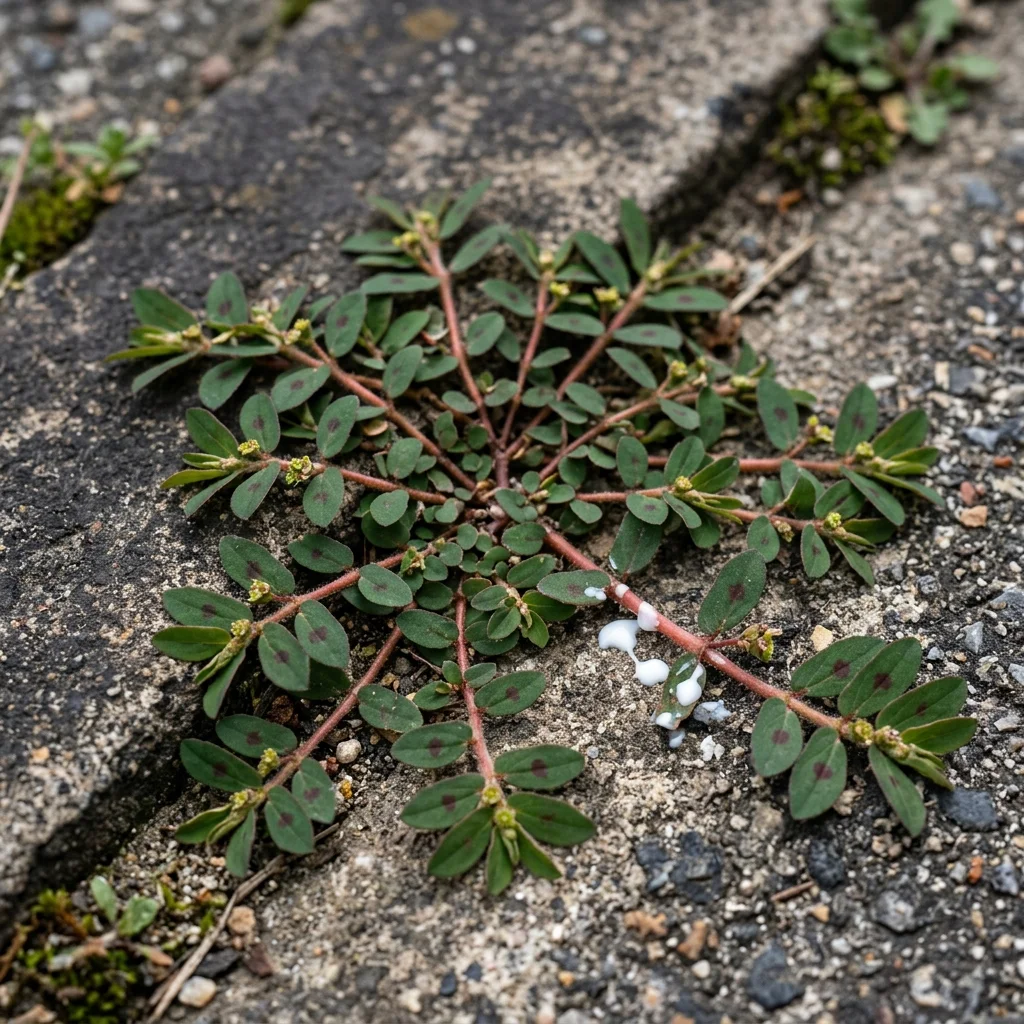
Spotted Spurge, also known as Milkspurt or Spotted Sand-mat, is an exceptionally aggressive, highly toxic annual broadleaf weed in the Euphorbiaceae family. Native to North America but globally naturalized, it is a severe nuisance in home gardens, sidewalk cracks, and dry lawns. It forms dense, circular, flat mats radiating from a single central taproot. The small green leaves feature a highly unique, dark-red spot along the midvein, and the entire plant bleeds a highly toxic, sticky milky sap when broken, causing skin blisters and pet poisoning.





How to Identify Spotted Spurge
A prostrate annual forming flat, circular green-red mats, with small opposite leaves showing a dark-red center spot, and sticky milky sap.
-
✔
Toxic Milky Latex Sap: Broken stems immediately bleed a thick, sticky, milky-white sap that is highly corrosive and irritating to skin.
-
✔
Red-Spotted Oval Leaves: Small, opposite green leaves (5 to 12 mm long) feature a highly distinct, dark reddish-purple spot along the central midvein.
-
✔
Central Taproot Rosette: Stems radiate flat from a single, thin central taproot, forming a circular mat up to 2 feet wide.
Complete Care & Management Guide
Access highly technical, scientific management directives to control or cultivate Spotted Spurge effectively.
Common Diseases & Treatment
Milky Sap Dermatitis
Symptoms: Severe skin itching, redness, and small watery blisters appearing after handling broken spurge stems.
Sidewalk Seam Invasion
Symptoms: Pavement and driveway joints are completely choked by flat, circular green-red mats of spurge.
Frequently Asked Questions
Why does Spotted Spurge bleed white sap?
The white sap is a toxic latex composed of complex organic compounds (diterpene esters). It acts as a powerful chemical defense mechanism that deters insects and grazing animals, while sealing wounds to prevent moisture loss.
Is Spotted Spurge toxic to dogs and cats?
Yes. If consumed by pets, the milky sap causes severe irritation and blistering of the mouth, tongue, and digestive tract, leading to drooling, vomiting, and diarrhea. Keep pets away from heavily infested yards.
How can I identify Spotted Spurge from other weeds?
Look for three key features: 1. It grows in a flat, circular mat radiating from a single point; 2. The tiny leaves have a distinct dark-red smudge in the center; 3. Breaking any stem immediately bleeds thick white milk.
What is the best way to get rid of it?
Wear thick rubber gloves. Locate the center of the circular mat where the taproot enters the ground. Grip the crown firmly and pull straight up; the entire plant will pop out. Apply organic mulch to prevent seeds.