Abutilon theophrasti

Velvetleaf Identification & Control

Velvetleaf, also known as Butterprint or China Jute, is an exceptionally aggressive, tough summer annual broadleaf weed in the mallow family. Native to southern Asia, it has escaped to become a highly destructive weed in agricultural fields and home gardens. Famed for its highly unique, massive heart-shaped leaves covered in exceptionally soft, velvety hairs, it releases allelopathic chemicals that stunt crops, while producing distinctive button-like seed pods packed with highly durable seeds.


Sunlight Icon
Sunlight Full Sun
Watering Icon
Watering Tolerance Low to Moderate
Soil Mix Icon
Soil Adaptability Any Soil / Rich Loam / Clay
Temperature Icon
Growth Temp 15°C - 38°C
Toxicity Danger Icon
Danger / Toxicity Pet Safe / Allelopathic Crop Threat
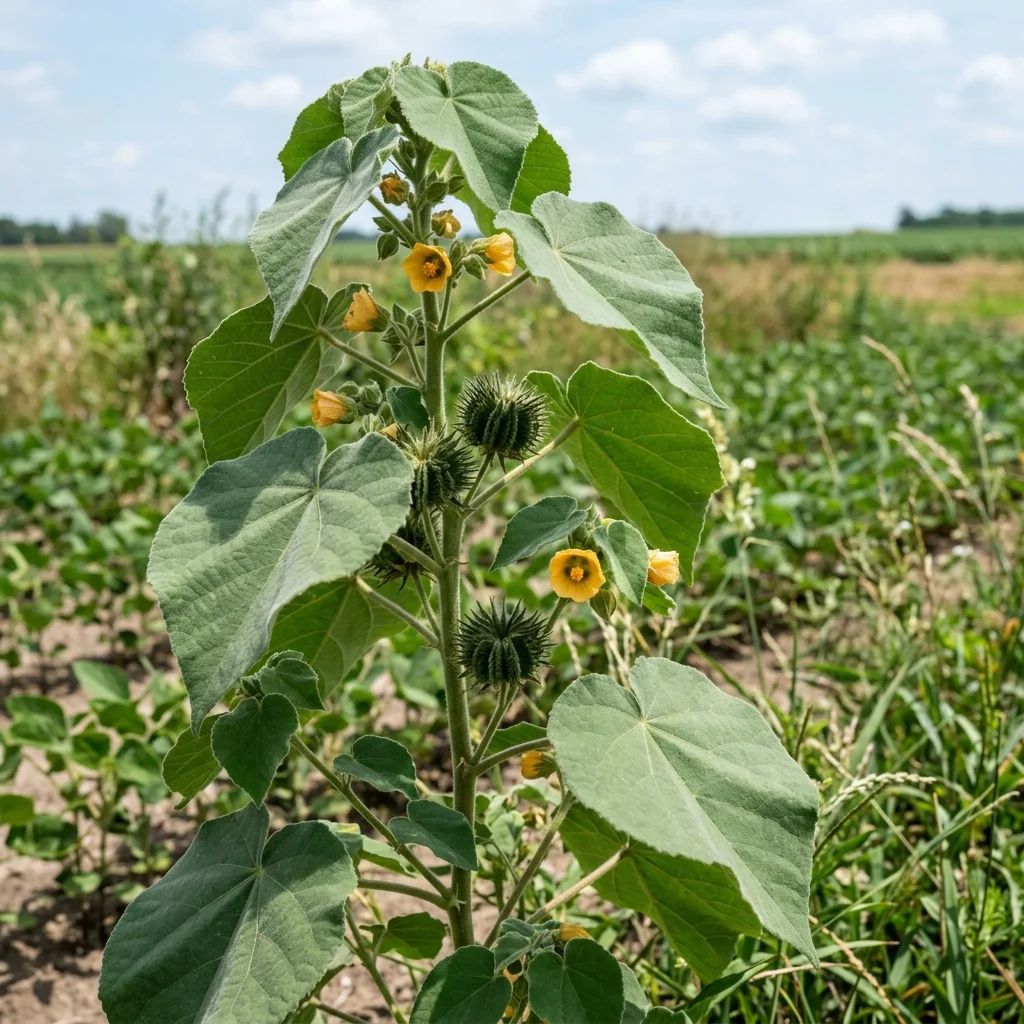
Botanical macro photography of Velvetleaf (Abutilon theophrasti) - Plant AI care and control database

How to Identify Velvetleaf

An upright annual with heart-shaped leaves covered in dense velvet hairs, small yellow flowers, and circular button-like seed capsules.

  • Soft Velvety Heart Leaves: Massive, heart-shaped green leaves (10 to 20 cm wide) covered in dense, soft, velvety hairs that feel like flannel.
  • Circular Button Seed Pods: Highly distinctive, circular, cup-like seed capsules composed of 12 to 15 woody segments, looking like an antique butter stamp.
  • Small Yellow Flowers: Small, 5-petaled, bright orange-yellow flowers (2 cm wide) blooming individually in leaf joints.
💡 Plant AI Tip: Velvetleaf seeds are legendary survivors! Equipped with an exceptionally hard, thick outer coat, the seeds can survive dormant in the soil for over 50 years, germinating immediately when soil is turned.

Complete Care & Management Guide

Access highly technical, scientific management directives to control or cultivate Velvetleaf effectively.

Highly adapted to dry and damp conditions. It grows vigorously in early spring moisture but survives dry spells by accelerating its seeding cycle, producing seeds and dying in summer.
Controlled effectively by mowing. Mowing cuts off the tall, upright seedheads before the heart-shaped pods open, preventing seed dispersal and disrupting its annual lifecycle.
Thrives in nutrient-poor and highly disturbed soils. Regular fertilization helps garden plants grow densely, shading out emerging velvetleaf seedlings.
Prefers Full Sun but tolerates partial shade. It struggles under dense forest canopies and dense, thick lawn turf shading. Shading lawns suppresses it.
Thrives in newly tilled soils, gardens, crop fields, and roadsides. It easily grows in dry, compacted, or poor soils where other plants struggle.
Reproduces strictly by seeds. A single plant can produce up to 10,000 seeds that can remain viable in the soil for over 50 years.
A summer annual. Germinates in spring, grows rapidly to flower in late summer, and is completely killed by the first winter frost, leaving seeds behind.
Features an exceptionally deep, thick vertical taproot anchored to a massive woody root crown. Complete manual extraction requires a sturdy spade.
Occasionally targeted by velvetleaf seed beetles, which feed heavily on the seed heads, acting as a helpful natural biological control.
Highly disease-resistant. It suffers virtually zero structural damage from natural plant diseases, maintaining highly aggressive growth.
To control Velvetleaf organically, manually dig up young rosettes in early summer before they develop their tough, woody taproot and bristly seed spikes, and mulch heavily.

Is your garden showing velvety heart-shaped leaves or antique button-like seed pods?

Mow early to cut off seed heads, pull the shallow fibrous roots, and keep dogs away from dry patches.

Diagnose Weed Instantly

Common Diseases & Treatment

Verticillium Wilt

Symptoms: Symptoms: Leaves turn yellow, wilt, and drop prematurely, and the plant stems develop dark streaks inside.

Action: Action: Immediately pull and discard infected plants. This disease is spread by leafhoppers and can infect garden tomatoes and cucumbers.

Seed Pod Explosion

Symptoms: Symptoms: Circular button seed pods turn dry, woody, and split open, releasing thousands of hard seeds.

Action: Action: Cut off the dry button seed pods using shears and discard them in a trash bag. Do not compost seeded heads.

Frequently Asked Questions

Why is it called 'Velvetleaf' and 'Butterprint'?

It is called 'Velvetleaf' because its heart-shaped leaves are covered in exceptionally soft, dense hairs that feel exactly like velvet or flannel. 'Butterprint' comes from the shape of the seed pod, which looks like the antique carved wooden stamps historically used to press decorative designs into butter blocks.

Does Velvetleaf damage agricultural crops?

Yes! Velvetleaf is a severe weed in corn and soybean fields. It is a highly aggressive nutrient and water thief, and its leaves release natural toxic allelopathic chemicals that actively suppress the seed germination and growth of neighboring crop plants.

Can the fibers of the stems be used?

Yes. In its native Asia, Velvetleaf (known as China Jute) was historically cultivated as a valuable fiber crop. The tall, straight stems contain exceptionally strong, durable bast fibers used to make high-quality ropes, coarse sacks, and paper.

What is the best way to get rid of it?

Because it has a shallow fibrous root system, it is very easy to pull out by hand. Manual weeding or close mowing in mid-summer before the flower stalks open is the most effective organic control method.

No more dying plants. Grow healthy greens today!

Get Started for Free