Wild Mustard Identification & Control
Wild Mustard, botanically known as Sinapis arvensis and also known as Charlock or Field Mustard, is an exceptionally common, highly aggressive summer annual broadleaf weed in the mustard family. Native to Europe but thoroughly naturalized globally, it is a severe threat to crop yields and pastures. It features upright, bristly-hairy stems, deeply-lobed leaves, and produces showy clusters of bright yellow 4-petaled flowers. The seeds contain high levels of allyl isothiocyanate (mustard oil), which causes severe digestive inflammation and poisoning in livestock.





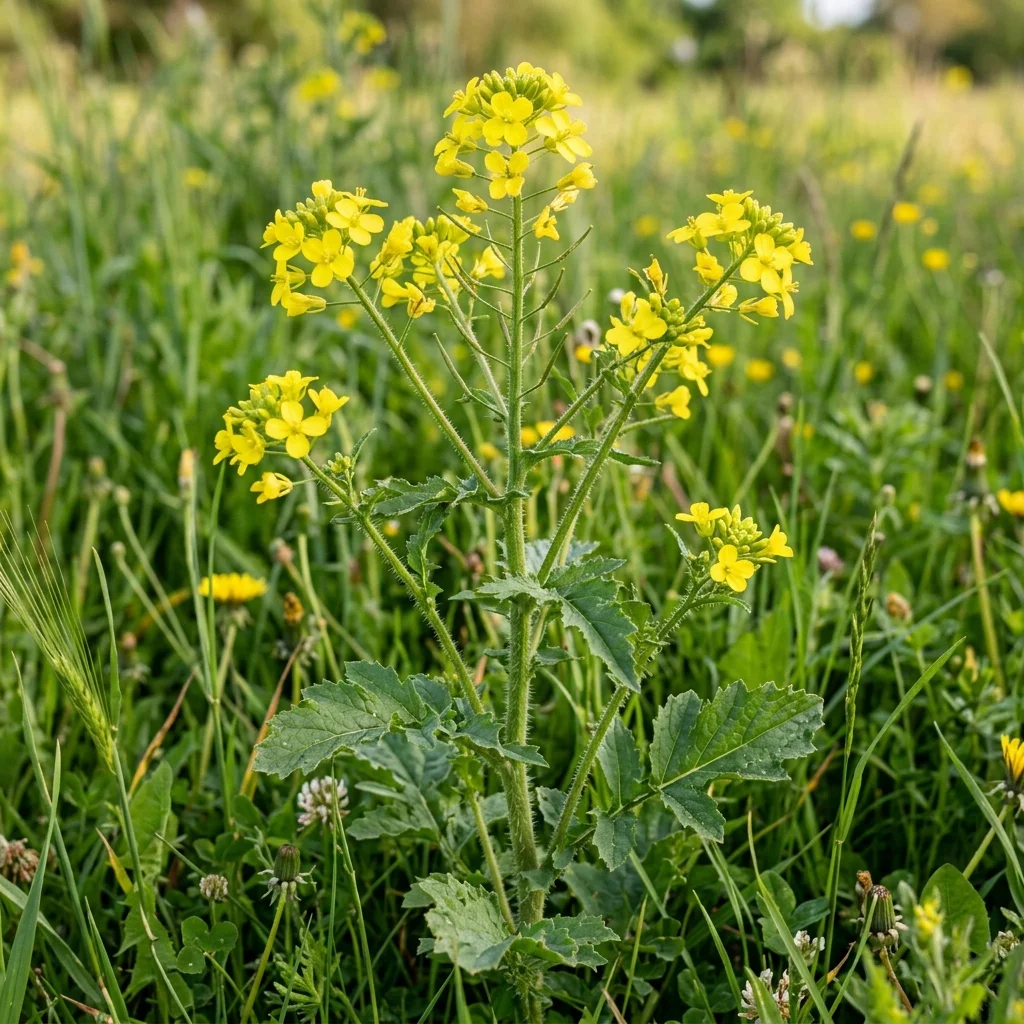
How to Identify Wild Mustard
An upright, branched annual with stiff bristly hairs on lower stems, showy clusters of bright yellow 4-petaled flowers, and narrow pointed seed siliques.
-
✔
Bright Yellow 4-Petaled Flowers: Showy, flat clusters of small yellow flowers with exactly 4 petals arranged in a cross (cruciform shape).
-
✔
Swollen Bristly Lower Stems: Stems are erect, highly branched, and covered in stiff, rough, downward-pointing bristly hairs near the base.
-
✔
Narrow Pointed Pods (Siliques): Slender, cylindrical seed pods (3 to 5 cm long) with a highly distinct, flat, beak-like tip containing dark round seeds.
Complete Care & Management Guide
Access highly technical, scientific management directives to control or cultivate Wild Mustard effectively.
Common Diseases & Treatment
Cabbage Clubroot Reservoir
Symptoms: Nightshade roots turn swollen, distorted, and rot, spreading the devastating slime mold to garden brassica crops.
Seed Pod Shattering
Symptoms: Cylindrical pointed seed pods turn dry, woody, and split open, releasing thousands of hard seeds.
Frequently Asked Questions
Why is Wild Mustard toxic to livestock?
The seeds of Wild Mustard contain a high concentration of glucosinolates (specifically sinigrin), which break down into allyl isothiocyanate (mustard oil) when chewed. This compound is highly irritating to the digestive tract of cattle, causing severe gastroenteritis and colic.
Are the leaves edible?
Yes! The young, tender leaves of Wild Mustard harvested in early spring before the flowers open are completely edible and have a delicious, spicy, mustard-like zip. They are widely boiled or steamed as greens.
How long do the seeds survive in soil?
Wild Mustard seeds are legendary survivors. Equipped with a highly durable, thick seed coat, they can survive dormant in dry or compacted agricultural soil for over 50 to 60 years, germinating immediately when the soil is tilled.
What is the best way to get rid of it?
Because it has a shallow fibrous root system, it is very easy to pull out by hand. Manual weeding or close mowing in late spring before the yellow flowers open is the most effective organic control method.