Wild Oat Identification & Control
Wild Oat, botanically known as Avena fatua, is an exceptionally common, highly aggressive summer annual grass weed in the Poaceae family. Native to Eurasia but thoroughly naturalized globally, it is one of the most economically devastating weeds in spring wheat, barley, and canola crops. Growing up to 4 feet tall, it closely resembles cultivated oats but features open, drooping panicles with hanging spikelets. The seeds are armed with a highly unique, long, bent, and twisted awn. This awn twists and untwists in response to changes in air humidity, acting as a self-drilling mechanism that actively screws the seed into the soil.





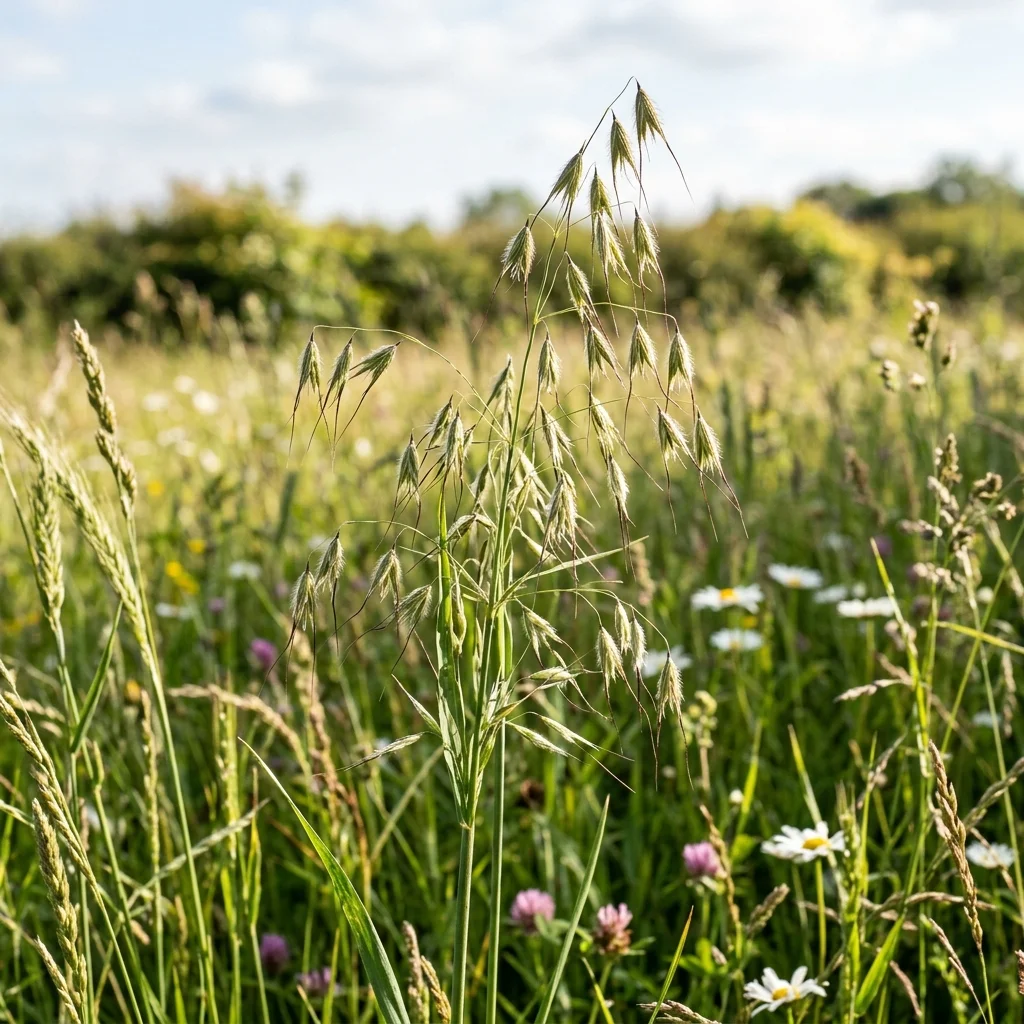
How to Identify Wild Oat
An upright summer annual grass with open drooping seed heads, closely resembling cultivated oats but having twisted, bent awns on the seeds.
-
✔
Drooping Seed Panicles: Large, highly open, pyramidal flower clusters with drooping spikelets that hang gracefully like tiny lanterns.
-
✔
Twisted Bent Awns: Each seed possesses a prominent, dark, long, bent awn that is highly twisted at the base.
-
✔
Hairy Seed Base: The base of the seed (floret) is covered in stiff, brown, brush-like hairs, showing a highly distinct circular scar ('sucker-mouth').
Complete Care & Management Guide
Access highly technical, scientific management directives to control or cultivate Wild Oat effectively.
Common Diseases & Treatment
Crown Rust Spreader
Symptoms: Leaves develop bright orange-to-yellow powdery pustules, rapidly spreading the devastating crown rust fungus to neighboring oats.
Hygroscopic Seed Drilling
Symptoms: Wild oat seeds drill themselves deep into garden turf, making hand-weeding ineffective as roots emerge deep.
Frequently Asked Questions
How do Wild Oat seeds drill themselves into the ground?
The seeds possess a long, twisted awn that is highly hygroscopic. Changes in air moisture cause the awn to twist and uncurl, physically crawling along the soil until it snaps the seed into cracks and drills it deep.
How do you distinguish wild oats from cultivated oats?
Wild oat seeds feature a highly distinct circular scar ('sucker-mouth') at the base and have long, bent, twisted awns, whereas cultivated oat seeds lack the scar and have straight or no awns.
Does it damage spring cereal yields?
Yes. Wild Oats are notorious agricultural weeds. They grow rapidly, stealing critical nitrogen, moisture, and sunlight from barley and wheat crops, severely reducing crop yields.
What is the best way to eradicate it?
Sowing competitive crop cultivars at higher density to shade out wild oat seedlings, combined with close mowing of fence lines before seedheads mature, is highly effective organically.