Yellow Woodsorrel Identification & Control
Yellow Woodsorrel, botanically classified as Oxalis stricta, is a highly persistent, low-growing herbaceous perennial weed in the oxalis family. Native to North America, it commonly invades damp, shaded home lawns, ornamental gardens, and greenhouses. Famous for its bright clover-like leaf leaflets that fold closed at night and its small, bright yellow 5-petaled flowers, it contains high levels of oxalic acid and spreads vigorously via explosive seed capsules.





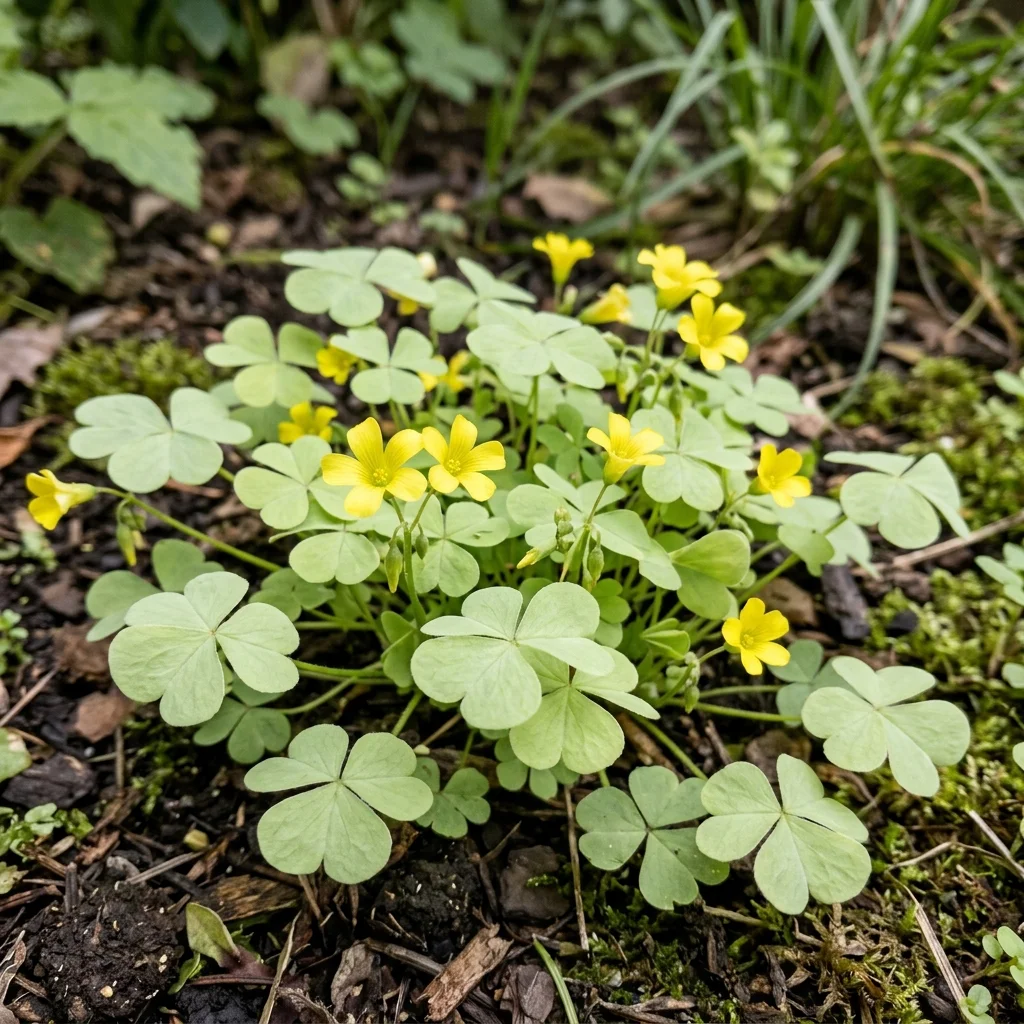
How to Identify Yellow Woodsorrel
A low-growing, delicate clover-like rosette with light-green heart-shaped leaflets, small 5-petaled yellow flowers, and erect, pointed seedpods.
-
✔
Heart-Shaped Clover Leaves: The leaf is divided into three highly distinct, deeply notched, heart-shaped leaflets (unlike the rounded leaflets of clover).
-
✔
Small Yellow Flowers: Small, bright yellow, 5-petaled cup-shaped flowers blooming in small clusters from spring to autumn.
-
✔
Explosive Seed Capsules: Pointed, erect seed capsules (resembling miniature okra pods) that burst open violently when touched to fling seeds.
Complete Care & Management Guide
Access highly technical, scientific management directives to control or cultivate Yellow Woodsorrel effectively.
Common Diseases & Treatment
Browning Rust
Symptoms: Small, dusty orange-brown spots appearing on the heart-shaped waxy yellow-green leaves.
Explosive Seed podting
Symptoms: Stiff, pointed seed capsules burst violently upon light touch, flinging seeds up to 10 feet.
Frequently Asked Questions
How is Oxalis different from White Clover?
Oxalis leaflets are strictly heart-shaped with a deep notch at the tip, and they fold down at night. White Clover leaflets are rounded or oval with smooth margins and have a pale V-mark. Also, Oxalis has yellow flowers, while clover has round white flowers.
Is Yellow Woodsorrel toxic to dogs?
Yes, Oxalis contains high concentrations of soluble calcium oxalates, which give it a sour taste (sour grass). If eaten in large quantities by dogs or cats, it can cause salivation, tremors, vomiting, and potential kidney damage.
Why is it called the 'Compass Plant'?
It is named the Compass Plant because its upper leaves twist vertically to align north-and-south. This allows the broad leaf surfaces to capture maximum sunlight in the cool morning and evening, while presenting only the thin leaf edge to the hot, direct midday sun, conserving moisture.
What is the best way to get rid of it?
Because it has a shallow fibrous root system, it is very easy to pull out by hand. Manual weeding or close mowing in mid-summer before the flower stalks open is the most effective organic control method.