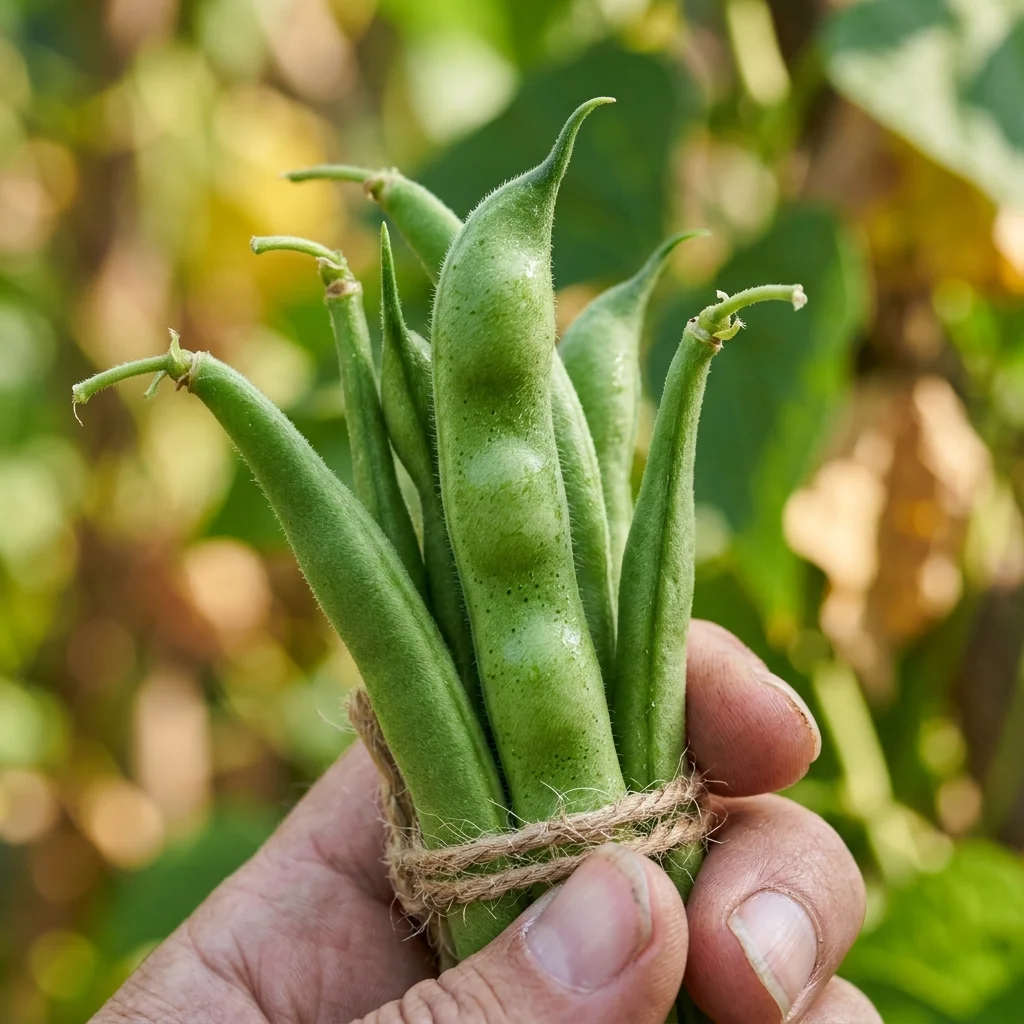
Phaseolus vulgaris

Green Bean Growing & Harvesting Guide

Green Bean (Phaseolus vulgaris), the crunchy kitchen garden staple, is one of the most popular home crops. Prize-winning for its abundant tender pods and atmospheric nitrogen-fixing root nodules, this rewarding legume requires consistent moisture and continuous harvesting to keep producing.


Sunlight Icon
Sunlight Full Sun (6+ hours)
Watering Icon
Watering Regular / Consistent
Soil Mix Icon
Soil pH Light, Well-Drained Loam (pH 6.0-6.8)
Temperature Icon
Target Temp 15°C - 28°C
Toxicity Warning Icon
Toxicity Pet Friendly (Non-toxic)
Botanical macro photography of Green Bean (Phaseolus vulgaris) - Plant AI care database

How to Identify Green Bean

Green Bean (Phaseolus vulgaris) is a highly valued edible crop globally. Recognizing its definitive vegetative and fruit/vegetable structures is key to successful companion growing and harvesting.

  • Key Visual Features: Bushy (bush beans) or climbing (pole beans) herbaceous plant with compound trifoliate leaves.
  • Leaf & Stems: Small white, pink, or purple butterfly-shaped pea-like flowers along stems.
  • Fruit/Edible Part: Elongated, slender green pods containing a row of immature kidney-shaped seeds.
💡 Plant AI Tip: Snap a photo with Plant AI to identify garden veggies and diagnose leaf spot diseases in 1 second.

Complete Growing & Harvesting Guide

Follow our detailed scientific agricultural cultivation guide to keep your Green Bean thriving and high-yielding.

Water regularly, providing 1 inch of water weekly. Maintain consistent moisture during flowering and pod setting.
Prune away lower damaged leaves on pole beans. No pruning is required for low-growing bushy varieties.
Low nitrogen feeder. Avoid high-nitrogen feeds which cause massive leaf growth at the cost of actual pod yield.
Requires absolute full sun, demanding 6+ hours of direct daylight daily to drive continuous flowering.
Thrives in loose, well-aerated sandy loam enriched with compost (pH 6.0-6.8). Tolerant of average fertility.
Direct sow seeds 1 inch deep once soil is warm in spring. Space bush beans 3 inches apart, and pole beans 6 inches apart.
Thrives in warm temperate weather. Seedlings suffer below 10°C; protect from early cold snaps.
Space pole beans 6 inches apart next to sturdy A-frame trellises. Space bush beans 3 inches apart in rows 18 inches apart.
Prone to Mexican bean beetles and spider mites. Apply organic neem oil proactively to leaf undersides.
Susceptible to Bean Common Mosaic Virus and Rust. Avoid working in bean beds while foliage is wet to stop spore spread.
Harvest pods daily when they are firm, slender, and snap easily, before internal seeds bulge and turn pods woody.

Is your Green Bean leaves turning yellow, spotted or dying?

Protect your kitchen garden. Take a photo with Plant AI to diagnose pests and crop diseases instantly.

Diagnose My Crop

Common Diseases & Treatment

Bean Rust (Uromyces)

Symptoms: Undersides of leaves develop tiny, raised reddish-brown powdery rust pustules, causing foliage to dry up and drop.

Action: Provide wide spacing, never touch wet foliage, and spray organic copper or sulfur fungicide proactively.

Common Mosaic Virus (BCMV)

Symptoms: Leaves show puckered, mottled yellow and dark green mosaic patterns; growth is severely stunted and pods are misshapen.

Action: No cure. Control aphid vectors, plant certified disease-free seeds, and discard infected plants immediately.

Frequently Asked Questions

What is the difference between bush beans and pole beans?

Bush beans grow in compact, 2-foot mounds and harvest all at once. Pole beans are climbing vines that require trellises and harvest continuously.

Why are my bean flowers falling off without setting pods?

This is usually caused by high summer heat (above 32°C), which sterile-dries the pollen, or extreme drought stress.

Do green beans need nitrogen fertilizers?

No. Beans are legumes that form symbiotic relationships with soil rhizobia bacteria to fix their own atmospheric nitrogen.

Are raw green beans safe for dogs and cats?

Yes! Green beans are completely non-toxic to pets. Raw or steamed green beans make an excellent low-calorie, fiber-rich treat for dogs.

Harvest bountiful greens. Grow healthy edibles today!

Get Started for Free