Mulberry Growing & Harvesting Guide
Mulberry (Morus alba), the prolific and fast-growing wonder of the berry garden, is a highly rewarding species. Celebrated for its sweet, juice-packed berries and rapid wood generation, this highly resilient tree thrives under spring pollarding to stimulate new berry-bearing shoots.





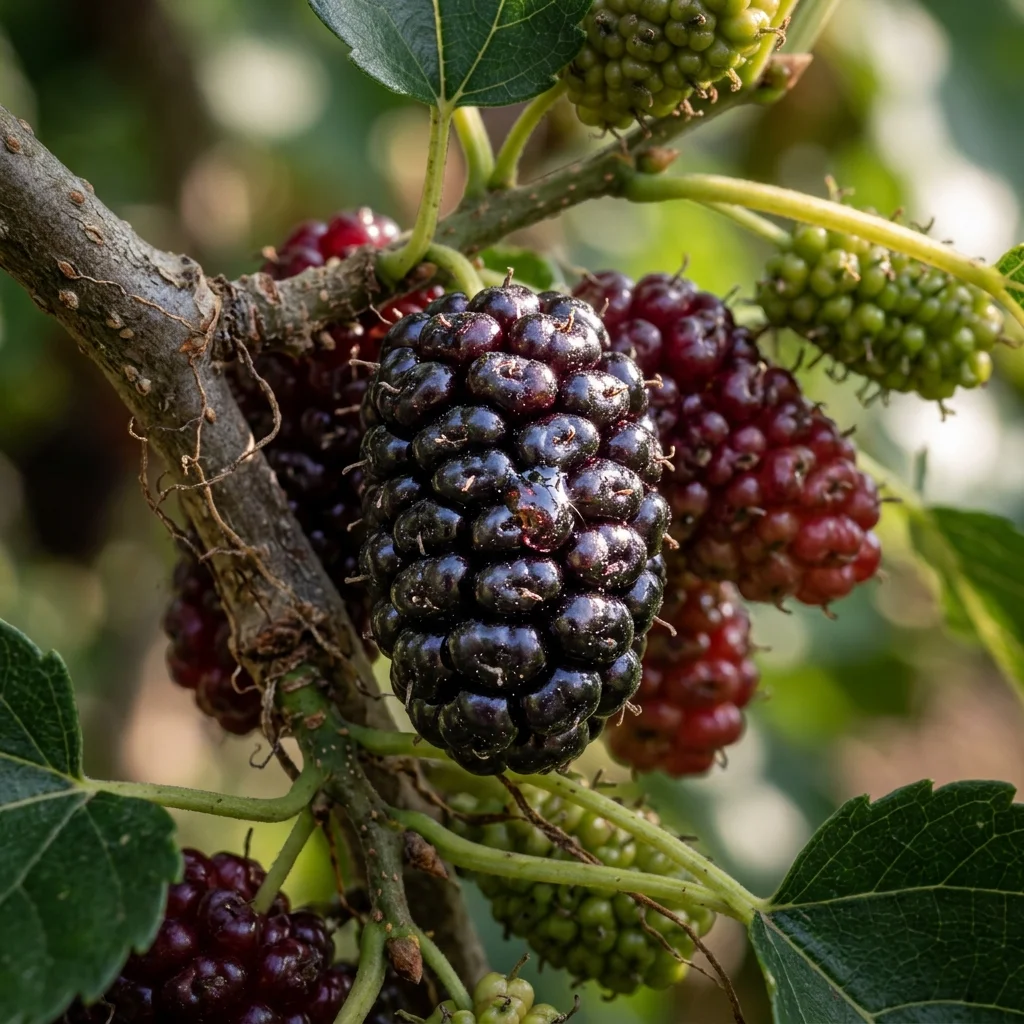
How to Identify Mulberry
Mulberry (Morus alba) is a highly valued edible crop globally. Recognizing its definitive vegetative and fruit/vegetable structures is key to successful companion growing and harvesting.
-
✔
Key Visual Features: Medium-sized deciduous tree growing up to 30 feet, often with weeping branches.
-
✔
Leaf & Stems: Broad, glossy green leaves, highly variable in shape with lobed margins.
-
✔
Fruit/Edible Part: Elongated, blackberry-like composite berries turning from white-green to deep purple-black.
Complete Growing & Harvesting Guide
Follow our detailed scientific agricultural cultivation guide to keep your Mulberry thriving and high-yielding.
Common Diseases & Treatment
Mulberry Bacterial Blight (Pseudomonas)
Symptoms: Leaves develop angular black spots with yellow halos; young shoots turn black, shrivel, and show dry cankers.
Popcorn Disease (Ciboria)
Symptoms: Developing green berries develop dry, swollen, hard white galls resembling popcorn kernels, rendering berries inedible.
Frequently Asked Questions
Why is my mulberry tree growing huge but not producing berries?
This is commonly caused by excessive nitrogen fertilizer driving leafy growth, or the tree is still in its juvenile phase (seedlings take 4-6 years).
What is the best way to harvest a massive mulberry crop?
Spread a clean tarp or sheet under the tree branches and gently shake the limbs. Mature ripe mulberries will easily rain down onto the tarp.
How can I keep my mulberry tree compact for home gardens?
Grow dwarf cultivars (like Dwarf Everbearing) and practice severe winter pruning to keep the tree at a manageable 6-to-8-foot height.
Are mulberries safe for pet dogs and cats?
Yes! Ripe mulberries are completely safe and non-toxic to dogs and cats in moderation. (Note: Avoid unripe green berries/leaves which can irritate pet stomachs).