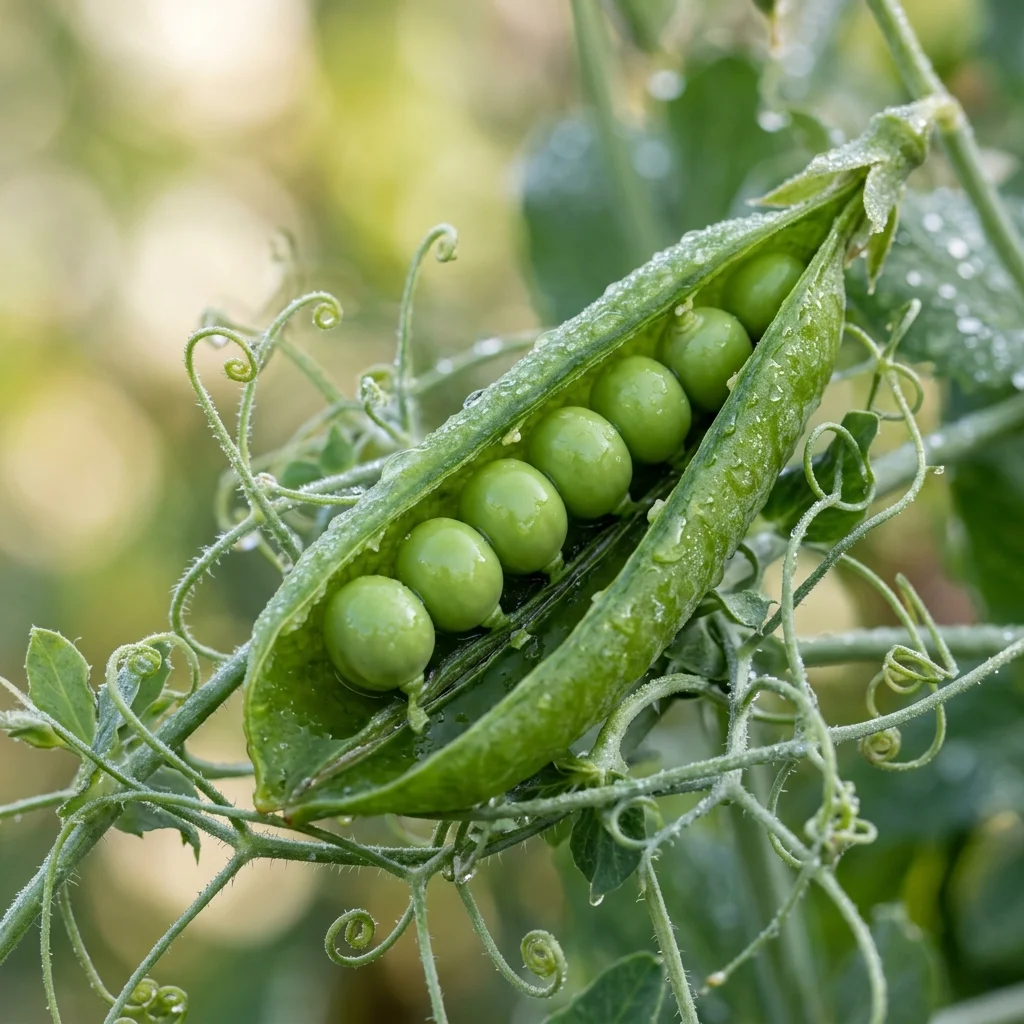
Pisum sativum

Pea Growing & Harvesting Guide

Pea (Pisum sativum), the sweet cool-season favorite, is a highly rewarding legume to cultivate. Prize-winning for its crisp sugary pods and soil-enriching nitrogen-fixing nodules, this climbing cool-weather annual demands early spring sowing, brush trellising, and temperature protection.


Sunlight Icon
Sunlight Full Sun / Partial Shade
Watering Icon
Watering Moderate / Regular
Soil Mix Icon
Soil pH Loose, Compost-Rich, Well-Drained (pH 6.0-7.0)
Temperature Icon
Target Temp 7°C - 23°C
Toxicity Warning Icon
Toxicity Pet Friendly (Non-toxic)
Botanical macro photography of Pea (Pisum sativum) - Plant AI care database

How to Identify Pea

Pea (Pisum sativum) is a highly valued edible crop globally. Recognizing its definitive vegetative and fruit/vegetable structures is key to successful companion growing and harvesting.

  • Key Visual Features: Climbing annual herb with delicate stems and green leaflets ending in branching clinging tendrils.
  • Leaf & Stems: Showy white or purple butterfly-shaped flowers in pairs.
  • Fruit/Edible Part: Straight or curved green pod enclosing a single row of round, sweet green seeds.
💡 Plant AI Tip: Snap a photo with Plant AI to identify garden veggies and diagnose leaf spot diseases in 1 second.

Complete Growing & Harvesting Guide

Follow our detailed scientific agricultural cultivation guide to keep your Pea thriving and high-yielding.

Water regularly, providing 1 inch of water weekly. Avoid waterlogging; peas have highly delicate root systems.
No heavy pruning required. Pinch back the growing tips of young vines at 6 inches to encourage bushy branching.
Low feeder. Apply compost at planting. Avoid high-nitrogen feeds which trigger excess leaf growth at the expense of sweet peas.
Thrives in full sun (6+ hours), but tolerates very light partial shade in warm spring weather to prolong harvest.
Requires loose, well-aerated soil rich in organic compost (pH 6.0-7.0). Intolerant of compacted clay.
Sow seeds 1 inch deep in early spring as soon as soil can be worked. Seeds germinate well in cool 10°C soil.
Cool-season crop. Prefers temperatures between 7°C and 23°C; plants wilt, turn bitter, and cease production above 27°C.
Space seeds 2 inches apart in double rows. Provide a lightweight pea brush or netting trellis for tendril climbing.
Watch for aphids and pea weevils. Control aphids with sharp water sprays or organic insecticidal soap.
Susceptible to Powdery Mildew and Root Rot. Water early in the day and keep soil drainage sharp.
Harvest shelling peas when pods are plump. Harvest snow/snap peas when pods are flat and seeds are tiny.

Is your Pea leaves turning yellow, spotted or dying?

Protect your kitchen garden. Take a photo with Plant AI to diagnose pests and crop diseases instantly.

Diagnose My Crop

Common Diseases & Treatment

Fusarium Wilt (Fusarium)

Symptoms: Lower leaves turn yellow and wilt, progressing up the vine; root tissues show dark reddish-brown discoloration inside.

Action: Plant resistant cultivars, practice crop rotation, and avoid planting in cold, soggy soil.

Powdery Mildew (Erysiphe)

Symptoms: A powdery white fungal coating blankets leaves and pods late in the season, causing foliage to dry up and die.

Action: Ensure wide spacing, prune lower dense leaves, and apply potassium bicarbonate or sulfur sprays proactively.

Frequently Asked Questions

Why are my pea vines turning yellow from the bottom up?

This is commonly caused by soggy soil leading to root rot (Fusarium), or high heat stressing the cool-season vine.

Do peas require a trellis to climb?

Yes. Even dwarf varieties benefit from lightweight pea brush or netting support to keep pods clean and off the damp ground.

Can I eat pea shoots and leaves?

Yes! The tender top 4 inches of pea vines (pea shoots) are a gourmet culinary treat, delicious raw in salads or lightly sauteed.

Are sweet peas safe for cats and dogs to eat?

Yes! Garden peas (Pisum sativum) are entirely safe and non-toxic to pets. (Note: Do not confuse them with ornamental 'Sweet Peas' which are toxic).

Harvest bountiful greens. Grow healthy edibles today!

Get Started for Free