Arachis hypogaea

Peanut Growing & Harvesting Guide

Peanut (Arachis hypogaea), the high-energy groundnut of home plots, is a highly fascinating annual legume to grow. Celebrated for its high-protein pods maturing underground, this self-pollinating species demands loose, sandy soils and deep gypsum side-dressing.


Sunlight Icon
Sunlight Full Sun (6+ hours)
Watering Icon
Watering Moderate / Regular
Soil Mix Icon
Soil pH Rich, Sandy Loam, Well-Drained (pH 5.9-6.5)
Temperature Icon
Target Temp 22°C - 35°C
Toxicity Warning Icon
Toxicity Pet Friendly (Non-toxic)
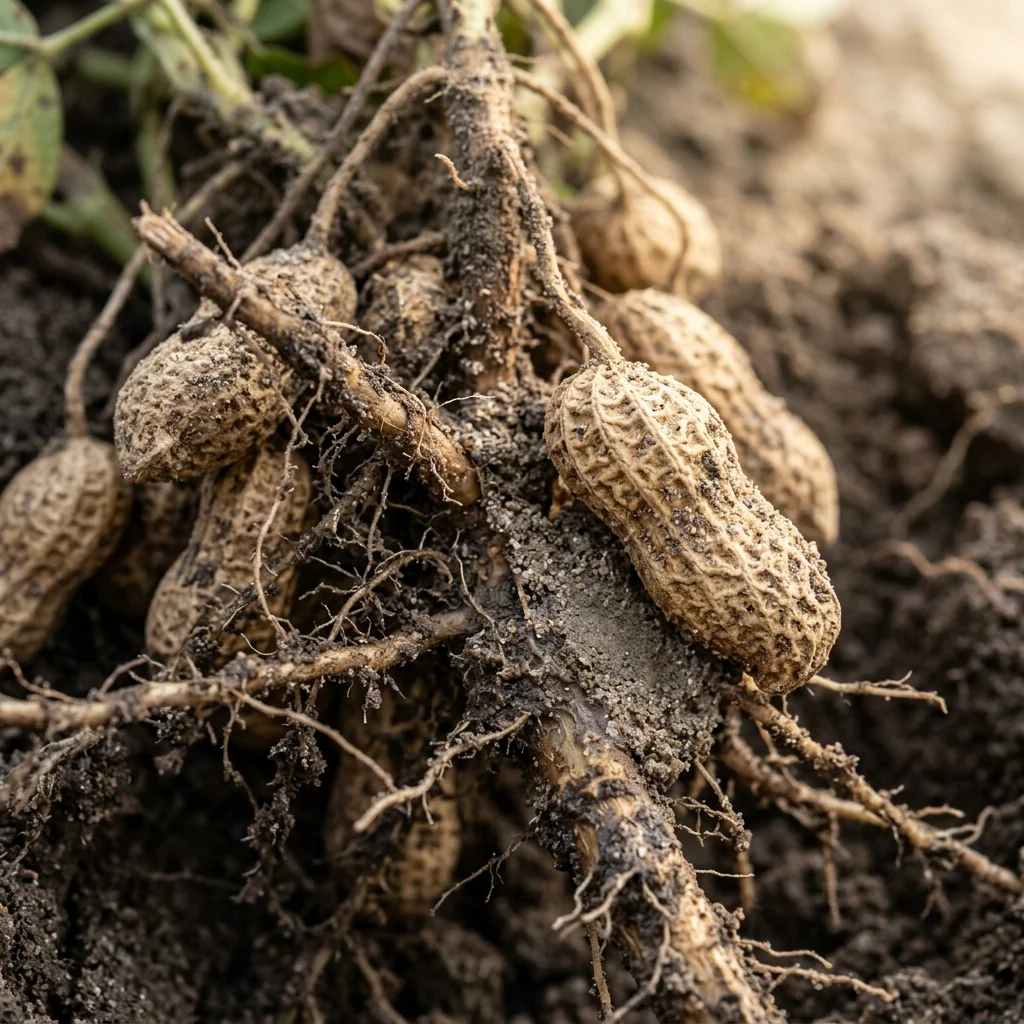
Botanical macro photography of Peanut (Arachis hypogaea) - Plant AI care database

How to Identify Peanut

Peanut (Arachis hypogaea) is a highly valued edible crop globally. Recognizing its definitive vegetative and fruit/vegetable structures is key to successful companion growing and harvesting.

  • Key Visual Features: Low-growing, branching annual legume with pinnate compound leaflets.
  • Leaf & Stems: Bright yellow self-pollinating blossoms produced close to the lower leaf axils.
  • Fruit/Edible Part: Fibrous, dry reticulated tan pods maturing underground containing 1 to 4 nuts.
💡 Plant AI Tip: Snap a photo with Plant AI to identify garden veggies and diagnose leaf spot diseases in 1 second.

Complete Growing & Harvesting Guide

Follow our detailed scientific agricultural cultivation guide to keep your Peanut thriving and high-yielding.

Deliver 1 inch of water weekly. Maintain steady moisture until pegs fully penetrate the soil, then decrease water to protect developing shells from rotting.
No pruning required. Keep the soil bed around the plant base completely clear of tough weeds so descending pegs can easily enter.
Low nitrogen feeder. Side-dress the ground with organic gypsum (calcium sulfate) once yellow pea-like flowers open to harden shells.
Requires absolute full sun, demanding 6 to 8 hours daily. Vital to drive vigorous pegging and high sugar synthesis.
Demands highly loose, deeply aerated sandy loam enriched with compost (pH 5.9-6.5). Stiff compact clay blocks peg penetration.
Sow raw, unpeeled peanut seeds 1.5 inches deep directly in warm spring soil when soil temperatures reach 18°C.
Warm-season crop. Highly frost-sensitive; growth completely halts below 15°C and severe freezes kill the entire plant.
Space plants 8 inches apart next to soft, deeply dug soil beds allowing pegs room to burrow down.
Prone to thrips, aphids, and nematodes. Treat with organic neem oil or practice marigold companion planting.
Susceptible to Early Leaf Spot and Crown Rot. Maintain excellent drainage and irrigate at soil level.
Harvest in late autumn when leaves turn yellow. Lift the entire plant with a pitchfork and cure in the sun for 2 weeks.

Is your Peanut leaves turning yellow, spotted or dying?

Protect your kitchen garden. Take a photo with Plant AI to diagnose pests and crop diseases instantly.

Diagnose My Crop

Common Diseases & Treatment

Early Leaf Spot (Cercospora)

Symptoms: Circular dark brown spots appear on leaf upper surfaces, expanding to defoliate lower stems.

Action: Maximize plant spacing, irrigate only at soil level, and apply organic copper fungicide at first sign.

Crown Rot (Aspergillus)

Symptoms: Seedlings wilt suddenly; soil line stem base rots, covered in dark black powdery fungal spores.

Action: Treat seeds with organic Bacillus subtilis, rotate crops with corn/grains, and avoid waterlogged planting beds.

Frequently Asked Questions

What is the unique 'pegging' process in peanut growing?

After pollination, the yellow flower wilts, and a bud-like stalk called a 'peg' grows downward, bends into the soil, and matures into peanut pods underground.

Why do my peanuts need gypsum (calcium sulfate)?

Calcium is critical for peanut pod development. Gypsum provides highly soluble calcium to the pegs without raising soil pH, preventing empty shells (called 'pops').

Can I plant grocery store peanuts?

Only if they are raw, unroasted, and still in their shells. However, certified garden seed peanuts are highly recommended to prevent introducing soil-borne viral diseases.

Are peanuts safe for my pet dog?

Yes! Plain, unsalted, raw or roasted peanuts are completely non-toxic and safe for dogs in small amounts. (Caution: Avoid salted varieties and moldy nuts).

Harvest bountiful greens. Grow healthy edibles today!

Get Started for Free