Watercress Growing & Harvesting Guide
Watercress (Nasturtium officinale), the pepper-crisp water explorer of crystal streams, is a highly nutritious semi-aquatic perennial. PRIZED for its hollow, water-buoyant stems and deeply complex mineral-rich flavor, this cool-loving green demands constant oxygenated running water.





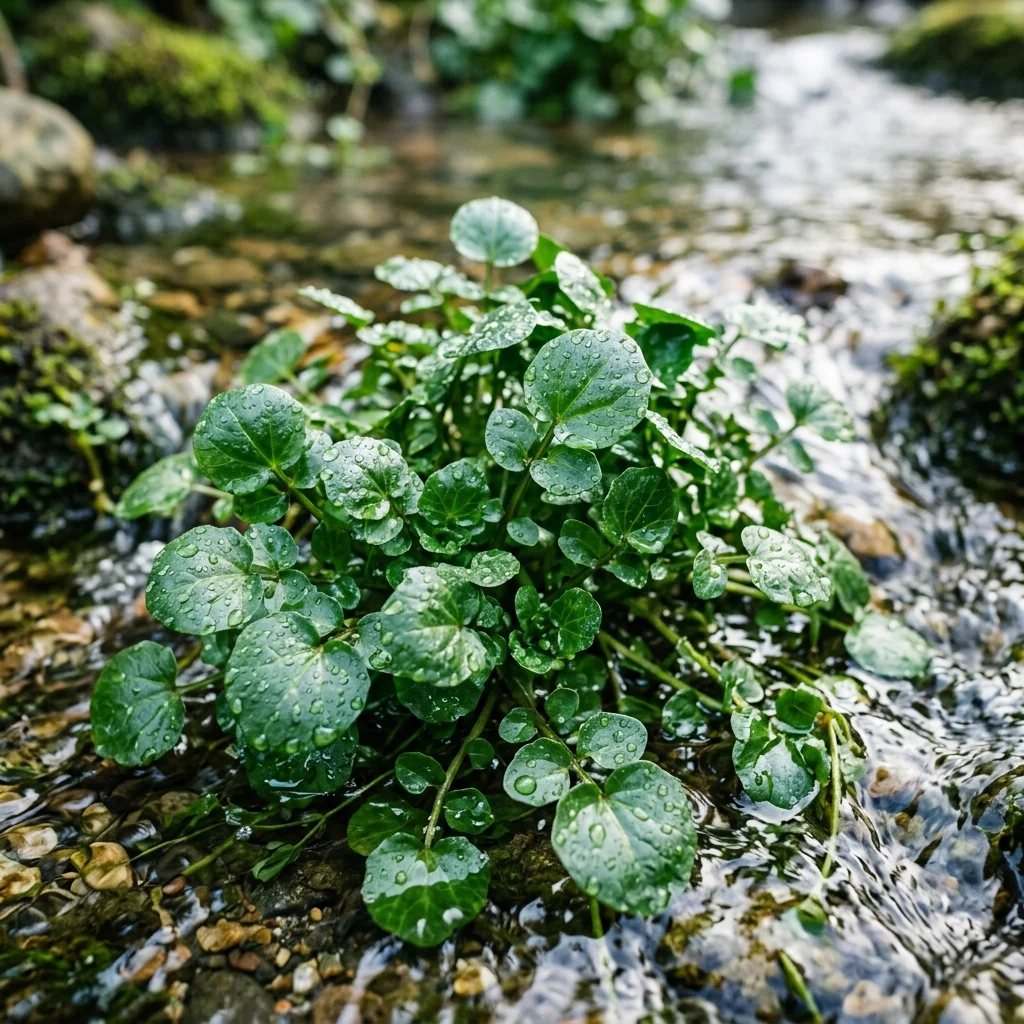
How to Identify Watercress
Watercress (Nasturtium officinale) is a highly valued edible crop globally. Recognizing its definitive vegetative and fruit/vegetable structures is key to successful companion growing and harvesting.
-
✔
Key Visual Features: Fast-growing, hollow-stemmed aquatic perennial with creeping or floating stems.
-
✔
Leaf & Stems: Pinnately compound glossy dark green leaves; tiny clusters of white four-petalled flowers.
-
✔
Fruit/Edible Part: Creeping leafy green stems with white fibrous roots emerging at stem joints.
Complete Growing & Harvesting Guide
Follow our detailed scientific agricultural cultivation guide to keep your Watercress thriving and high-yielding.
Common Diseases & Treatment
Watercress Leaf Spot (Septoria)
Symptoms: Leaves develop small, circular brown spots with grey centers, expanding to turn leaves yellow and drop off.
Pythium Damping Off (Pythium)
Symptoms: Young seedlings rot at the soil line, collapse, and die in highly saturated stagnant seed beds.
Frequently Asked Questions
Q: Can I grow watercress without a natural stream?
A: Yes! Grow watercress in a pot placed inside a wide bucket of clean water. Change the water every 2 days to keep it fresh and oxygenated.
Q: Why does my watercress taste extremely bitter?
A: Watercress turns bitter and tough once the weather gets hot or the plant begins to produce white flowers. Harvest early in cool seasons.
Q: Is it safe to harvest wild watercress?
A: Be extremely cautious. Wild watercress grown in pastures can host dangerous liver fluke parasites. Only harvest wild greens from certified pure water sources.
Q: Is watercress safe for pet cats and dogs?
A: Yes! Watercress is completely non-toxic to dogs and cats in small amounts. Sliced greens are rich in vitamins, but avoid feeding wild-foraged watercress.